May 18, 2026

Government Policies & Steel Prices 2026
Steel Prices

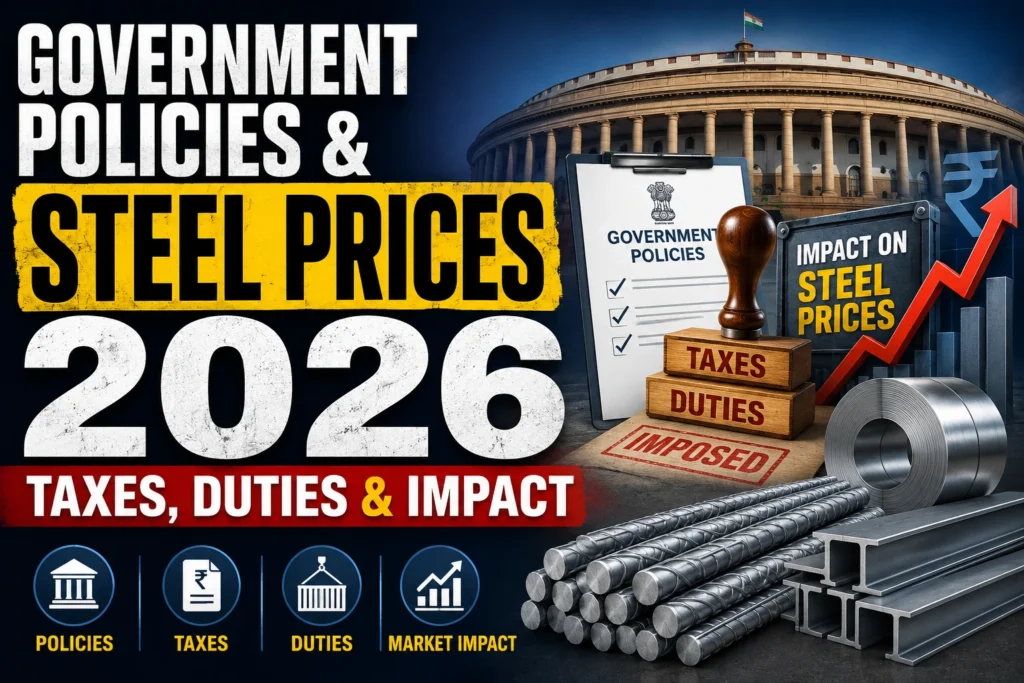
Government Policies & Steel Prices 2026: Taxes, Duties & Impact

Government Policies & Steel Prices 2026: Taxes, Duties & Impact Steel prices in India are increasing in 2026 mainly because of government policies, import duties, rising infrastructure spending, and higher global trade pressure. New safeguard duties on imported steel, GST impact, and large-scale infrastructure projects are pushing domestic demand and production costs upward. These policy changes are directly affecting builders, manufacturers, contractors, and steel buyers across India. Introduction: Why Government Policies Matter in Steel Pricing Steel prices are not controlled only by demand and supply. Government decisions also play a major role in deciding how expensive steel becomes in the Indian market. Policies related to import duties, taxation, infrastructure investment, environmental rules, and trade protection directly affect steel manufacturers and buyers. In 2026, India’s steel market is witnessing major policy-driven changes. The government is trying to protect domestic steel companies from cheap foreign imports while simultaneously increasing spending on roads, railways, metro projects, airports, industrial corridors, and smart cities. Because of this, steel demand is rising rapidly, while import restrictions are making foreign steel more expensive. If you have already read our main pillar guide on “Why Steel Prices Are Increasing in 2026? Complete Market Breakdown for Buyers”, then this article will help you understand the government and policy side of the price increase in much greater detail. For steel buyers, contractors, and B2B procurement teams, understanding these policies is extremely important because they directly impact project costs, procurement planning, and long-term budgeting. How Government Policies Influence Steel Prices Government policies affect steel prices through several channels. These include: Import duties on foreign steel Export restrictions GST taxation Environmental regulations Infrastructure spending Anti-dumping duties Trade agreements Industrial production incentives When the government increases import duties, imported steel becomes expensive. This protects Indian steel manufacturers but also increases domestic steel prices because local producers gain stronger pricing power. Similarly, when the government increases infrastructure spending, demand for steel rises sharply. Large infrastructure projects consume huge amounts of TMT bars, structural steel, MS pipes, steel plates, and coils. Higher demand automatically pushes prices upward. In 2026, both these situations are happening together in India. Imports are becoming costly while domestic demand is increasing strongly. India’s Safeguard Duty on Steel Imports in 2026 One of the biggest policy decisions affecting steel prices in 2026 is the safeguard duty imposed by the Indian government on selected steel imports. According to multiple reports, India imposed a safeguard duty ranging between 11% and 12% on some imported steel products to reduce the sudden increase in cheap imports, especially from countries like China. The government introduced this move because imported low-cost steel was creating pressure on Indian steel manufacturers. Domestic companies argued that extremely cheap imports were hurting Indian steel production and reducing profitability. The Directorate General of Trade Remedies (DGTR) found that there was a “sudden, sharp, and significant increase” in steel imports that could seriously harm the Indian steel industry. As a result: First-year safeguard duty: 12% Second-year safeguard duty: 11.5% Third-year safeguard duty: 11% This policy is designed to support Indian steel producers and reduce dependence on imported steel. Why Cheap Steel Imports Became a Problem India became one of the world’s largest steel consumers, but cheap imports from countries such as China, Vietnam, and some other Asian markets started increasing rapidly. Foreign steel manufacturers were selling products at lower prices in international markets due to excess production capacity. Indian buyers and traders naturally started purchasing cheaper imported steel. This created several problems: Pressure on Indian Steel Companies Indian steel manufacturers had to reduce their prices to compete with cheaper imports. This reduced profit margins for domestic companies. Reduced Domestic Production Incentive If imported steel remains significantly cheaper, local companies may reduce production expansion plans because profitability becomes uncertain. Risk to Employment The steel industry supports millions of jobs directly and indirectly. Lower domestic production can impact employment in manufacturing, logistics, mining, fabrication, and construction. Quality Concerns The Indian government and domestic industry also raised concerns regarding sub-standard imported steel products entering the market. Because of these reasons, safeguard duties were introduced. How Import Duties Increase Domestic Steel Prices Many buyers assume that import duties affect only imported steel. In reality, they also increase domestic steel prices. Here is how this works: When imported steel becomes expensive due to duties, buyers shift toward Indian manufacturers. This increases demand for domestic steel. At the same time, domestic steel companies face less competition from foreign suppliers. This gives local producers more pricing flexibility. As imports reduce, overall market supply tightens. Lower supply and higher demand together push prices upward. Reports suggest that after the safeguard duty announcement, steel prices in India increased noticeably in several segments. This is one of the major reasons why steel buyers are facing higher prices in 2026. GST Impact on Steel Prices GST also plays an important role in steel pricing. Most steel products in India fall under the 18% GST slab. This includes: TMT bars MS pipes Steel coils Structural steel Steel sheets Hollow sections Although GST created a more organized taxation structure compared to the older tax system, it still adds significant cost to final procurement. For example: If the base price of steel increases due to raw material cost or safeguard duty, GST is applied on the higher amount. This increases the final invoice value even further. Let us understand with a simple example: Component Amount Base steel price ₹60,000 Transportation & handling ₹3,000 Total before GST ₹63,000 GST @18% ₹11,340 Final cost ₹74,340 This shows how GST magnifies the overall impact of rising steel prices. For contractors and project developers, this becomes a major budgeting issue, especially in large-volume procurement. Infrastructure Budget Is Increasing Steel Demand India’s infrastructure growth is another major reason behind rising steel prices. The government has significantly increased spending on: Highways Metro rail projects Railway modernization Industrial corridors Smart cities Airports Warehousing Renewable energy projects Manufacturing infrastructure All these sectors require huge quantities of steel products. Large infrastructure projects consume: TMT bars
Global Market Affects Steel Prices
Steel Prices

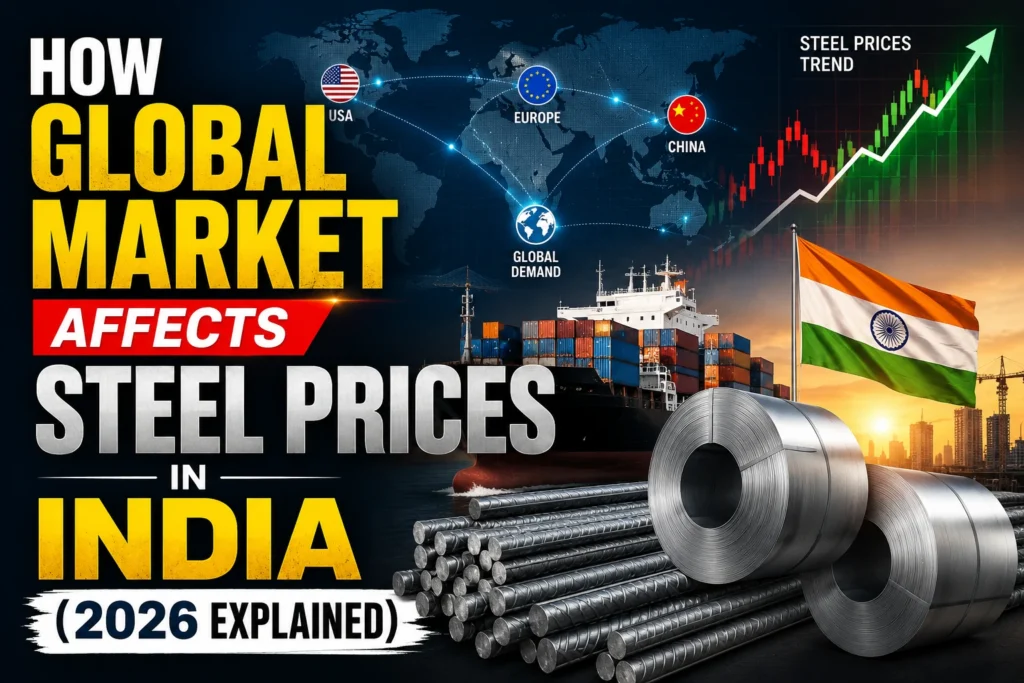
How Global Market Affects Steel Prices in India (2026 Explained)

How Global Market Affects Steel Prices in India (2026 Explained) Steel prices in India in 2026 are strongly influenced by global factors like China’s production levels, raw material costs, international demand, and currency exchange rates. When global steel demand rises or supply tightens, Indian prices increase. Buyers working with Deal On Steel Industries should track global trends to plan smarter purchases and control project costs. Understanding the Connection Between India and the Global Steel Market India is one of the largest steel producers in the world, but it does not operate in isolation. Steel is a globally traded commodity, meaning prices are influenced not only by domestic demand and supply but also by international market conditions. When global steel prices rise, Indian manufacturers often increase their rates as well. This happens because raw materials like iron ore and coking coal are either imported or priced based on global benchmarks. Even if domestic production remains stable, global fluctuations still impact pricing. For a complete foundational understanding of this topic, you should read our main guide “Why Steel Prices Are Increasing in 2026”, which explains the broader market forces behind current trends. India vs Global Steel Market: How They Interact India’s steel market is closely linked with global trade flows. While India exports steel to many countries, it also imports certain types of steel and raw materials. When global demand is high, Indian producers prefer exporting steel because they can earn better margins. This reduces supply in the domestic market, which leads to price increases within India. On the other hand, when global demand is weak, more steel stays within the country, which can stabilize or even reduce prices. This balance between export opportunities and domestic availability plays a major role in price movements. You can better understand domestic fluctuations by reading “Steel Price Trend in India (2020–2026): Full Data Analysis”, where we break down how prices have moved over the years. China’s Production Impact on Steel Prices China is the world’s largest steel producer, accounting for more than 50% of global production. Because of this dominance, any change in China’s production directly affects global steel prices—and eventually impacts India. When China increases production: Global supply rises Prices tend to fall or stabilize When China cuts production (due to environmental policies or reduced demand): Global supply decreases Prices increase worldwide In 2026, China has been focusing on reducing pollution, which has led to controlled production levels. This has tightened global supply and pushed prices upward. Indian steel manufacturers often adjust their prices based on these global movements. So even if local demand remains unchanged, reduced Chinese output can still lead to higher prices in India. Export-Import Dynamics: A Key Price Driver India is both a steel exporter and importer, and this dual role significantly impacts pricing. Export Impact When international prices are higher than domestic prices: Indian companies export more steel Domestic supply decreases Prices in India increase Import Impact When global prices are lower: India imports cheaper steel Domestic competition increases Prices may stabilize or drop However, the government sometimes imposes import duties to protect local manufacturers. These policies can limit cheap imports, keeping prices higher within the country. For deeper insights into cost drivers, you can explore “Iron Ore & Coal Prices Impact on Steel Rates (2026 Guide)”, which explains how raw material pricing feeds into this system. Dollar vs INR: Currency Exchange Effect on Steel Prices One of the most overlooked but powerful factors is the exchange rate between the US Dollar and the Indian Rupee. Steel and its raw materials are traded globally in US dollars. So, when the rupee weakens against the dollar: Import costs increase Raw materials become expensive Steel prices rise in India When the rupee strengthens: Imports become cheaper Production costs decrease Prices may stabilize In 2026, fluctuations in currency have added additional pressure on steel prices. Even small changes in exchange rates can significantly impact large-volume purchases. For buyers working on tight budgets, this becomes a critical factor in planning procurement. Case Study: How Global Factors Increased Steel Prices in 2026 Let’s take a practical example to understand how all these factors combine. Situation: China reduces steel production due to environmental regulations Global demand increases due to infrastructure growth The US dollar strengthens against the Indian rupee Result: Global supply decreases Prices rise internationally Indian manufacturers increase export volumes Domestic supply reduces Import costs increase due to currency weakness Final Impact: Steel prices in India increase significantly—even if local demand remains stable. This is exactly what has been observed in 2025–2026, where multiple global factors aligned to push prices upward. What This Means for Indian Buyers and Contractors For contractors, builders, and procurement managers, understanding global market influence is no longer optional—it is essential. Here’s what you should focus on: Track global steel news, especially China Monitor USD/INR exchange rates Plan bulk purchases when prices stabilize Avoid last-minute buying during peak demand Working with experienced suppliers like Deal On Steel Industries can help you navigate these fluctuations, as they track both domestic and global trends to offer better pricing guidance. Smart Buying Strategy Based on Global Trends If you want to reduce costs despite rising prices, you need a strategy aligned with global movements. Key Tips: Buy in phases instead of one bulk order Lock prices when global trends show stability Avoid peak construction seasons Stay updated with policy changes Timing your purchase based on global indicators can save a significant amount of money, especially in large-scale projects. Summary: Global Market’s Role in Indian Steel Prices The Indian steel market is deeply connected to global dynamics. Factors like China’s production, international demand, export-import balance, and currency exchange rates all play a major role in determining prices. In 2026, rising global demand, controlled supply, and currency fluctuations have combined to increase steel prices in India. This trend highlights the importance of understanding not just local conditions but also global market movements. For buyers, the key takeaway is simple:Better awareness leads to better buying

Iron Ore & Coal Prices Impact on Steel Rates
Steel Prices

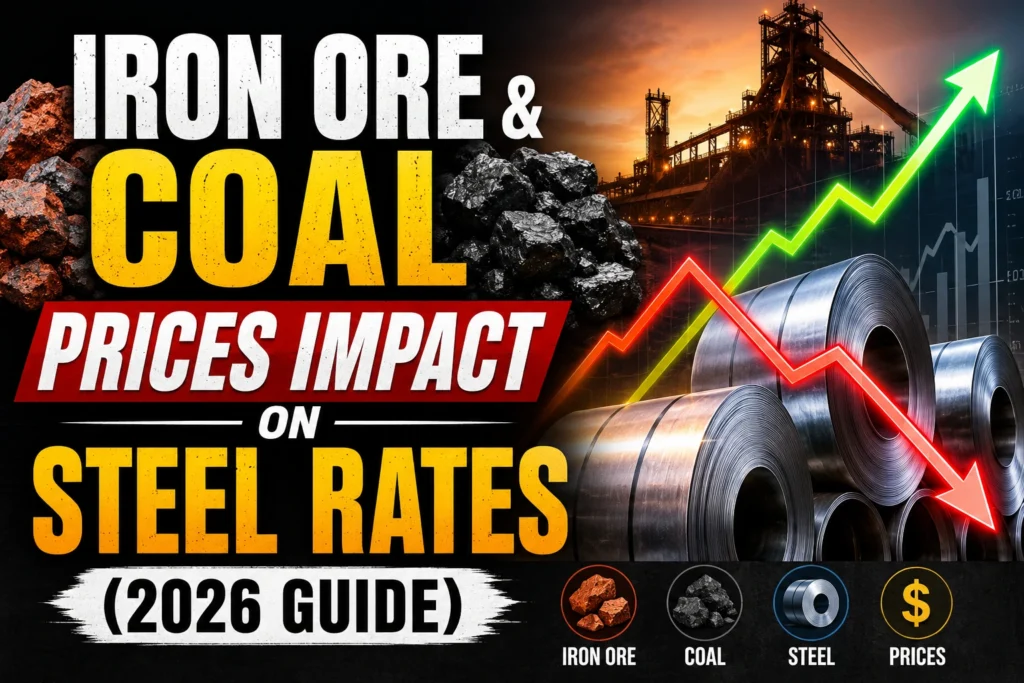
Iron Ore & Coal Prices Impact on Steel Rates (2026 Guide)

Iron Ore & Coal Prices Impact on Steel Rates (2026 Guide) Steel prices in 2026 are increasing mainly because the cost of iron ore and coal has gone up sharply. These two raw materials make up the majority of steel production cost. When their prices rise due to global demand, supply issues, and logistics costs, steel manufacturers increase prices, directly impacting buyers, contractors, and industries. Introduction Steel pricing is not random — it is deeply connected to raw materials, global markets, and production costs. In 2026, one of the biggest reasons behind rising steel prices is the increase in iron ore and coal prices. These are the two most critical inputs required to produce steel, and any fluctuation in their cost has a direct impact on the final price of steel products. For buyers, contractors, and procurement managers, understanding this connection is essential. Without knowing why prices are rising, it becomes difficult to plan purchases, manage budgets, or negotiate better deals. At Deal On Steel Industries, we regularly analyze market trends to help buyers make informed decisions in a volatile pricing environment. If you want a broader understanding of all the factors affecting steel prices this year, you should also read our detailed guide:👉 Why Steel Prices Are Increasing in 2026? Complete Market Breakdown for Buyers. Steel Production Basics (Simple Explanation) To understand how iron ore and coal affect steel prices, you first need a basic idea of how steel is produced. The process may sound technical, but it can be understood in simple steps. Steel production starts with iron ore, which is mined from the earth. This ore contains iron, but it is not pure and needs to be processed. On the other hand, coal, specifically coking coal, is used as a fuel and chemical agent to extract iron from the ore. Inside a blast furnace, iron ore, coke (processed coal), and limestone are heated at extremely high temperatures. During this process, oxygen is removed from the iron ore, producing molten iron. This molten iron is then refined further to remove impurities and convert it into steel. The important point here is that iron ore provides the base metal, while coal provides the energy and chemical reaction needed to produce steel. Without either of these, steel production cannot take place. This is why changes in their prices directly impact the cost of manufacturing steel. Iron Ore Price Trend (2020–2026) Iron ore is the primary raw material used in steel production, and its price trend plays a major role in determining steel rates. Over the past few years, iron ore prices have seen significant fluctuations due to global and domestic factors. Between 2020 and 2021, iron ore prices increased sharply due to post-COVID recovery and strong demand from infrastructure and construction sectors. Countries like China increased steel production, which led to higher demand for iron ore globally. During 2022 and 2023, prices stabilized slightly, but they remained higher than pre-COVID levels. In 2024 and 2025, the market saw moderate stability, but costs were still elevated due to supply limitations and environmental regulations on mining activities. Now in 2026, iron ore prices are again rising due to a combination of factors such as increased demand, limited mining output, higher transportation costs, and export pressures. When iron ore becomes expensive, steel manufacturers have no choice but to increase their product prices to maintain profitability. This long-term movement is also explained in detail in:👉 Steel Price Trend in India (2020–2026): Full Data Analysis. Coal & Coke Price Trend (2026 Insights) Coal, especially coking coal, is the second most important raw material in steel production. While iron ore provides the metal, coal provides the energy required to extract and process that metal. India relies heavily on imported coking coal, which makes its price highly sensitive to global market conditions. In recent years, coal prices have been affected by supply chain disruptions, geopolitical tensions, and rising energy demand worldwide. In 2026, coal prices remain volatile and relatively high. Factors such as increased shipping costs, currency fluctuations, and limited global supply have added pressure on steel manufacturers. Since coal is used in large quantities in blast furnaces, even a small increase in its price significantly raises the cost of steel production. This means that when coal prices go up, the cost of running steel plants increases, and this cost is ultimately passed on to buyers in the form of higher steel prices. Cost Breakdown of Steel Production (%) To clearly understand the impact of iron ore and coal, it is important to look at the cost structure of steel production. Steel manufacturing involves multiple expenses, but raw materials account for the largest share. Typically, iron ore contributes around 35–40% of the total production cost, while coal (coke) contributes another 25–30%. This means that nearly 60–70% of the total cost of steel production depends on these two materials alone. The remaining cost includes energy, labor, plant operations, maintenance, and transportation. While these costs are also important, they do not fluctuate as dramatically as raw material prices. This is why even a 10–20% increase in iron ore or coal prices can lead to a significant rise in steel prices. Manufacturers cannot absorb such large cost increases, so they pass them on to the market. Real Example Calculation (Simple Understanding) To make this concept clearer, let’s look at a simple real-world example. Suppose earlier the cost of producing one ton of steel was around ₹40,000. In this scenario, iron ore and coal together contributed around ₹25,000–₹28,000 of the total cost. Now in 2026, if iron ore prices increase by 30–40% and coal prices rise by a similar margin, the total production cost can easily increase to ₹48,000–₹50,000 per ton. To maintain margins, steel manufacturers will increase the selling price to around ₹55,000 per ton or even higher depending on market demand. This results in a direct price increase of ₹8,000–₹10,000 per ton for buyers. This increase is clearly visible across different steel products like TMT bars, MS pipes,

Scroll to Top