
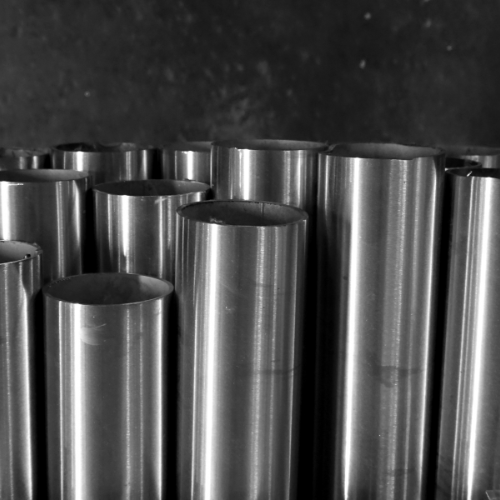
Complete Guide to Mild Steel Pipes
Blog Home – Blog MS Pipes: Complete Guide to Mild Steel Pipes, Types, Sizes, Manufacturing & Applications: Introduction Mild Steel pipes, commonly known as MS pipes, are among the most widely used steel products across construction, infrastructure, manufacturing, and engineering industries. Their exceptional balance of strength, flexibility, durability, and cost-effectiveness makes them a preferred choice for structural frameworks, water pipelines, scaffolding systems, fabrication work, and industrial installations. In modern construction and engineering projects, materials must meet several requirements simultaneously: they must provide structural strength, withstand environmental conditions, be easy to fabricate, and remain economically viable. Mild steel pipes successfully meet all these requirements, which is why they are extensively used in both small-scale and large-scale projects. MS pipes are manufactured from low-carbon steel, which gives them unique mechanical properties such as excellent weldability, good ductility, and high impact resistance. Because of these properties, they can be easily cut, bent, welded, and shaped according to specific design requirements. This detailed guide will help you understand everything about MS pipes, including their composition, manufacturing process, types, sizes, applications, advantages, and factors to consider when choosing the right supplier. What Are MS Pipes? MS pipes refer to Mild Steel pipes, which are steel pipes made from low carbon steel containing typically less than 0.25% carbon. The low carbon content plays a crucial role in determining the characteristics of mild steel. Compared to high-carbon steel, mild steel offers better flexibility and ductility. This means the material can absorb stress and deformation without breaking, making it ideal for applications that require both strength and adaptability. Because of their chemical composition and mechanical properties, mild steel pipes provide: Good tensile strength High durability Excellent weldability Ease of fabrication Resistance to cracking under stress Unlike brittle materials, mild steel can withstand heavy loads while maintaining its structural integrity. This makes MS pipes particularly valuable in industries such as construction, infrastructure development, water supply systems, and industrial fabrication. Another major advantage of mild steel pipes is their affordability. Compared to stainless steel or alloy steel pipes, mild steel pipes are significantly more economical while still delivering reliable performance. Chemical Composition and Properties of Mild Steel Understanding the chemical composition of mild steel helps explain why MS pipes have become so widely used in engineering and construction. Typical mild steel composition includes: Carbon: up to 0.25% Manganese: up to 1.65% Silicon: small traces Sulfur: minimal amount Phosphorus: minimal amount The low carbon percentage reduces brittleness and increases ductility. This allows the steel to be easily shaped and welded without cracking. Key Mechanical Properties Tensile Strength MS pipes possess good tensile strength, which allows them to support heavy structural loads without deformation. Ductility Ductility refers to the ability of a material to stretch or deform under stress without breaking. Mild steel pipes exhibit high ductility, making them suitable for bending and fabrication. Weldability Due to their low carbon content, MS pipes can be welded easily without the risk of structural weakness. Machinability Mild steel can be cut, drilled, and machined easily, making it ideal for fabrication and manufacturing processes. Manufacturing Process of MS Pipes The manufacturing of MS pipes involves several carefully controlled processes to ensure the final product meets industry standards and quality requirements. 1. Raw Material Preparation The production process begins with raw steel materials, usually in the form of steel coils or steel billets. These materials are inspected to ensure they meet required chemical and mechanical specifications. The quality of the raw material significantly influences the final strength, durability, and performance of the pipes. 2. Rolling Process During the rolling stage, steel sheets or strips are passed through a series of rollers. These rollers gradually shape the flat steel into a cylindrical form. This step ensures that the pipe maintains uniform thickness and diameter throughout its length. 3. Welding Process Once the steel strip is shaped into a pipe, the edges are welded together to create a continuous tube. One of the most common welding techniques used is Electric Resistance Welding (ERW). In this process, electrical resistance generates heat, which fuses the edges of the steel strip together. The welding seam is then carefully inspected to ensure it is strong and defect-free. 4. Heat Treatment After welding, the pipes often undergo heat treatment processes. Heat treatment improves the mechanical properties of the steel and reduces internal stresses created during manufacturing. This step helps enhance the durability and structural stability of the pipes. 5. Sizing and Straightening The pipes are passed through sizing mills to achieve precise dimensions. Straightening machines are used to ensure that the pipes are perfectly aligned. Accurate sizing is essential because industrial applications require strict adherence to dimensional standards. 6. Surface Finishing and Coating The pipes may undergo surface treatments such as: Anti-rust coating Galvanization Protective painting These treatments protect the pipes from corrosion and environmental damage. 7. Quality Testing Before the pipes are released to the market, they undergo various quality inspections. Common testing procedures include: Hydrostatic pressure testing Ultrasonic testing Dimensional inspection Surface defect inspection These tests ensure that the pipes meet safety and performance standards. Types of MS Pipes MS pipes are available in several types depending on their manufacturing method, shape, and intended application. ERW MS Pipes Electric Resistance Welded pipes are produced by rolling steel sheets and welding the edges together. These pipes are widely used because they are cost-effective and suitable for many structural applications. Common uses include construction frameworks, fencing, water pipelines, and scaffolding systems. Seamless MS Pipes Seamless pipes are manufactured without any welding joints. Instead, they are formed by piercing solid steel billets to create hollow tubes. Because they do not have welded seams, seamless pipes are stronger and more resistant to pressure. They are often used in high-pressure industrial systems. Square Hollow Section (SHS) Pipes Square MS pipes are commonly used in structural and architectural applications. Their symmetrical shape makes them ideal for construction frameworks, gates, railings, and machinery structures. Rectangular Hollow Section (RHS) Pipes Rectangular MS pipes are widely used in fabrication,