Green Steel & Low-Carbon Steel Pipes: The Future of India’s Industrial Infrastructure
Supplying high-quality MS, GI, Square & Rectangular Pipes for construction,
infrastructure, fabrication, and industrial projects across India.
- Green Steel & Low-Carbon Steel Pipes: The Future of India’s Industrial Infrastructure
- Introduction
- What is Green Steel?
- What are Low-Carbon Steel Pipes?
- Why Green Steel Pipes are Trending in India
- Manufacturing Process of Green Steel Pipes
- Key Benefits of Low-Carbon Steel Pipes
- Applications Across Industries
- Challenges in Adoption
- Future Outlook of Green Steel Pipes in India
- How Businesses Can Benefit
- Conclusion
Introduction
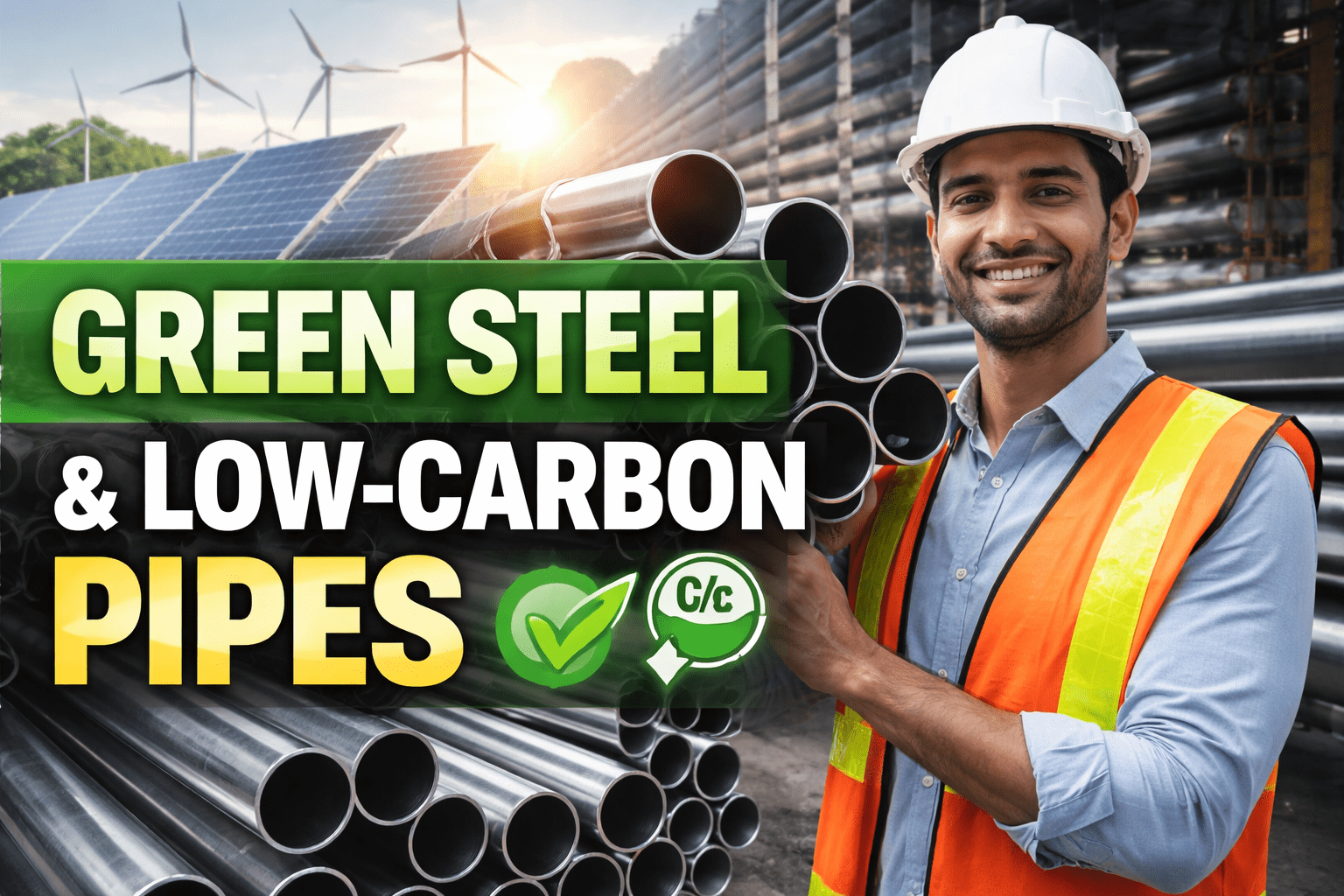
The Indian steel industry is undergoing a significant transformation as sustainability becomes a core focus across global supply chains. One of the most important developments in this shift is the rise of green steel and low-carbon steel pipes.
With increasing environmental regulations, ESG compliance requirements, and global demand for sustainable materials, Indian manufacturers, suppliers, and industrial buyers are now actively exploring eco-friendly steel solutions.
This blog provides a detailed overview of green steel pipes, their manufacturing process, benefits, market demand, and why they are becoming essential for industries in India.
What is Green Steel?
Green steel refers to steel produced using processes that significantly reduce carbon emissions compared to traditional methods.
Traditional Steel Production:
- Uses coal-based blast furnaces
- Emits high levels of CO₂
- Energy-intensive process
Green Steel Production:
- Uses renewable energy sources (solar, wind)
- Incorporates scrap-based recycling
- Utilizes hydrogen-based reduction technology
The result is low-carbon or near-zero emission steel, which is now being adopted globally.
What are Low-Carbon Steel Pipes?
Low-carbon steel pipes are manufactured using environmentally friendly steel production methods. These pipes offer the same structural strength and durability but with a lower environmental impact.
Common Types:
- ERW (Electric Resistance Welded) Pipes
- Seamless Pipes
- GI (Galvanized Iron) Pipes
- Hollow Structural Sections
These are widely used across infrastructure, oil & gas, construction, and water management sectors.
Why Green Steel Pipes are Trending in India
1. Government Policies & Sustainability Goals
India is actively working towards reducing carbon emissions in heavy industries. Steel manufacturers are being encouraged to adopt cleaner technologies and reduce their carbon footprint.
2. Rising Export Demand
Global buyers, especially in Europe and the Middle East, are increasingly demanding:
- ESG-compliant materials
- Low-carbon certified steel products
Indian exporters adopting green steel are gaining a competitive edge in international markets.
3. Corporate ESG Compliance
Large corporations and infrastructure developers are now prioritizing:
- Sustainable sourcing
- Environmental compliance
- Green certifications
This is driving demand for eco-friendly steel pipes in B2B procurement.
Manufacturing Process of Green Steel Pipes
Green steel pipe production involves several advanced processes:
1. Scrap-Based Electric Arc Furnace (EAF)
- Uses recycled steel scrap
- Reduces dependency on raw iron ore
- Significantly lowers emissions
2. Hydrogen-Based Reduction (Emerging Technology)
- Replaces coal with hydrogen
- Produces water instead of CO₂
3. Renewable Energy Integration
- Solar and wind energy used in production
- Reduces overall carbon footprint
4. Efficient Rolling & Finishing
- Modern automated mills
- Reduced energy consumption
Key Benefits of Low-Carbon Steel Pipes
✔ Environmental Benefits
- Lower carbon emissions
- Reduced environmental impact
- Supports sustainability goals
✔ Business Advantages
- Better acceptance in export markets
- Meets ESG and compliance requirements
- Enhances brand reputation
✔ Operational Benefits
- Same durability and strength
- High corrosion resistance (depending on coating)
- Suitable for all major industrial applications
Applications Across Industries
Green steel pipes are being widely adopted across multiple sectors:
🏗️ Construction & Infrastructure
- Structural frameworks
- Bridges and buildings
- Smart city projects
🛢️ Oil & Gas Industry
- Pipeline transportation
- Offshore drilling
- High-pressure applications
💧 Water & Waste Management
- Water supply systems
- Sewage pipelines
- Irrigation projects
⚙️ Manufacturing & Engineering
- Industrial machinery
- Fabrication units
- Process industries
Challenges in Adoption
While the demand is increasing, there are still some challenges:
1. Higher Initial Cost
Green steel production can be more expensive due to advanced technology and energy costs.
2. Limited Supply
Currently, not all manufacturers in India produce certified green steel.
3. Technology Transition
Switching from traditional methods requires investment in new infrastructure and processes.
Future Outlook of Green Steel Pipes in India
The future of green steel in India looks highly promising.
Key Trends:
- Increasing investment in sustainable steel plants
- Government incentives for low-carbon production
- Growing export opportunities
- Rising awareness among B2B buyers
Over the next 5–10 years, green steel pipes are expected to become a standard requirement rather than a niche product.
How Businesses Can Benefit
For manufacturers, traders, and suppliers in India, adopting green steel can open new opportunities:
✔ Enter premium markets
✔ Improve export potential
✔ Build long-term client trust
✔ Align with global sustainability trends
Conclusion
Green steel and low-carbon steel pipes are no longer just a trend—they represent the future of the steel industry. As environmental regulations tighten and global demand shifts toward sustainable materials, Indian businesses must adapt to stay competitive.
Steel Prices May Rise in march
For B2B buyers and industrial stakeholders, investing in eco-friendly steel solutions today can ensure long-term growth, compliance, and market relevance.