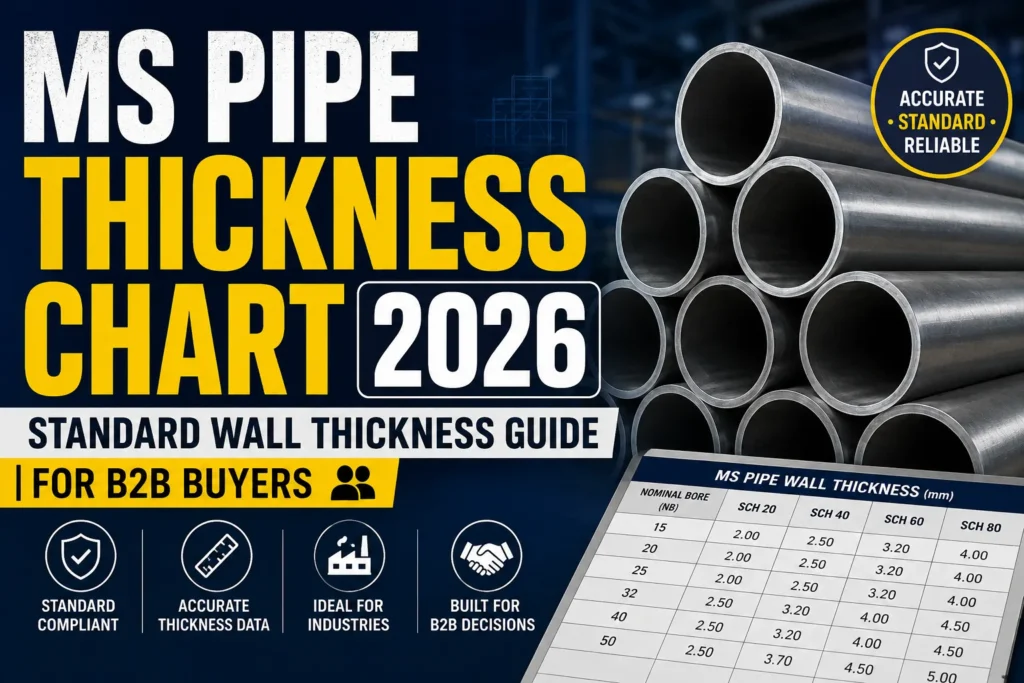
MS Pipe Thickness Chart 2026: Standard Wall Thickness Guide for B2B Buyers
MS Pipe thickness determines the strength, durability, weight, and load-bearing capacity of a steel pipe. In 2026, contractors, fabricators, and industrial buyers use standard MS Pipe Thickness Charts to select the correct pipe for construction, industrial, and infrastructure projects. Companies like Deal On Steel Industries help buyers choose accurate thickness according to project requirements and industry standards.
-
MS Pipe Thickness Chart 2026: Standard Wall Thickness Guide for B2B Buyers
- Why MS Pipe Thickness Matters in Industrial Projects
- Understanding MS Pipe Thickness
- Standard MS Pipe Thickness Chart 2026
- Light, Medium & Heavy MS Pipes Explained
- How Pipe Thickness Affects Pipe Weight
- Why Pipe Thickness is Important in Construction
- How Industrial Buyers Select Pipe Thickness
- Common Pipe Thickness Standards in India
- Common Mistakes Buyers Make While Selecting Pipe Thickness
- Pipe Thickness and ERW Pipe Performance
- Latest MS Pipe Industry Trends in 2026
- How to Verify MS Pipe Thickness Before Buying
- Future of MS Pipe Industry in India
- Conclusion
- FAQs
- MS Pipe Thickness Chart 2026: Standard Wall Thickness Guide for B2B Buyers
- ERW Pipe Full Form, Meaning, Uses & Advantages Explained (2026)
- Best MS Pipe Brands in India 2026: Top Companies for Quality Steel Pipes
- MS Black Pipe Price in India 2026: Latest Rates Per Kg, Sizes & B2B Buying Guide
- MS Pipe Sizes in MM, Inches & NB: Complete Size Chart Guide 2026
- Welded Pipes vs MS Black Pipes: Which Steel Pipe is Better for Construction in 2026?
- APL Apollo MS Black Pipe Price in Ghaziabad (2026): Latest Rates, Sizes & B2B Buying Guide
- MS Pipe Dealers in Ghaziabad (2026) | Complete B2B Buying Guide for Quality MS Pipes, Prices & Trusted Supplier
Why MS Pipe Thickness Matters in Industrial Projects
Many buyers focus only on pipe diameter and price. But in reality, pipe thickness is one of the most important factors while purchasing steel pipes.
The thickness of an MS pipe directly affects:
- Structural strength
- Pipe weight
- Pressure handling capacity
- Welding performance
- Durability
- Transportation cost
- Overall project safety
If the pipe thickness is incorrect, the entire fabrication or construction structure can face performance issues later.
This is why professional procurement teams always verify pipe thickness before placing bulk orders.
For buyers comparing pipe dimensions, weights, and industrial specifications, our detailed guide on MS Pipe Dealers in Ghaziabad also explains how reliable suppliers help maintain proper quality standards during procurement.
Understanding MS Pipe Thickness
What Does Pipe Thickness Mean?
Pipe thickness refers to the wall thickness of the steel pipe. It is usually measured in millimeters (mm).
For example:
- 1.6 mm
- 2.0 mm
- 2.5 mm
- 3.2 mm
- 4.0 mm
- 5.0 mm
The higher the thickness, the stronger and heavier the pipe becomes. In industrial applications, selecting the wrong thickness can increase project risk, material failure, and maintenance costs.
Difference Between Pipe Diameter and Pipe Thickness
Many first-time buyers confuse diameter with thickness.
Pipe Diameter
Diameter refers to the width of the pipe.
Pipe Thickness
Thickness refers to the wall depth of the pipe material. Two pipes may have the same diameter but different thicknesses. The thicker pipe will be heavier, stronger, and more expensive.
Standard MS Pipe Thickness Chart 2026
Round MS Pipe Thickness Chart
Below are some commonly used thickness ranges in India for round MS pipes.
| Pipe Size | Common Thickness |
|---|---|
| 15 NB | 1.6 mm – 3.2 mm |
| 20 NB | 1.6 mm – 4.0 mm |
| 25 NB | 1.8 mm – 4.5 mm |
| 32 NB | 2.0 mm – 5.0 mm |
| 40 NB | 2.0 mm – 5.4 mm |
| 50 NB | 2.3 mm – 5.6 mm |
| 80 NB | 2.9 mm – 6.0 mm |
| 100 NB | 3.2 mm – 6.3 mm |
These thicknesses may vary depending on:
- Brand
- ISI standards
- Industrial requirements
- Pipe category
- Application type
Square Pipe Thickness Chart
Square pipes are commonly used in fabrication and modern construction.
| Square Pipe Size | Thickness Range |
|---|---|
| 25×25 mm | 1.2 mm – 3.0 mm |
| 40×40 mm | 1.6 mm – 4.0 mm |
| 50×50 mm | 1.8 mm – 5.0 mm |
| 75×75 mm | 2.0 mm – 6.0 mm |
| 100×100 mm | 2.5 mm – 6.0 mm |
Rectangular Hollow Section Thickness Chart
Rectangular pipes are widely used in industrial sheds, warehouses, and structural frameworks.
| RHS Pipe Size | Thickness Range |
|---|---|
| 40×20 mm | 1.2 mm – 3.0 mm |
| 50×25 mm | 1.4 mm – 4.0 mm |
| 80×40 mm | 1.6 mm – 5.0 mm |
| 100×50 mm | 2.0 mm – 6.0 mm |
| 120×60 mm | 2.5 mm – 6.0 mm |
Light, Medium & Heavy MS Pipes Explained
Light Class Pipes
Light pipes have lower wall thickness and lower weight.
Common Uses
- Furniture
- Decorative fabrication
- Light structures
- Agricultural fencing
Advantages
- Lower cost
- Easy handling
- Lower transportation expenses
Limitation
Not suitable for heavy load applications.
Medium Class Pipes
Medium-duty pipes are among the most widely used categories in India.
Common Applications
- Commercial buildings
- Structural fabrication
- Industrial sheds
- General engineering work
These pipes provide a balance between strength and affordability.
Heavy Class Pipes
Heavy pipes are designed for high-load industrial applications.
Common Uses
- Infrastructure projects
- Industrial structures
- Heavy fabrication
- Warehousing
- High-pressure systems
These pipes offer higher durability and longer life.
How Pipe Thickness Affects Pipe Weight
Thickness Directly Increases Pipe WeightAs pipe thickness increases, overall pipe weight also increases.
For example:
- A 2 mm thick pipe weighs less than a 4 mm thick pipe
- Thicker pipes require more steel material
- Transportation cost also increases
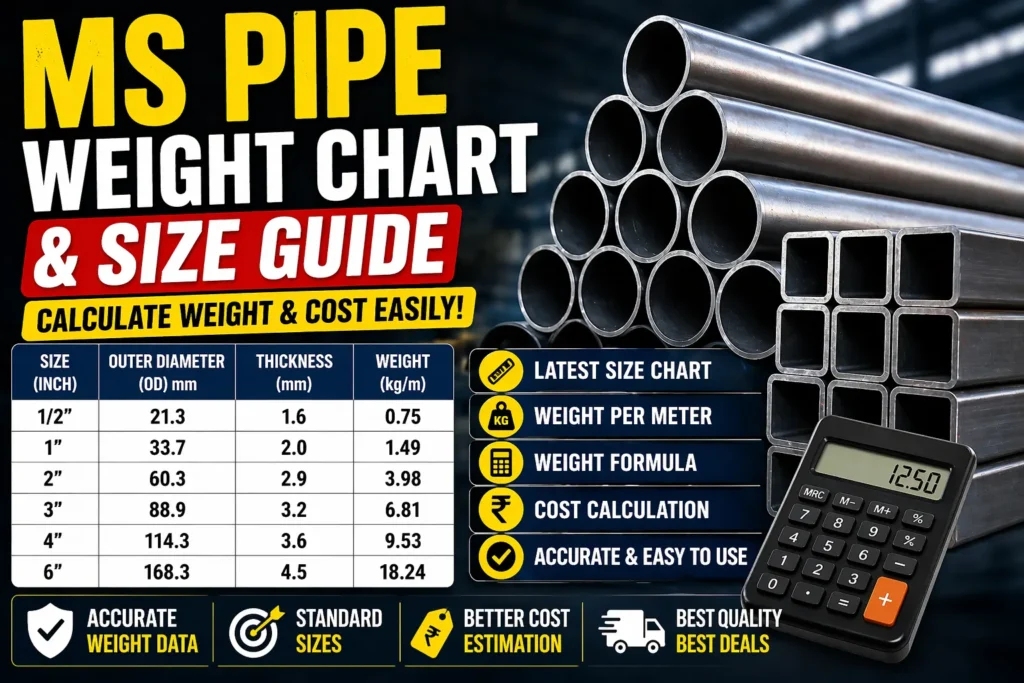
This is why industrial buyers regularly use professional MS Pipe Weight Calculator tools before finalizing bulk orders.
You can also explore our detailed MS Pipe Weight Chart & Size Guide 2026 to understand how thickness affects theoretical weight, transportation planning, and project costing.
Why Pipe Thickness is Important in Construction
Structural Safety
Incorrect thickness can weaken entire steel structures.
Builders and engineers select thickness according to:
- Building load
- Height
- Environmental conditions
- Structural design
Better Welding Performance
Thicker pipes often provide stronger welding joints for industrial fabrication.
This is especially important in:
- Warehouses
- Factory structures
- Industrial machinery
- Support systems
Improved Durability
Thicker pipes generally last longer because they resist:
- Bending
- Cracking
- Corrosion damage
- Structural stress
How Industrial Buyers Select Pipe Thickness
Based on Application
Different industries require different thicknesses.
Construction Industry
Medium and heavy pipes are preferred.
Furniture Industry
Light pipes are sufficient.
Industrial Plants
Heavy-duty pipes are commonly used.
Based on Load Requirement
The higher the load-bearing requirement, the thicker the pipe needed.
For example:
- Roof support structures need stronger pipes
- Warehouse columns require heavy sections
- Small fabrication items can use lighter pipes
Based on Budget
Pipe thickness directly impacts project cost.
Thicker pipes:
- Use more steel
- Cost more
- Increase freight expenses
However, reducing thickness only to save money can create safety risks later.
Common Pipe Thickness Standards in India
ISI Standards for MS Pipes
Most professional buyers prefer ISI-certified pipes because they maintain better dimensional accuracy.
Standard thickness classifications include:
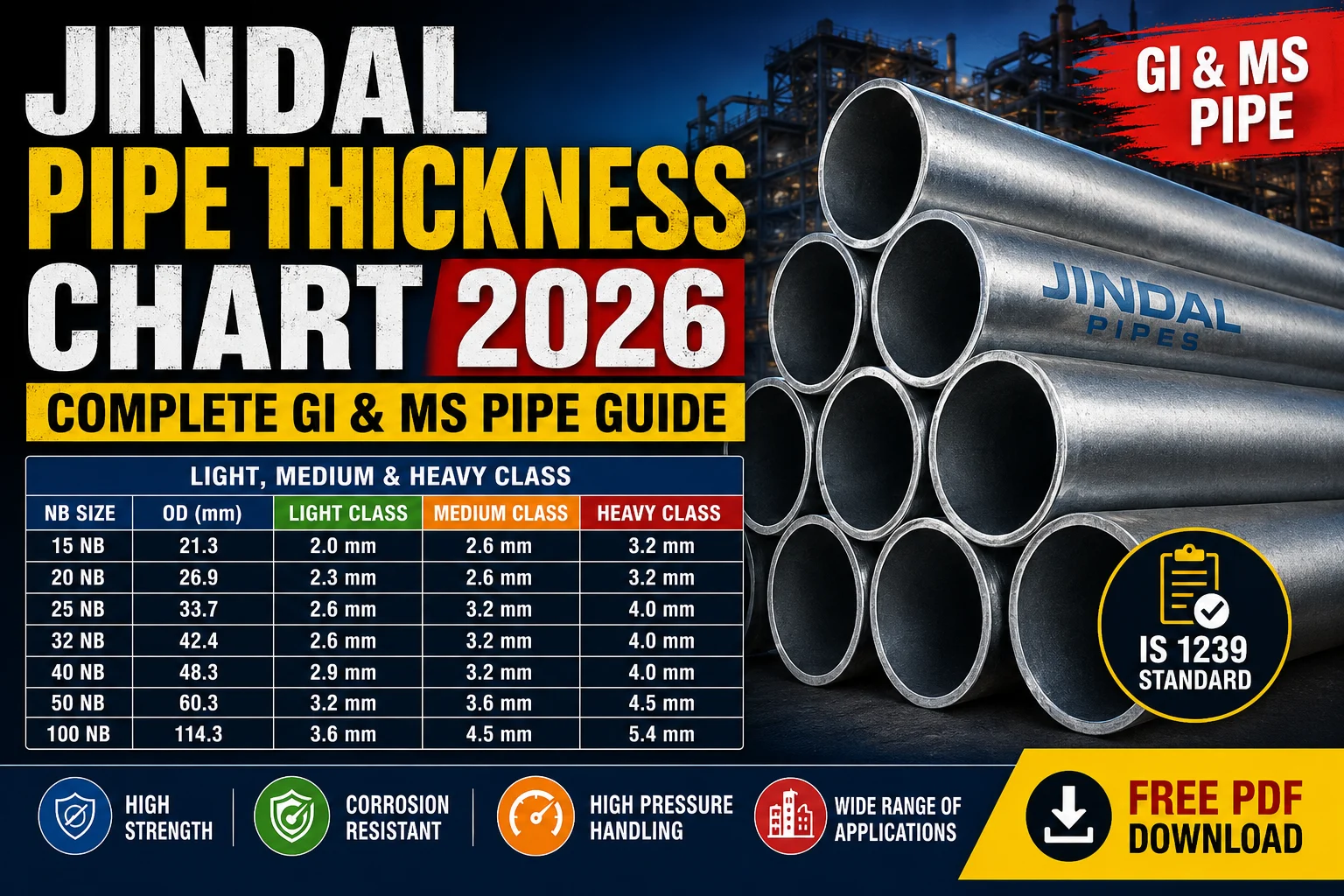
- Light Class
- Medium Class
- Heavy Class
These standards help buyers maintain quality consistency across projects.
Reliable suppliers like Deal On Steel Industries usually provide proper documentation, GST billing, and specification support for industrial buyers.
Common Mistakes Buyers Make While Selecting Pipe Thickness
Choosing Thickness Only Based on Price
Some buyers purchase thinner pipes only because they are cheaper.
This often leads to:
- Pipe bending
- Structural weakness
- Welding failure
- Higher maintenance costs
Ignoring Weight Verification
Underweight material is still a major issue in the Indian steel market.
Professional buyers always compare:
- Pipe dimensions
- Thickness
- Weight per meter
- Brand specifications
Not Understanding Project Requirements
Different applications require different thickness levels.
Using light pipes in heavy industrial structures can become dangerous over time.
Pipe Thickness and ERW Pipe Performance
Why Thickness Matters in ERW Pipes
ERW pipes are widely used in India because they are economical and easily available.
However, thickness selection is critical in ERW pipe performance.
Thicker ERW pipes provide:
- Better structural stability
- Higher load capacity
- Improved durability
- Better welding strength
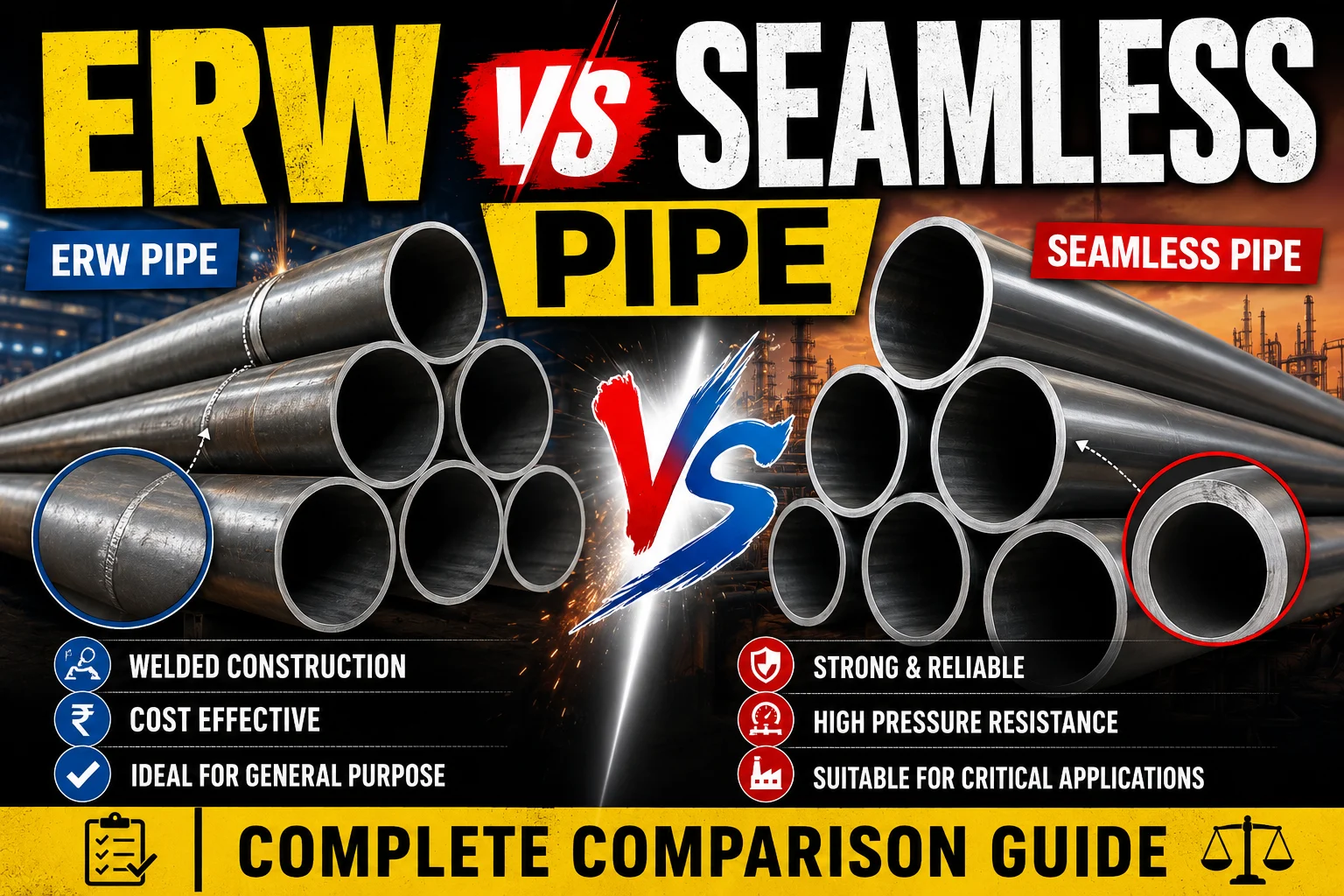
Buyers confused between welded and seamless pipe selection can read our detailed comparison on MS ERW Pipes vs Seamless Pipes in 2026 to understand which option works better for different industrial applications.
Latest MS Pipe Industry Trends in 2026
Growing Demand for Heavy Structural Pipes
In 2026, India is witnessing strong growth in:
- Warehousing
- Metro projects
- Industrial parks
- Infrastructure development
- Logistics hubs
This has increased demand for heavy-thickness MS pipes across India.
Rising Demand for Branded Pipes
Industrial buyers now prefer branded products because they offer:
- Better thickness consistency
- Improved quality control
- Accurate weight
- Better load performance
Increased Focus on Quality Verification
B2B procurement teams are now more aware about:
- Pipe specifications
- Thickness verification
- Weight standards
- Material testing
This trend is improving overall quality awareness in the steel industry.
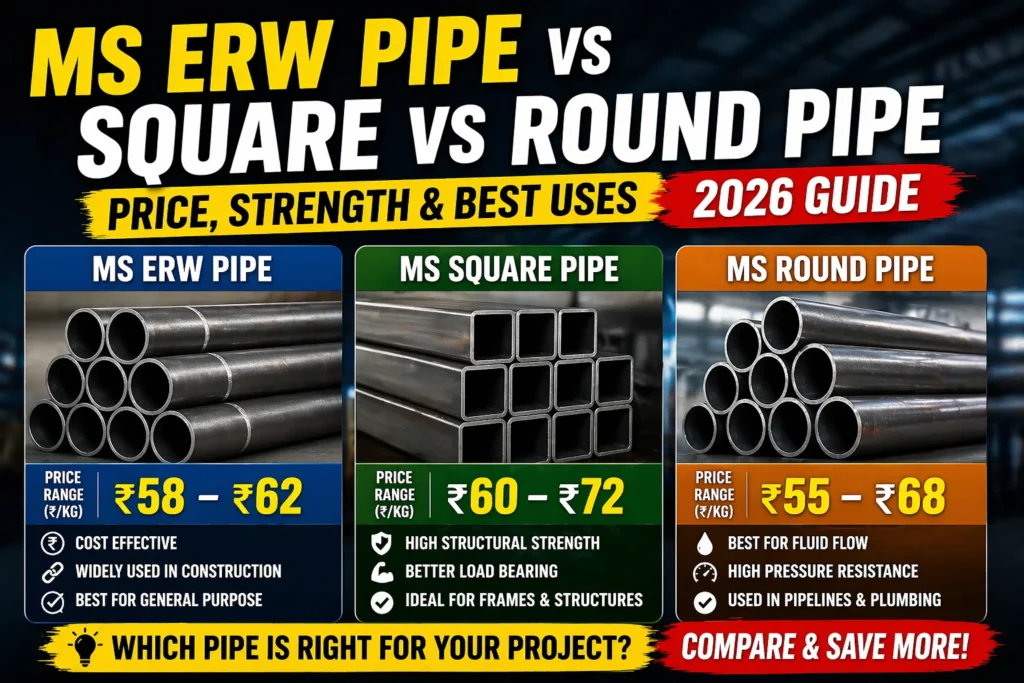
For businesses tracking market pricing trends, our detailed guide on MS ERW Pipe Price in India 2026 explains how pipe thickness, raw material cost, and steel demand impact overall pipe pricing. you can explore a full detailed guide on ERW Pipes.
How to Verify MS Pipe Thickness Before Buying
Use Vernier Calipers
Industrial buyers often use measuring tools to verify actual thickness.
Check Mill Test Certificates
Always request proper documentation from suppliers.
Compare Standard Weight
Pipe weight can help identify incorrect thickness.
If the pipe weight is lower than standard, the thickness may also be incorrect.
Buy from Trusted Suppliers
Reliable suppliers reduce the risk of underweight or substandard material.
Experienced suppliers like Deal On Steel Industries help buyers maintain proper industrial quality standards with accurate material specifications and transparent supply processes.
Future of MS Pipe Industry in India
Strong Growth Beyond 2026
India’s infrastructure expansion continues to increase steel demand rapidly.
Major growth sectors include:
- Smart cities
- Solar structures
- Warehousing
- Commercial real estate
- Industrial automation
- Transportation infrastructure
Because of this, demand for properly graded and accurately thick MS pipes will continue growing in the coming years.
Conclusion
The right pipe thickness plays a major role in construction quality, industrial safety, project durability, and long-term performance. In 2026, professional B2B buyers are focusing more on thickness verification, weight accuracy, and industrial quality standards before placing bulk orders.
Whether you are handling fabrication work, infrastructure projects, industrial structures, or commercial construction, understanding the correct MS pipe thickness can help you avoid major operational and structural problems later.
Trusted suppliers like Deal On Steel Industries help businesses choose the right pipe specifications according to application, budget, and industrial standards while maintaining reliable quality and supply consistency.
FAQs
What is the standard thickness of MS pipes?
Standard MS pipe thickness usually ranges from 1.2 mm to 6 mm depending on pipe size and industrial application.
Why is pipe thickness important?
Pipe thickness affects strength, weight, durability, load capacity, and welding performance.
How can I verify MS pipe thickness?
You can verify thickness using measuring tools, standard weight charts, and mill test certificates.
Which pipe thickness is best for construction?
Medium and heavy class pipes are commonly preferred for construction and industrial structures.
Does thicker pipe mean better quality?
Not always, but thicker pipes usually provide higher strength and durability for heavy-duty applications.
About Company
Deal On Steel Industries Pvt. Ltd. has established itself as a leading provider of high-quality stainless steel pipes in India. We are dedicated to exceeding client expectations by delivering superior products, believing this is the definitive path to success.
Most Recent Posts
- All Posts
- Boiler tubes
- Jindal pipes
- Kolkata
- mild Steel
- Ms erw Pipes
- MS Pipes
- Seamless Boiler Tubes
- Stainless Steel Coils
- stainless steel fittings
- Stainless steel Flanges
- Stainless Steel Pipes
- Stainless steel sheets
- Stainless steel Tubes
- Steel Prices
- Trending Steel
- Back
- Alloy Steel Boiler Tubes
- Carbon Steel Boiler Tubes
- Stainless Steel Boiler Tubes
- Jindal Boiler Tubes
- TATA Boiler Tubes
- ERW Boiler Tubes
- Back
- TATA Boiler tubes