Will Steel Prices Fall in 2026?
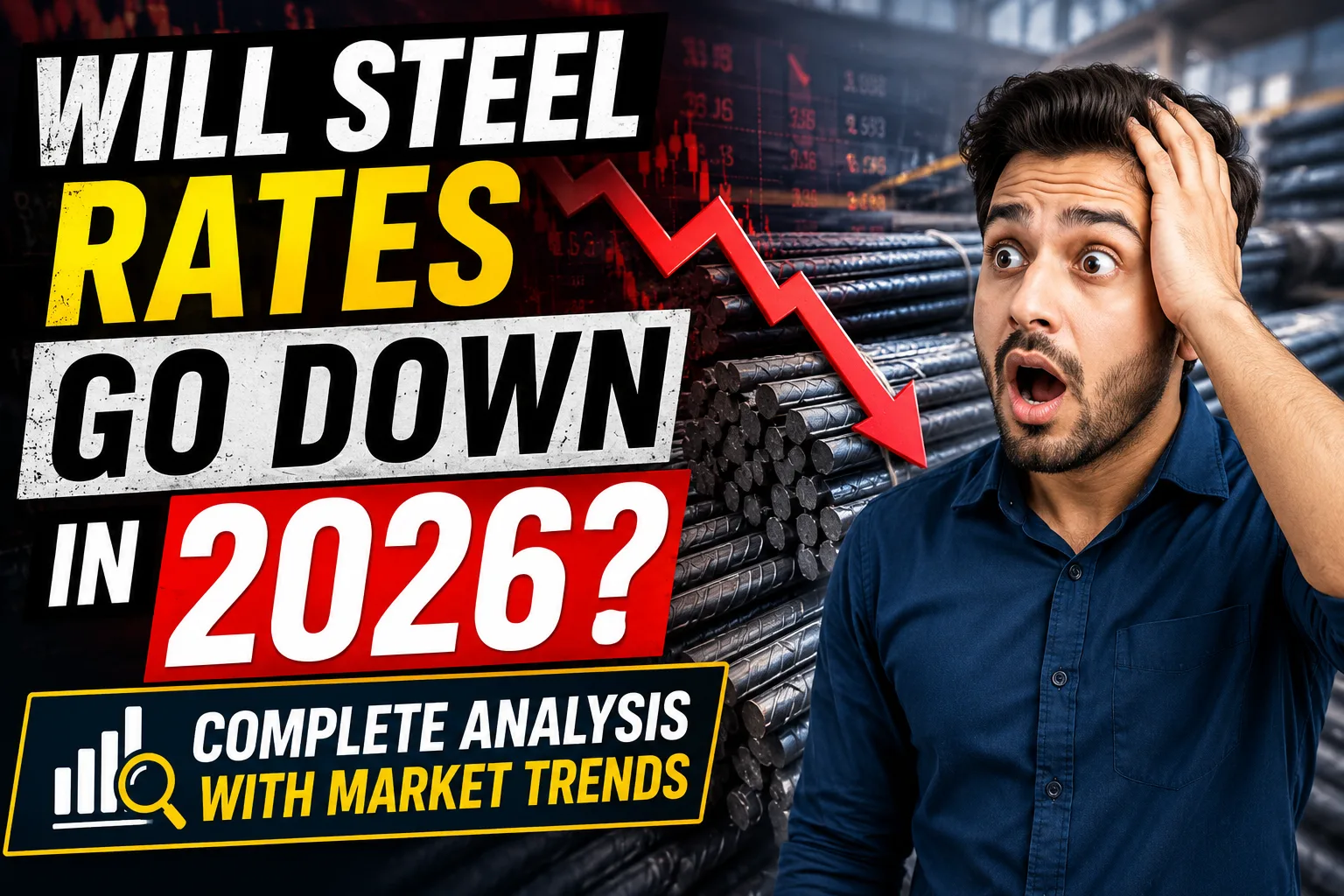
Steel prices in India are unlikely to fall sharply in 2026. While short-term corrections and minor fluctuations may occur, strong infrastructure demand, rising raw material costs, government policies, and global supply pressures are expected to keep prices relatively firm throughout the year.
-
Will Steel Prices Fall in 2026?
- Introduction
- Why Steel Prices Matter in Construction & Industrial Projects
- Steel Price Trend: What Happened Between 2020 and 2026?
- Will Steel Prices Actually Fall in 2026?
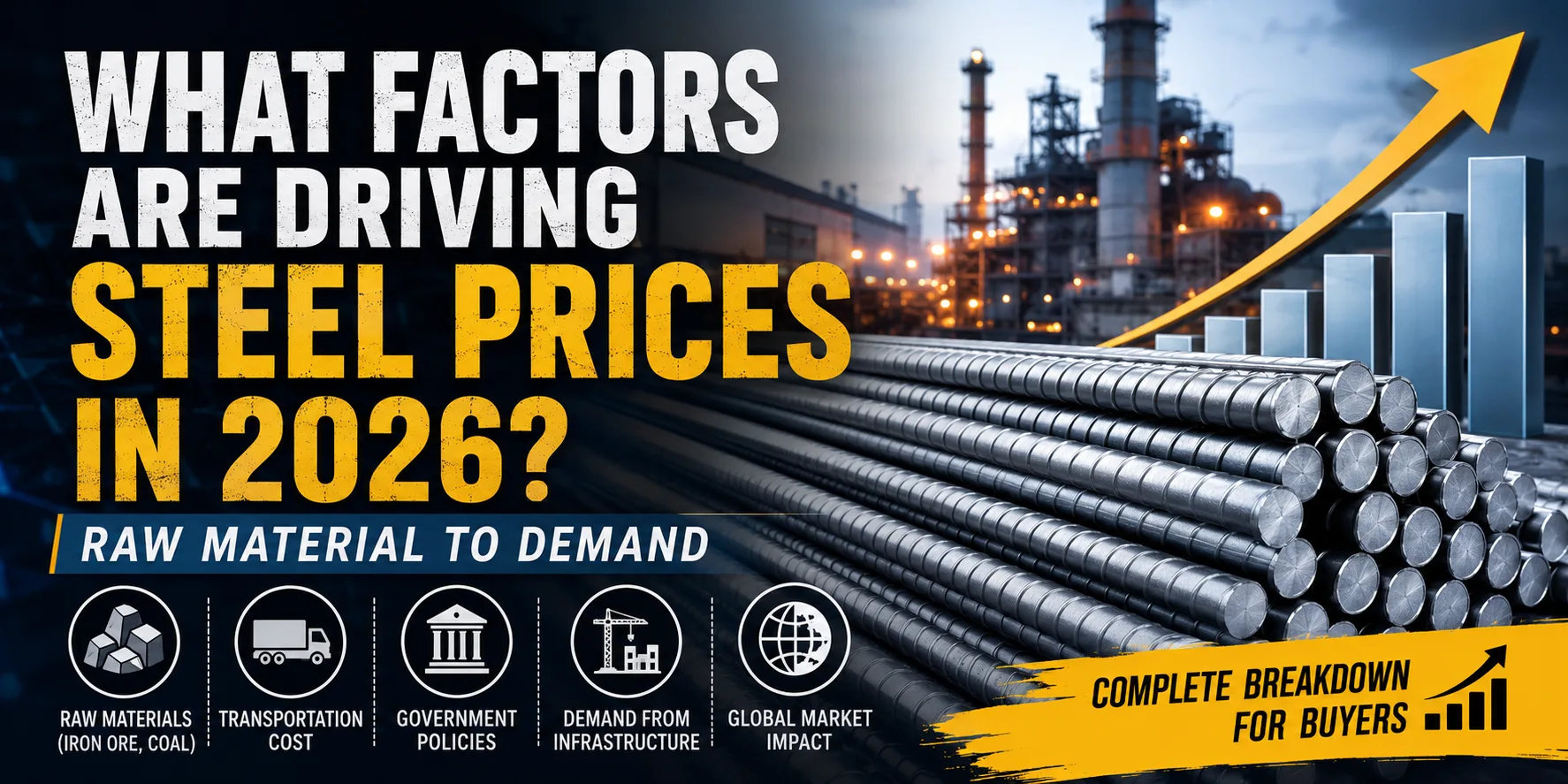
- 7 Major Factors Affecting Steel Prices in 2026
- Steel Price Forecast 2026 (Quarter-by-Quarter Analysis)
- Expected Steel Price Range in India During 2026
- Will MS Pipe & GI Pipe Prices Fall in 2026?
- Expert Market Opinions on Steel Prices
- Should Contractors Wait for Lower Steel Prices?
- How Industrial Buyers Can Reduce Steel Costs in 2026
- Final Conclusion
- Frequently Asked Questions (FAQs)
Introduction
In 2026, contractors, builders, and industrial buyers across India are facing a common challenge — uncertainty in steel pricing. Many are delaying purchases, hoping for a price drop, while others are struggling to lock budgets due to market volatility. Whether you are dealing with MS pipes, GI pipes, TMT bars, or structural steel, price movement directly impacts your project cost and profit margins. This guide will help you understand the real market situation, future predictions, and whether you should wait or buy now. For a deeper understanding of the overall market dynamics, you can also read our main guide “Why Steel Prices Are Increasing in 2026”, along with supporting insights like “Steel Price Trend in India (2020–2026)” and “TMT Bar Price Trend 2026”.
Why Steel Prices Matter in Construction & Industrial Projects
Steel is one of the most critical cost components in construction and industrial projects. Even a small price change can significantly impact overall expenses. For contractors, steel pricing directly affects project budgeting and tender pricing. When prices rise unexpectedly, profit margins shrink. For builders, it influences the cost of residential and commercial projects, often leading to delays or redesigns. In industrial sectors like fabrication and manufacturing, steel costs determine production expenses and competitiveness. Transportation and logistics also play a role, as freight costs add to the final price. A key point to understand is that even a ₹2–₹5 per kg increase in steel prices can result in lakhs of rupees in additional cost for large-scale projects.
If you regularly track pricing, referring to updated benchmarks like Jindal Pipes Price List can help you stay aligned with market trends.
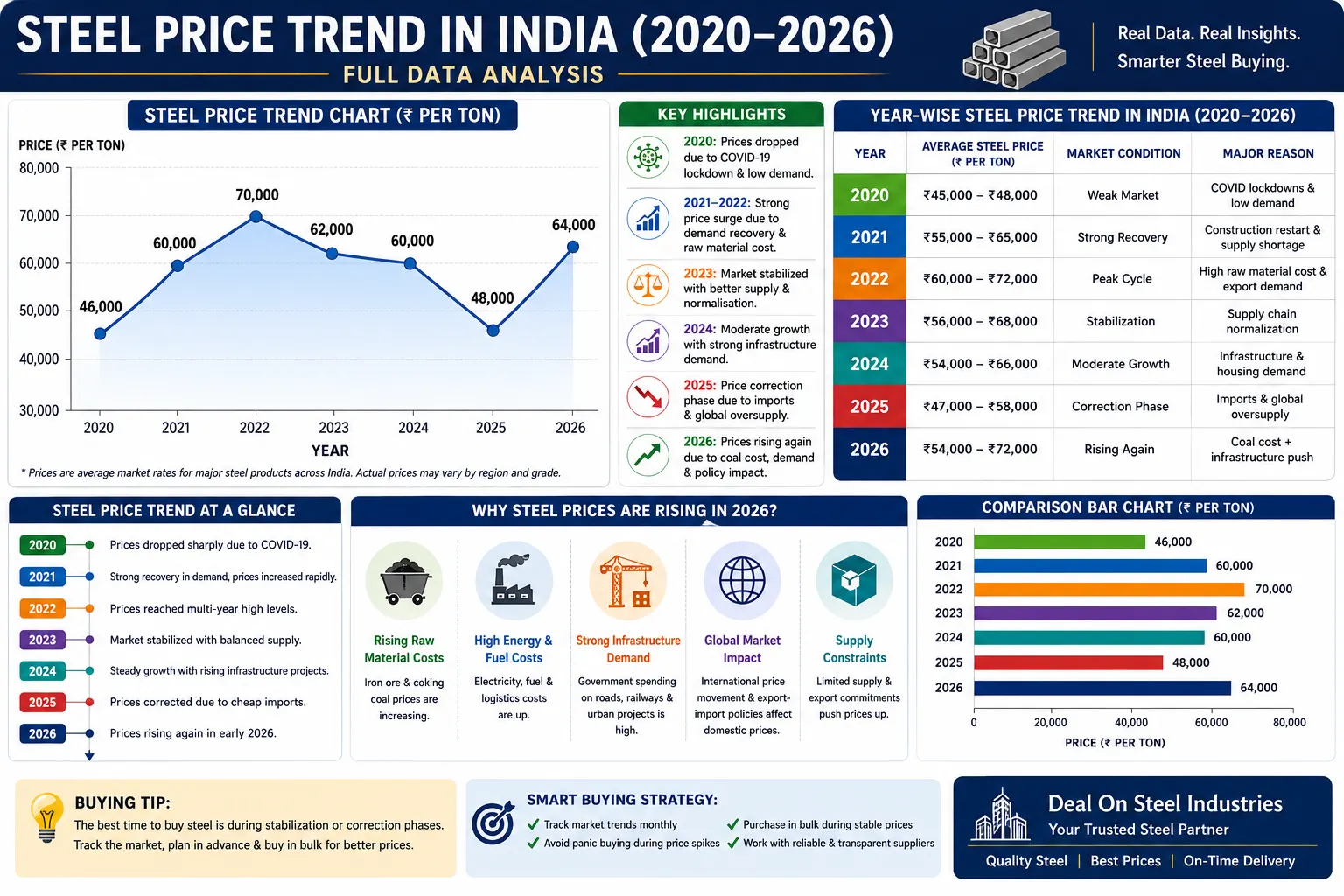
Steel Price Trend: What Happened Between 2020 and 2026?
Pandemic Price Boom (2020–2022)
During the COVID-19 pandemic, steel prices saw a sharp increase. This was mainly due to supply chain disruptions, labor shortages, and rising raw material costs. Logistics issues and reduced production capacity created a supply shortage, while demand started recovering faster than expected. This imbalance caused prices to spike significantly.
Correction Phase (2023–2024)
After the boom, the market entered a correction phase. Global demand slowed down, especially due to reduced activity in China. Oversupply in some regions also contributed to price stabilization. As a result, steel prices softened during this period, giving temporary relief to buyers.
Stabilization & Recovery (2025–2026)
From 2025 onwards, the market began stabilizing. Infrastructure projects picked up pace in India, and demand started increasing again. India is now considered one of the fastest-growing steel markets globally. This growth, combined with steady demand, has kept prices stable with an upward bias.
Will Steel Prices Actually Fall in 2026?
Temporary price dips are possible in 2026, but a major crash in steel prices is highly unlikely.
Why Major Price Drops Are Unlikely
India is currently witnessing massive infrastructure development. Projects related to highways, railways, industrial corridors, and housing are driving strong demand. Government initiatives like PM Gati Shakti are accelerating construction activity across the country. This continuous demand creates a strong base for steel consumption. At the same time, manufacturing expansion and urbanization are increasing the need for steel products. These factors make it difficult for prices to fall significantly.
7 Major Factors Affecting Steel Prices in 2026
1. Infrastructure Demand in India
India’s infrastructure growth is one of the biggest drivers of steel demand. Projects such as highways, metro systems, warehouses, and factories require massive quantities of steel. Steel demand in India is expected to grow by around 8–9% in 2026, which will support stable pricing.
2. Raw Material Costs
Steel production depends heavily on raw materials like iron ore, coking coal, scrap, and zinc. If these input costs increase, steel prices also rise. For example, rising zinc prices directly impact the cost of GI pipes, making them more expensive.
3. Global Supply Chain Issues
Global factors such as geopolitical tensions, freight costs, and port delays also influence steel prices. Conflicts in regions like West Asia can disrupt supply chains, leading to price volatility.
4. Chinese Steel Exports
China plays a major role in the global steel market. If China exports excess steel at lower prices, it can create downward pressure. However, this also leads to protective measures by India to support domestic manufacturers.
5. Government Import Duties & Policies
The Indian government often introduces safeguard duties and anti-dumping policies to protect domestic steel producers. These measures help maintain price stability and prevent sharp declines.
6. Construction & Real Estate Growth
The growth of housing projects, commercial buildings, and industrial parks increases steel demand. Construction costs are expected to rise by 3–5% in 2026, partly due to steel pricing.
7. Energy & Transportation Costs
Steel production and transportation require significant energy. Rising diesel prices, electricity costs, and freight charges all contribute to higher steel prices.
Steel Price Forecast 2026 (Quarter-by-Quarter Analysis)
Q1 2026
The year started with price stabilization and moderate recovery after previous fluctuations.
Q2 2026
Demand increased due to infrastructure projects, leading to firmer prices.
Q3 2026
During the monsoon season, construction activity may slow down, causing temporary corrections in prices.
Q4 2026
Festive demand and increased infrastructure spending are expected to push prices upward again.
Expected Steel Price Range in India During 2026
| Product | Expected Price Trend |
|---|---|
| TMT Bars | Stable to Moderately Higher |
| MS Pipes | Slightly Volatile |
| GI Pipes | Higher due to zinc costs |
| Structural Steel | Strong Demand |
| SS 304 Pipes | Premium Segment Stable |
Steel prices may vary depending on location, transportation cost, and supplier availability.
Will MS Pipe & GI Pipe Prices Fall in 2026?
MS Pipe Outlook
MS pipe prices are expected to remain moderately stable. They are closely linked to hot rolled coil (HRC) prices, which are not expected to fall significantly.
GI Pipe Outlook
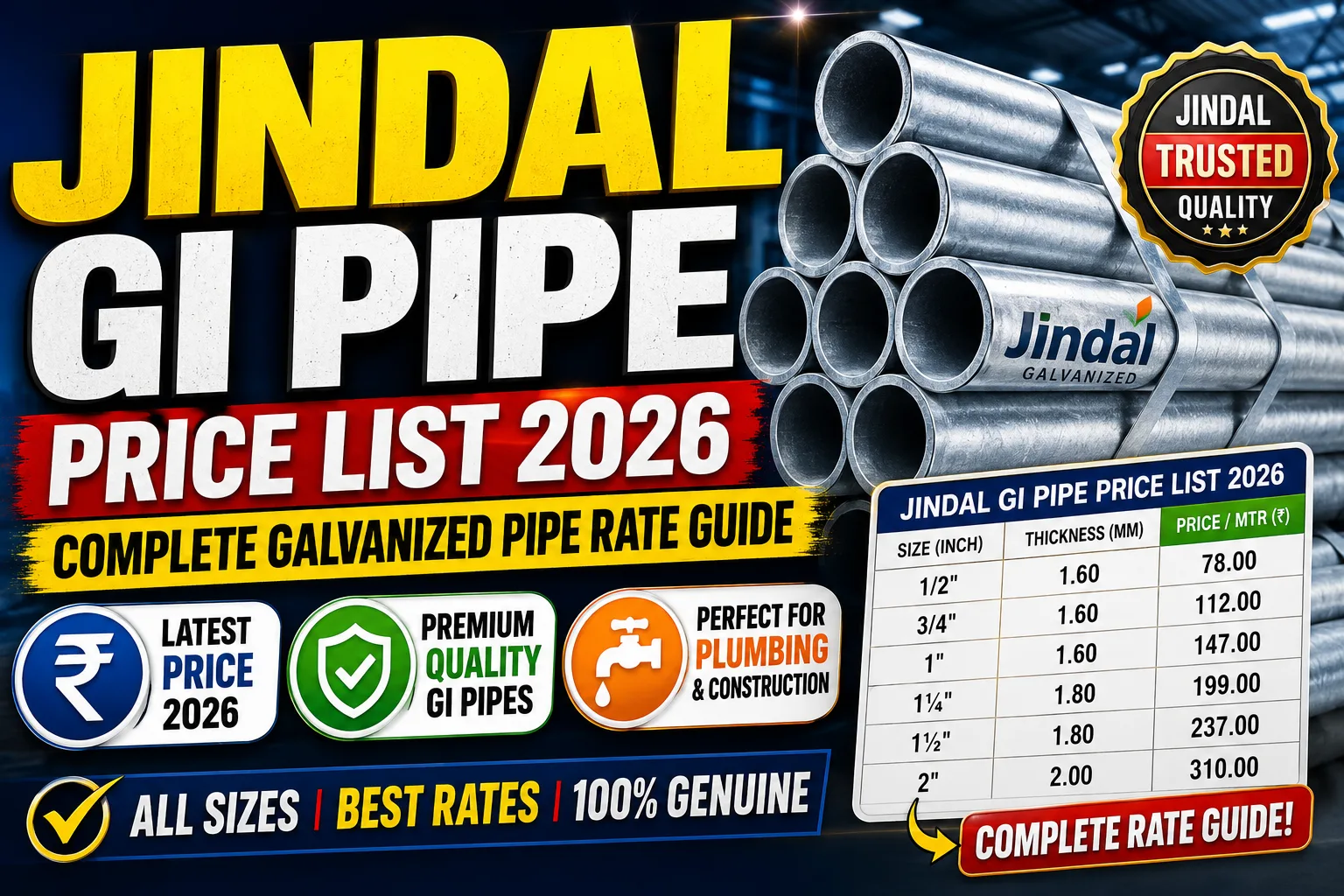
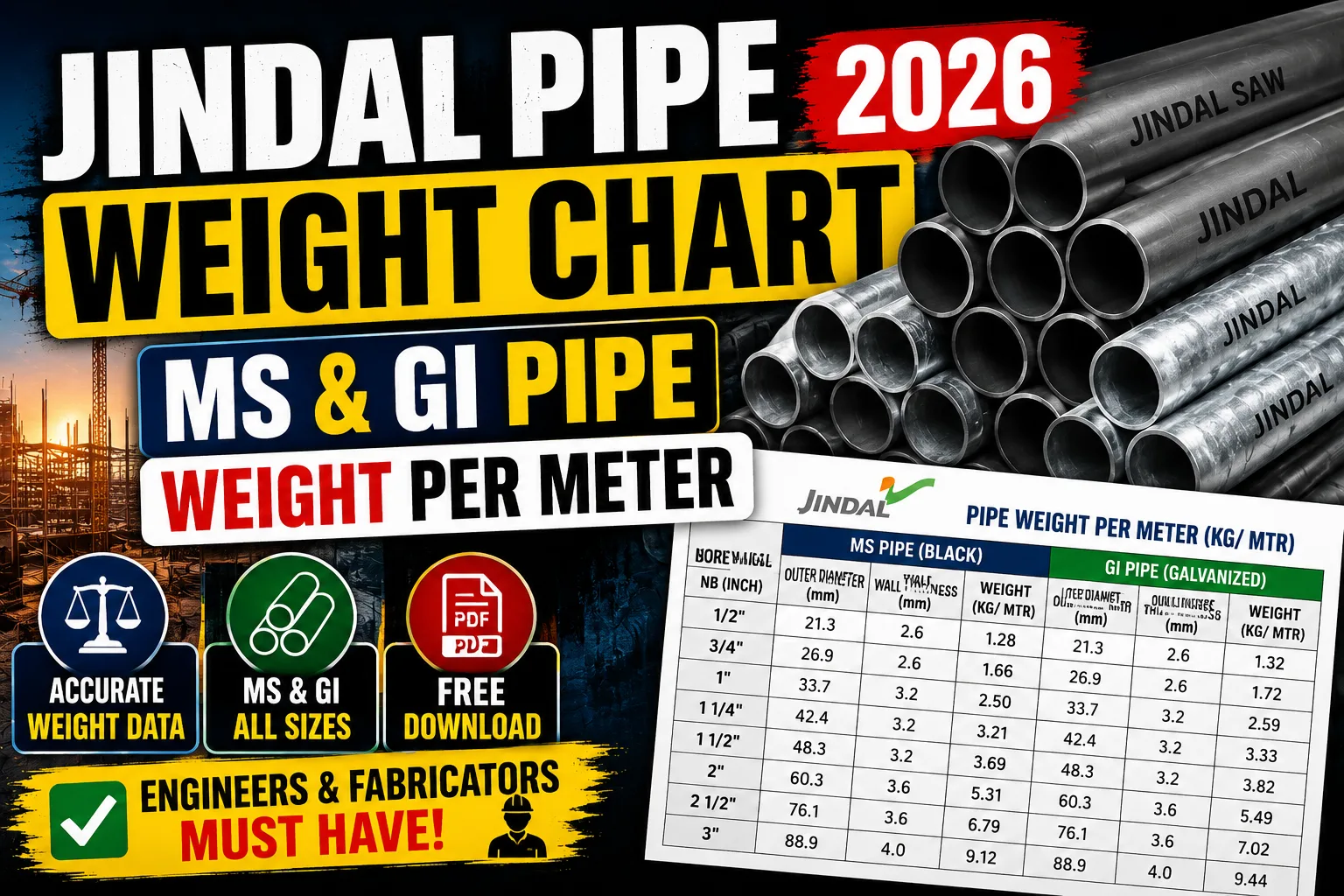
GI pipe prices are more sensitive due to zinc costs. Since zinc is trading near multi-year highs, GI pipe prices may remain elevated. You can track updates through resources like the Jindal GI Pipe Price List and technical references such as Jindal Pipe Weight Chart.
Expert Market Opinions on Steel Prices
Major industry players like Tata Steel have shown optimism about future demand.
Experts believe that strong consumption growth and infrastructure expansion will continue to support steel prices. Early signs of price recovery are already visible in the market. Companies like Pipe & Sections Pvt Pvt are also observing consistent demand from contractors and industrial buyers, indicating a stable market outlook.
Should Contractors Wait for Lower Steel Prices?
Waiting for prices to fall can be risky. The market is highly unpredictable, and delays in procurement can lead to project cost overruns.
Contractors who delay purchases may face:
- sudden price increases
- project delays
- budget miscalculations
Best Buying Strategy
Instead of waiting, buyers should focus on smart procurement strategies:
- phased purchasing
- bulk booking during dips
- regular market monitoring
- locking supplier quotations
This approach reduces risk and ensures cost control.
How Industrial Buyers Can Reduce Steel Costs in 2026
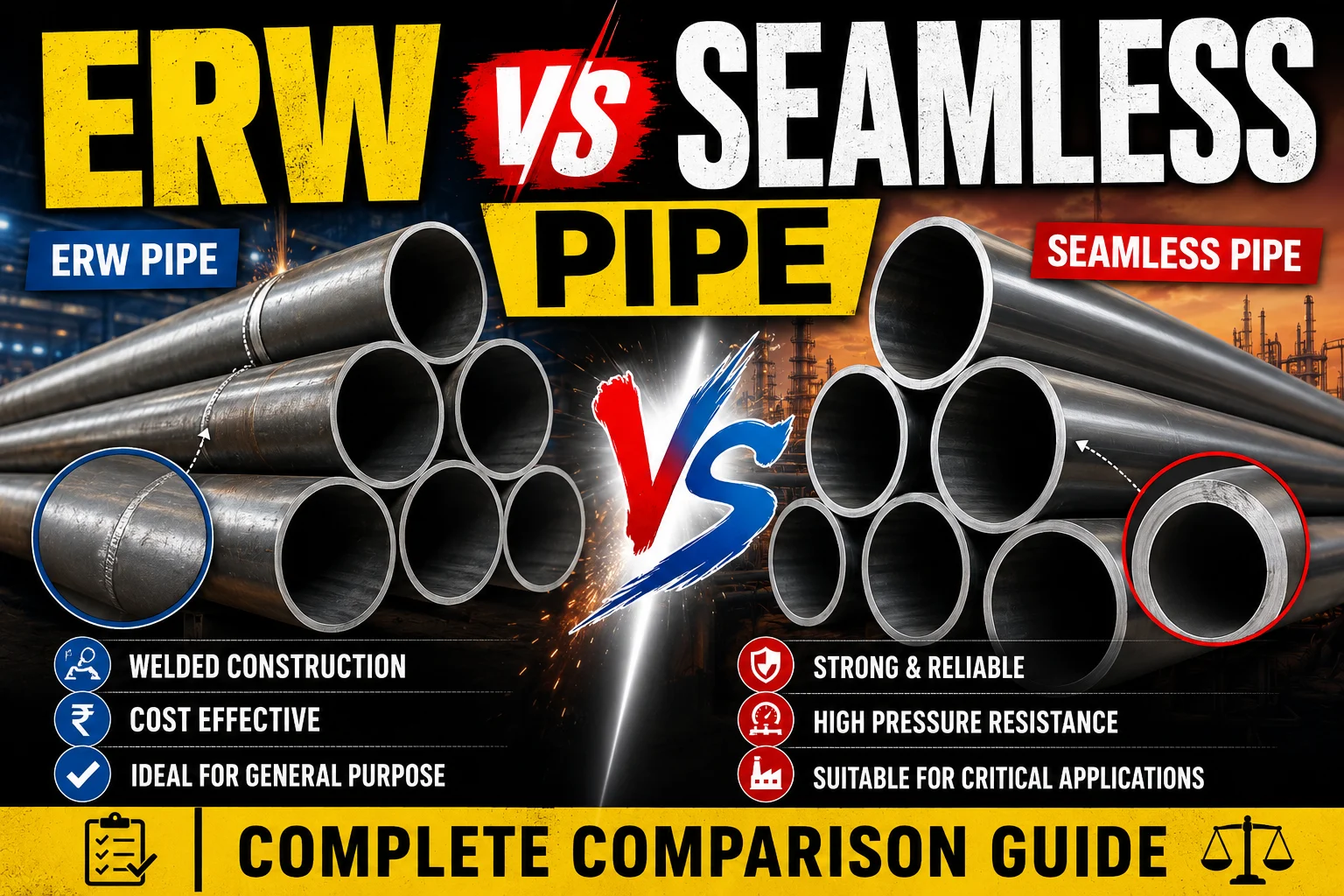
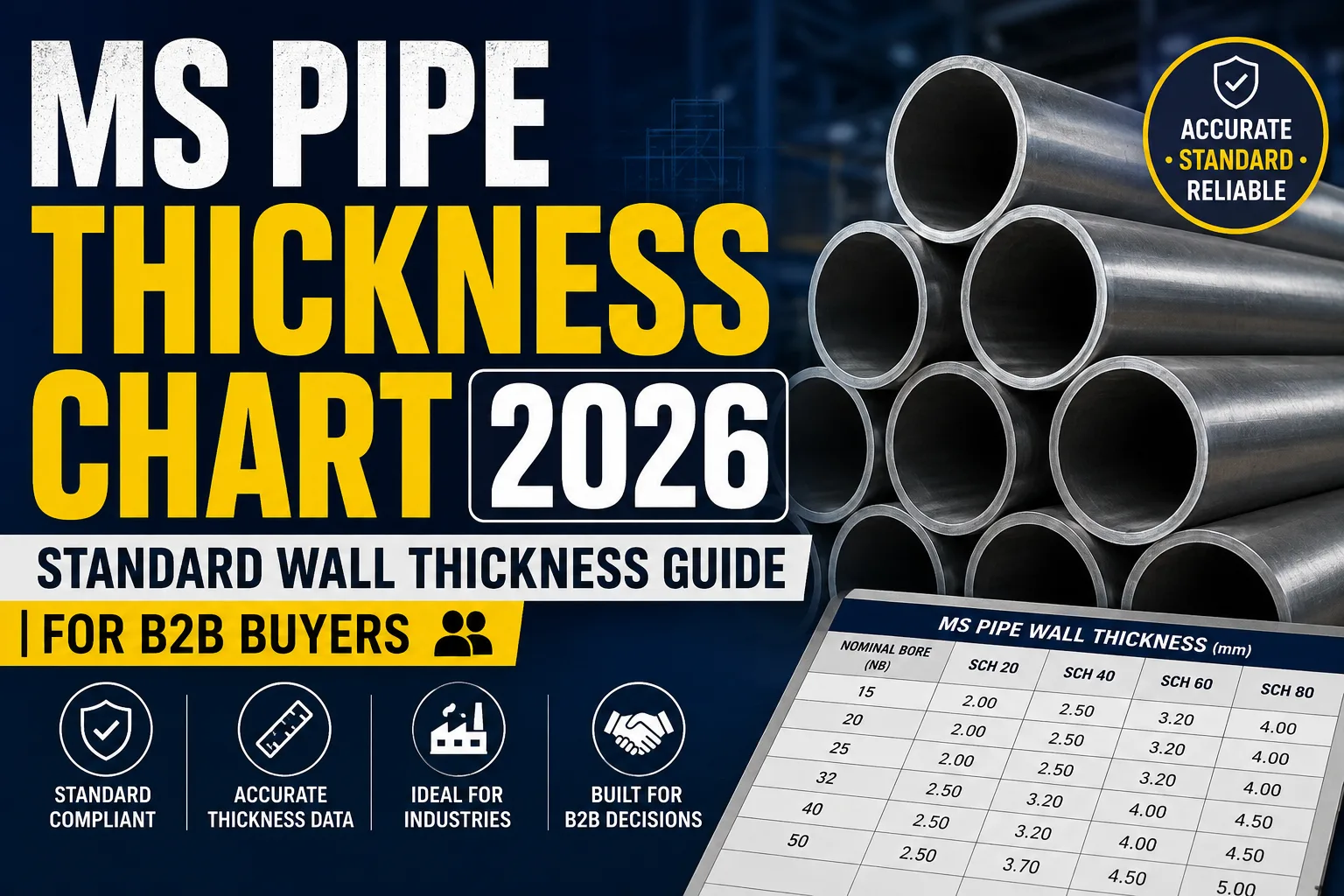
Industrial buyers can optimize costs by adopting strategic purchasing methods. Buying during temporary corrections can help reduce expenses. Combining shipments lowers transportation costs, while optimizing specifications prevents unnecessary spending. Avoiding over-specification and sourcing locally are also effective ways to control costs. For better decision-making, you can refer to technical guides like MS Pipe Sizes Explained, Pipe Thickness Chart, and ERW vs Seamless Pipe.
Final Conclusion
While temporary corrections may occur, the overall steel market outlook for 2026 remains strong. Infrastructure expansion, rising industrial demand, increasing raw material costs, and government protection policies are all supporting price stability. Instead of waiting for a major price drop, buyers should focus on strategic purchasing and market awareness. This approach will help contractors, builders, and industrial buyers manage costs effectively and avoid unnecessary risks in a volatile market.
Frequently Asked Questions (FAQs)
Will steel prices go down in 2026?
Steel prices may see short-term corrections, but a major fall is unlikely.
Why are steel prices increasing in India?
Due to strong demand, rising raw material costs, and infrastructure growth.
Is 2026 a good time to buy steel?
Yes, but smart purchasing strategies should be followed.
Will TMT bar prices rise again?
They are expected to remain stable with slight upward movement.
What affects GI pipe prices the most?
Zinc prices have the biggest impact.
Are steel prices linked to global markets?
Yes, global demand and supply conditions influence pricing.
Will construction costs increase in 2026?
Yes, by around 3–5% due to rising material costs.
Should contractors wait before buying steel?
Waiting is risky; phased buying is a better approach.
About Company
Deal On Steel Industries Pvt. Ltd. has established itself as a leading provider of high-quality stainless steel pipes in India. We are dedicated to exceeding client expectations by delivering superior products, believing this is the definitive path to success.
Most Recent Posts
- All Posts
- Boiler tubes
- Jindal pipes
- Kolkata
- mild Steel
- Ms erw Pipes
- MS Pipes
- Seamless Boiler Tubes
- Stainless Steel Coils
- stainless steel fittings
- Stainless steel Flanges
- Stainless Steel Pipes
- Stainless steel sheets
- Stainless steel Tubes
- Steel Prices
- Trending Steel
- Back
- Alloy Steel Boiler Tubes
- Carbon Steel Boiler Tubes
- Stainless Steel Boiler Tubes
- Jindal Boiler Tubes
- TATA Boiler Tubes
- ERW Boiler Tubes
- Back
- TATA Boiler tubes