Iron Ore & Coal Prices Impact on Steel Rates (2026 Guide)
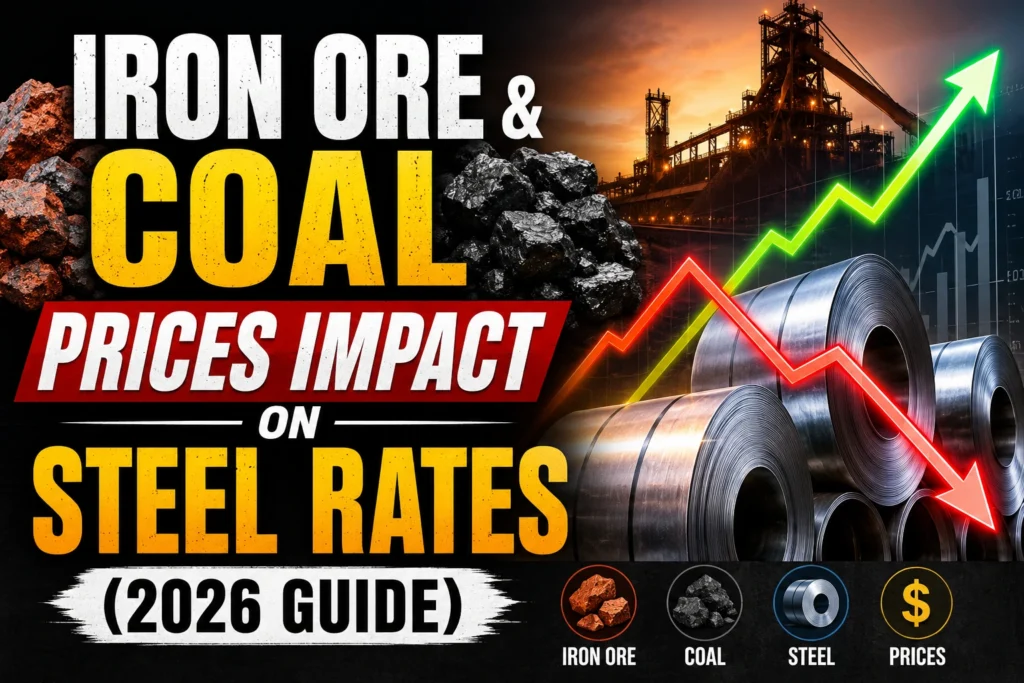
Steel prices in 2026 are increasing mainly because the cost of iron ore and coal has gone up sharply. These two raw materials make up the majority of steel production cost. When their prices rise due to global demand, supply issues, and logistics costs, steel manufacturers increase prices, directly impacting buyers, contractors, and industries.
-
Iron Ore & Coal Prices Impact on Steel Rates (2026 Guide)
- Introduction
- Steel Production Basics (Simple Explanation)
- Iron Ore Price Trend (2020–2026)
- Coal & Coke Price Trend (2026 Insights)
- Cost Breakdown of Steel Production (%)
- Real Example Calculation (Simple Understanding)
- How This Impacts Buyers and Construction Projects
- Smart Buying Strategy in 2026
- Future Outlook for Steel Prices
- Conclusion
- Will Steel Rates Go Down in 2026? Complete Analysis with Market Trends
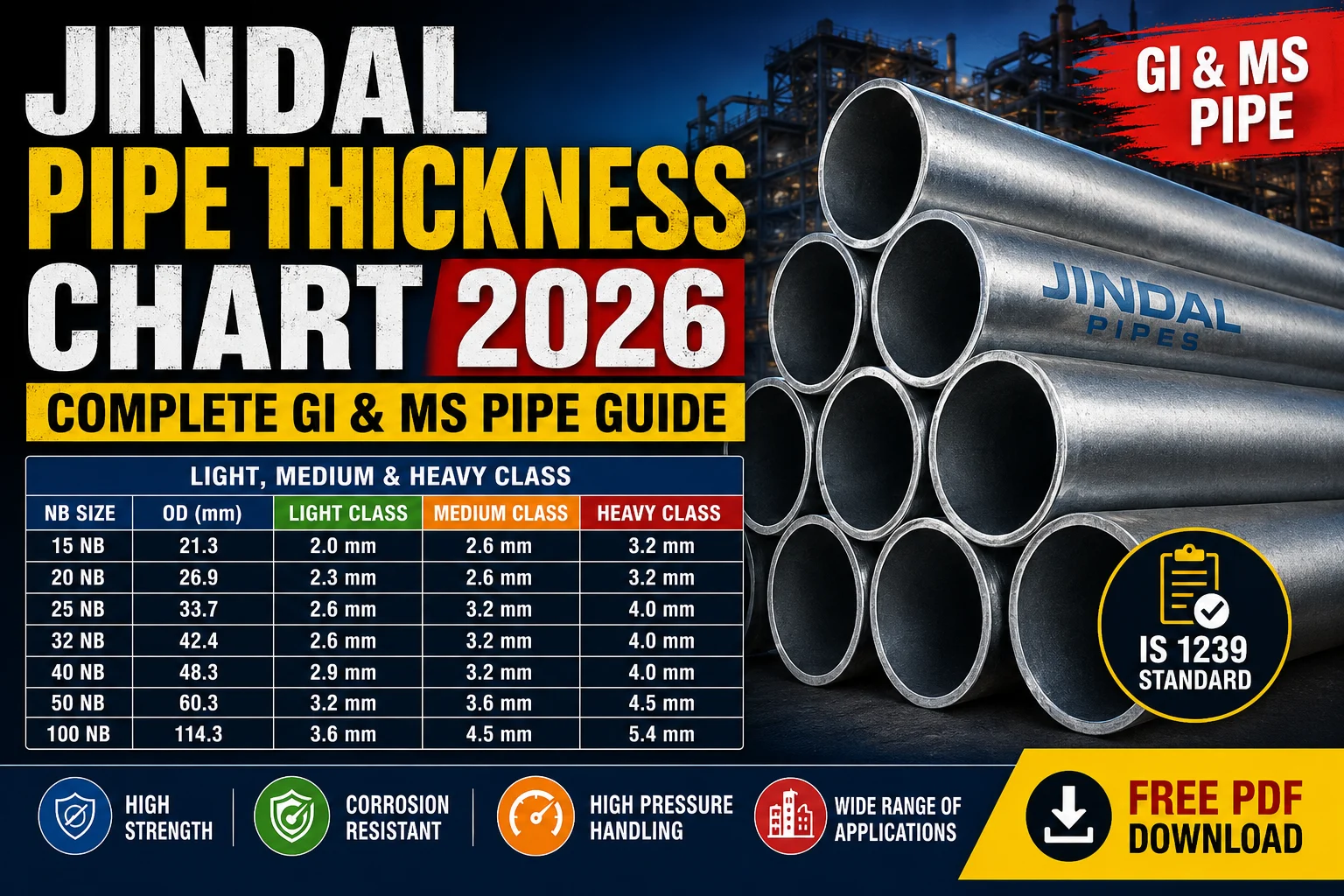
- Jindal Pipe Thickness Chart 2026 – Light Medium & Heavy Class Guide
- ERW vs Seamless Pipe – Complete Comparison Guide
- Jindal SS 304 Pipe Price List 2026 – Latest Stainless Steel Pipe Rates
- Jindal MS Pipe Price List 2026 – Complete Mild Steel Pipe Rate Guide
- Jindal GI Pipe Price List 2026 – Complete Galvanized Pipe Rate Guide
- Jindal Pipe Weight Chart 2026 – MS & GI Pipe Weight Per Meter
- Government Policies & Steel Prices 2026: Taxes, Duties & Impact
Introduction
Steel pricing is not random — it is deeply connected to raw materials, global markets, and production costs. In 2026, one of the biggest reasons behind rising steel prices is the increase in iron ore and coal prices. These are the two most critical inputs required to produce steel, and any fluctuation in their cost has a direct impact on the final price of steel products. For buyers, contractors, and procurement managers, understanding this connection is essential. Without knowing why prices are rising, it becomes difficult to plan purchases, manage budgets, or negotiate better deals. At Deal On Steel Industries, we regularly analyze market trends to help buyers make informed decisions in a volatile pricing environment. If you want a broader understanding of all the factors affecting steel prices this year, you should also read our detailed guide:
👉 Why Steel Prices Are Increasing in 2026? Complete Market Breakdown for Buyers.
Steel Production Basics (Simple Explanation)
To understand how iron ore and coal affect steel prices, you first need a basic idea of how steel is produced. The process may sound technical, but it can be understood in simple steps.
Steel production starts with iron ore, which is mined from the earth. This ore contains iron, but it is not pure and needs to be processed. On the other hand, coal, specifically coking coal, is used as a fuel and chemical agent to extract iron from the ore. Inside a blast furnace, iron ore, coke (processed coal), and limestone are heated at extremely high temperatures. During this process, oxygen is removed from the iron ore, producing molten iron. This molten iron is then refined further to remove impurities and convert it into steel.
The important point here is that iron ore provides the base metal, while coal provides the energy and chemical reaction needed to produce steel. Without either of these, steel production cannot take place. This is why changes in their prices directly impact the cost of manufacturing steel. For a deeper breakdown of price trends, you can check this analysis on steel price forecast 2026 in India.
Iron Ore Price Trend (2020–2026)
Iron ore is the primary raw material used in steel production, and its price trend plays a major role in determining steel rates. Over the past few years, iron ore prices have seen significant fluctuations due to global and domestic factors.
Between 2020 and 2021, iron ore prices increased sharply due to post-COVID recovery and strong demand from infrastructure and construction sectors. Countries like China increased steel production, which led to higher demand for iron ore globally. During 2022 and 2023, prices stabilized slightly, but they remained higher than pre-COVID levels. In 2024 and 2025, the market saw moderate stability, but costs were still elevated due to supply limitations and environmental regulations on mining activities. Now in 2026, iron ore prices are again rising due to a combination of factors such as increased demand, limited mining output, higher transportation costs, and export pressures. When iron ore becomes expensive, steel manufacturers have no choice but to increase their product prices to maintain profitability.
This long-term movement is also explained in detail in:
👉 Steel Price Trend in India (2020–2026): Full Data Analysis.
Coal & Coke Price Trend (2026 Insights)
Coal, especially coking coal, is the second most important raw material in steel production. While iron ore provides the metal, coal provides the energy required to extract and process that metal. India relies heavily on imported coking coal, which makes its price highly sensitive to global market conditions. In recent years, coal prices have been affected by supply chain disruptions, geopolitical tensions, and rising energy demand worldwide. In 2026, coal prices remain volatile and relatively high. Factors such as increased shipping costs, currency fluctuations, and limited global supply have added pressure on steel manufacturers. Since coal is used in large quantities in blast furnaces, even a small increase in its price significantly raises the cost of steel production. This means that when coal prices go up, the cost of running steel plants increases, and this cost is ultimately passed on to buyers in the form of higher steel prices.
Cost Breakdown of Steel Production (%)
To clearly understand the impact of iron ore and coal, it is important to look at the cost structure of steel production. Steel manufacturing involves multiple expenses, but raw materials account for the largest share. Typically, iron ore contributes around 35–40% of the total production cost, while coal (coke) contributes another 25–30%. This means that nearly 60–70% of the total cost of steel production depends on these two materials alone. The remaining cost includes energy, labor, plant operations, maintenance, and transportation. While these costs are also important, they do not fluctuate as dramatically as raw material prices.
This is why even a 10–20% increase in iron ore or coal prices can lead to a significant rise in steel prices. Manufacturers cannot absorb such large cost increases, so they pass them on to the market.
Real Example Calculation (Simple Understanding)
To make this concept clearer, let’s look at a simple real-world example. Suppose earlier the cost of producing one ton of steel was around ₹40,000. In this scenario, iron ore and coal together contributed around ₹25,000–₹28,000 of the total cost. Now in 2026, if iron ore prices increase by 30–40% and coal prices rise by a similar margin, the total production cost can easily increase to ₹48,000–₹50,000 per ton. To maintain margins, steel manufacturers will increase the selling price to around ₹55,000 per ton or even higher depending on market demand. This results in a direct price increase of ₹8,000–₹10,000 per ton for buyers.
This increase is clearly visible across different steel products like TMT bars, MS pipes, and structural steel. If you want product-specific insights, you can check:
👉 MS Pipe Price Increase 2026: Latest Rates & Market Insights.
How This Impacts Buyers and Construction Projects
The increase in steel prices due to rising raw material costs has a direct impact on buyers across industries. For construction companies and contractors, steel is one of the largest cost components in any project. When steel prices increase, the overall project cost rises significantly. This can lead to budget overruns, reduced profit margins, and even project delays. In some cases, contractors may need to renegotiate contracts or adjust project timelines. For industrial buyers and manufacturers, higher steel prices increase production costs, which can affect pricing of final products and overall business profitability.
Understanding these impacts is crucial for planning and cost management. This topic is explained in more detail here:
👉 “How Rising Steel Prices Affect Construction Projects (Builder Guide)”
Smart Buying Strategy in 2026
Since iron ore and coal prices are unpredictable, steel buyers need to adopt a strategic approach to purchasing. Waiting for prices to drop may not always be the best decision, especially in a rising market. One effective strategy is to monitor raw material trends regularly. When prices show signs of stabilization, buyers can consider bulk purchasing to lock in lower rates. Advance planning and inventory management also play a key role in reducing cost risks. Working with reliable suppliers like Deal On Steel Industries can help buyers get timely updates, better pricing options, and consistent supply. Long-term relationships with suppliers can also provide advantages such as negotiated rates and priority delivery.
Future Outlook for Steel Prices
Looking ahead, the outlook for steel prices remains closely tied to raw material trends. Iron ore demand is expected to remain strong due to ongoing infrastructure development in India and globally. Coal prices may continue to be volatile due to import dependency and global energy market fluctuations. As a result, steel prices are likely to remain on the higher side, with periodic ups and downs. Buyers should not expect a major price drop in the short term, but rather focus on strategic purchasing and cost management.
Conclusion
In conclusion, the rise in steel prices in 2026 can be largely attributed to the increasing cost of iron ore and coal. These two raw materials form the foundation of steel production and account for the majority of manufacturing costs. When their prices increase due to global demand, supply constraints, and logistical challenges, steel prices inevitably rise. For buyers, understanding this relationship is essential for making informed purchasing decisions and managing project costs effectively.
At Deal On Steel Industries, our goal is to simplify complex market trends and provide actionable insights so that buyers can stay ahead in a competitive and rapidly changing steel market.
About Company
Deal On Steel Industries Pvt. Ltd. has established itself as a leading provider of high-quality stainless steel pipes in India. We are dedicated to exceeding client expectations by delivering superior products, believing this is the definitive path to success.
Most Recent Posts
- All Posts
- Boiler tubes
- Jindal pipes
- Kolkata
- mild Steel
- Ms erw Pipes
- MS Pipes
- Seamless Boiler Tubes
- Stainless Steel Coils
- stainless steel fittings
- Stainless steel Flanges
- Stainless Steel Pipes
- Stainless steel sheets
- Stainless steel Tubes
- Steel Prices
- Trending Steel
- Back
- Alloy Steel Boiler Tubes
- Carbon Steel Boiler Tubes
- Stainless Steel Boiler Tubes
- Jindal Boiler Tubes
- TATA Boiler Tubes
- ERW Boiler Tubes
- Back
- TATA Boiler tubes