What Factors Are Driving Steel Prices in 2026? (Raw Material to Demand)
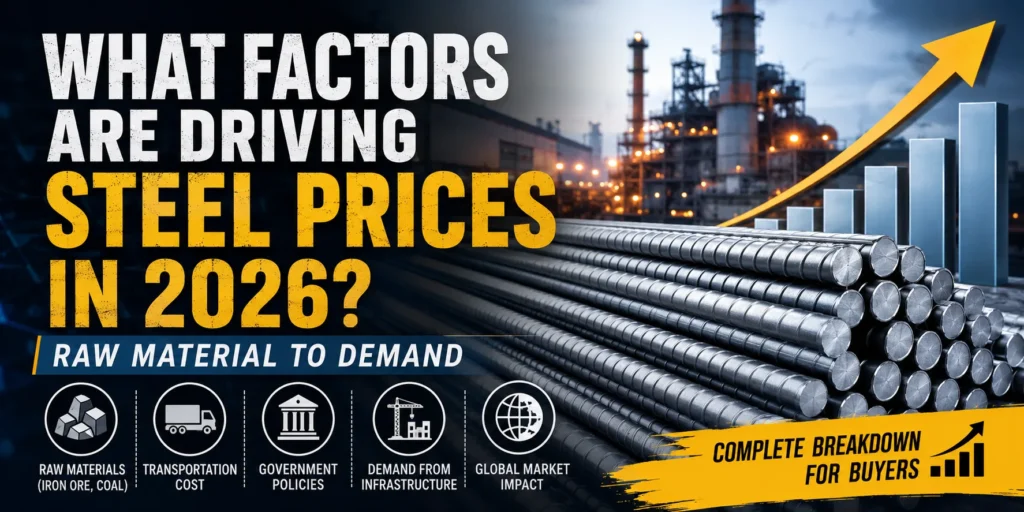
Steel prices in 2026 are increasing mainly due to higher raw material costs (iron ore and coal), rising transportation expenses, strong infrastructure demand, government policies, and global market pressure. These factors together push production costs up and create supply-demand imbalance, making steel more expensive for buyers across India and globally.
-
What Factors Are Driving Steel Prices in 2026? (Raw Material to Demand)
- Overview: Why Steel Prices Are Rising in 2026
- Raw Materials: Iron Ore and Coal Are Getting Expensive
- Transportation Cost: Logistics Is Becoming Expensive
- Government Policies: Taxes, Duties, and Regulations
- Demand from Infrastructure: The Biggest Growth Driver
- Global Market Impact: International Factors Matter
- Energy Costs: A Hidden but Important Factor
- Labor and Production Costs
- Market Speculation and Stocking
- Real Example: How All Factors Combine
- What Buyers Should Do in 2026
- Summary: Key Factors Behind Steel Price Increase
- Final Thoughts
Overview: Why Steel Prices Are Rising in 2026
Steel is one of the most important materials used in construction, manufacturing, and infrastructure. In 2026, buyers, contractors, and businesses are noticing a steady increase in steel prices. This is not happening due to a single reason—multiple factors are working together behind the scenes.
From raw material shortages to global demand shifts, the steel industry is going through a complex phase. If you are a buyer, contractor, or procurement manager, understanding these factors can help you make better purchasing decisions.
For a complete breakdown of the overall market situation, you can also read our main guide “Why Steel Prices Are Increasing in 2026? Complete Market Breakdown for Buyers” which explains the bigger picture in detail.
In this article, we will break down each factor in simple English so you can clearly understand what is driving steel prices in 2026.
Raw Materials: Iron Ore and Coal Are Getting Expensive
The biggest reason behind rising steel prices is the increasing cost of raw materials. Steel is mainly made using iron ore and coal (or coke), and when these become expensive, steel prices automatically increase.
Iron Ore Price Increase
Iron ore is the primary ingredient in steel production. In 2026, iron ore prices have increased due to:
- Limited mining output in some regions
- Higher demand from countries like China and India
- Export restrictions in certain markets
- Environmental regulations affecting mining
When supply is limited and demand is high, prices go up. This directly increases the cost of producing steel.
Coal and Coke Prices
Coal, especially coking coal, is used in blast furnaces to convert iron ore into steel. In 2026:
- Coal imports have become more expensive
- Supply disruptions have affected availability
- Energy demand has increased globally
This makes steel production more costly.
👉 To understand this in deeper detail, you can check our related guide “Iron Ore & Coal Prices Impact on Steel Rates (2026 Guide)” where we explain cost breakdown with examples.
Cost Impact on Steel
Raw materials contribute around 60–70% of total steel production cost. So even a small increase in iron ore or coal prices can significantly impact the final steel price.
Transportation Cost: Logistics Is Becoming Expensive
Transportation plays a major role in steel pricing. Steel is heavy and bulky, so moving it from factories to warehouses and construction sites involves significant cost.
Key Reasons for Rising Transportation Costs
- Increase in fuel prices (diesel, petrol)
- Higher railway freight charges
- Rising toll taxes on highways
- Port handling and shipping costs
In India, steel often travels long distances—from manufacturing plants to cities and project sites. Even a small increase in fuel cost can raise the final price per ton.
Example
If transportation cost increases by ₹500–₹1000 per ton, it directly adds to the steel price that buyers pay.
Impact on Buyers
- Higher delivery charges
- Increased project cost
- Price variation between cities
This is why steel prices in metro cities can differ from smaller towns.
Government Policies: Taxes, Duties, and Regulations
Government policies have a strong impact on steel prices. In 2026, several policy-related factors are influencing the market.
Import and Export Duties
- Higher import duties make foreign steel expensive
- Export restrictions can limit supply in the global market
- Domestic prices increase when supply is controlled
GST and Taxation
Steel in India comes under GST, and any change in tax rates can affect pricing.
Environmental Regulations
Governments are focusing more on sustainable production:
- Pollution control norms
- Carbon emission reduction
- Energy efficiency requirements
These regulations increase the cost of production for steel manufacturers.
Infrastructure Budget
Government spending on infrastructure (roads, railways, housing) increases steel demand. When demand increases faster than supply, prices go up.
👉 You can also explore our detailed article “Government Policies & Steel Prices 2026: Taxes, Duties & Impact” for a deeper understanding.
Demand from Infrastructure: The Biggest Growth Driver
One of the strongest reasons for rising steel prices in 2026 is high demand from infrastructure and construction projects.
Key Sectors Driving Demand
- Real estate (residential and commercial buildings)
- Road and highway construction
- Railways and metro projects
- Industrial and factory development
India is currently investing heavily in infrastructure development, which requires a huge amount of steel.
Demand vs Supply Gap
When demand increases faster than production:
- Steel becomes scarce
- Prices start rising
- Buyers compete for supply
Impact on Construction Cost
Rising steel prices directly increase:
- Building construction cost
- Project budgets
- Contractor expenses
If you are involved in construction, you may also find this helpful: “TMT Bar Price Trend 2026: Why Construction Costs Are Rising”.
Global Market Impact: International Factors Matter
Steel is a global commodity, and international market trends have a direct impact on Indian steel prices.
China’s Role in Steel Market
China is the largest steel producer in the world. Any change in its production affects global supply.
- Reduced production → Global prices increase
- Increased exports → Prices may stabilize
Currency Exchange Rate (USD vs INR)
Steel imports and raw materials are often priced in US dollars.
- Weak Indian Rupee → Higher import cost
- Strong dollar → Expensive raw materials
Global Demand
Countries around the world are investing in infrastructure, increasing global demand for steel.
Supply Chain Disruptions
Events like:
- War or geopolitical tensions
- Shipping delays
- Trade restrictions
can affect steel supply and increase prices globally.
Energy Costs: A Hidden but Important Factor
Steel production requires a lot of energy. Electricity, gas, and fuel costs play a major role.
In 2026:
- Power tariffs have increased
- Fuel prices are high
- Energy demand is rising
This increases the operational cost of steel plants, which is passed on to buyers.
Labor and Production Costs
Another factor contributing to rising steel prices is labor and operational cost.
Reasons:
- Increased wages
- Skilled labor demand
- Maintenance and machinery cost
Modern steel plants also invest in automation and technology, which adds to production cost.
Market Speculation and Stocking
Sometimes, prices increase not just due to actual demand but also due to market behavior.
Trader Activity
- Stock hoarding
- Bulk buying
- Speculative pricing
When traders expect prices to rise, they buy more stock, which reduces supply in the market and pushes prices higher.
Real Example: How All Factors Combine
Let’s understand with a simple example:
- Iron ore price increases
- Coal becomes expensive
- Fuel prices rise
- Transportation cost goes up
- Government increases duties
- Demand from construction rises
👉 Result: Steel price increases significantly
This is exactly what is happening in 2026.
What Buyers Should Do in 2026
If you are planning to buy steel, here are some simple tips:
1. Plan Your Purchase Early
Prices are likely to rise further, so early buying can save cost.
2. Buy in Bulk
Bulk buying often reduces per ton cost.
3. Track Market Trends
Keep an eye on price trends before purchasing.
4. Choose Reliable Supplier
Working with trusted suppliers like Deal On Steel Industries ensures:
- Transparent pricing
- Quality material
- Reliable supply
Summary: Key Factors Behind Steel Price Increase
Let’s quickly recap the main reasons:
- Rising iron ore and coal prices
- Increasing transportation cost
- Government policies and taxes
- High infrastructure demand
- Global market pressure
- Energy and production cost increase
All these factors together are driving steel prices upward in 2026.
Final Thoughts
Steel prices in 2026 are influenced by a combination of local and global factors. Understanding these reasons helps buyers make smarter decisions and avoid unexpected cost increases.
If you want a complete overview of the entire steel market, don’t forget to read our main pillar guide:
👉 “Why Steel Prices Are Increasing in 2026? Complete Market Breakdown for Buyers”
Staying informed is the best way to save money and plan better in a rising market.
About Company
Deal On Steel Industries Pvt. Ltd. has established itself as a leading provider of high-quality stainless steel pipes in India. We are dedicated to exceeding client expectations by delivering superior products, believing this is the definitive path to success.
Most Recent Posts
- All Posts
- Boiler tubes
- Jindal pipes
- Kolkata
- mild Steel
- Ms erw Pipes
- MS Pipes
- Seamless Boiler Tubes
- Stainless Steel Coils
- stainless steel fittings
- Stainless steel Flanges
- Stainless Steel Pipes
- Stainless steel sheets
- Stainless steel Tubes
- Steel Prices
- Trending Steel
- Back
- Alloy Steel Boiler Tubes
- Carbon Steel Boiler Tubes
- Stainless Steel Boiler Tubes
- Jindal Boiler Tubes
- TATA Boiler Tubes
- ERW Boiler Tubes
- Back
- TATA Boiler tubes