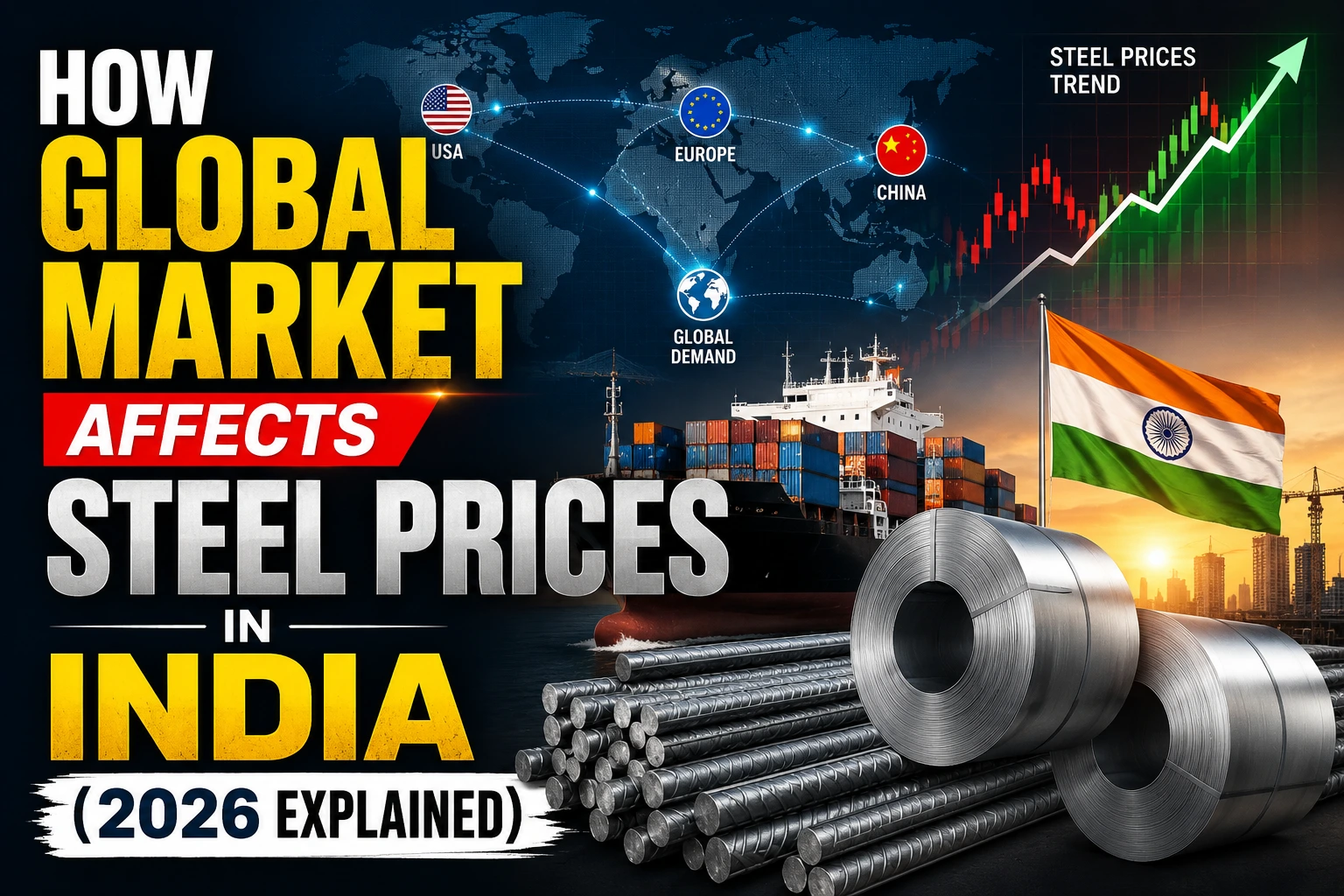
How Global Market Affects Steel Prices in India (2026 Explained)
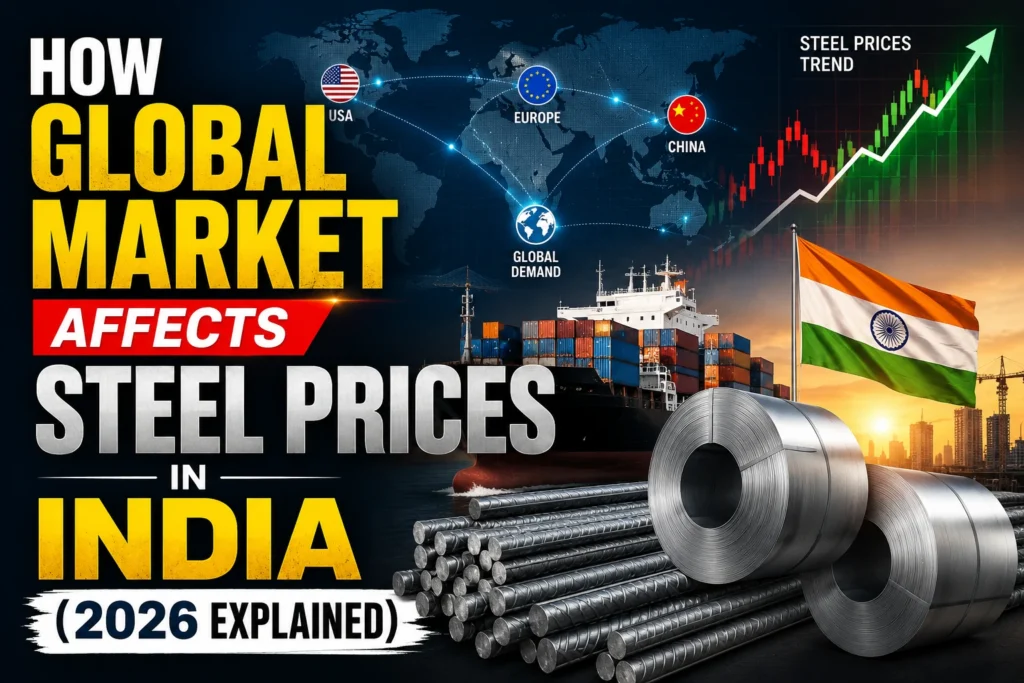
Steel prices in India in 2026 are strongly influenced by global factors like China’s production levels, raw material costs, international demand, and currency exchange rates. When global steel demand rises or supply tightens, Indian prices increase. Buyers working with Deal On Steel Industries should track global trends to plan smarter purchases and control project costs.
Understanding the Connection Between India and the Global Steel Market
India is one of the largest steel producers in the world, but it does not operate in isolation. Steel is a globally traded commodity, meaning prices are influenced not only by domestic demand and supply but also by international market conditions.
When global steel prices rise, Indian manufacturers often increase their rates as well. This happens because raw materials like iron ore and coking coal are either imported or priced based on global benchmarks. Even if domestic production remains stable, global fluctuations still impact pricing.
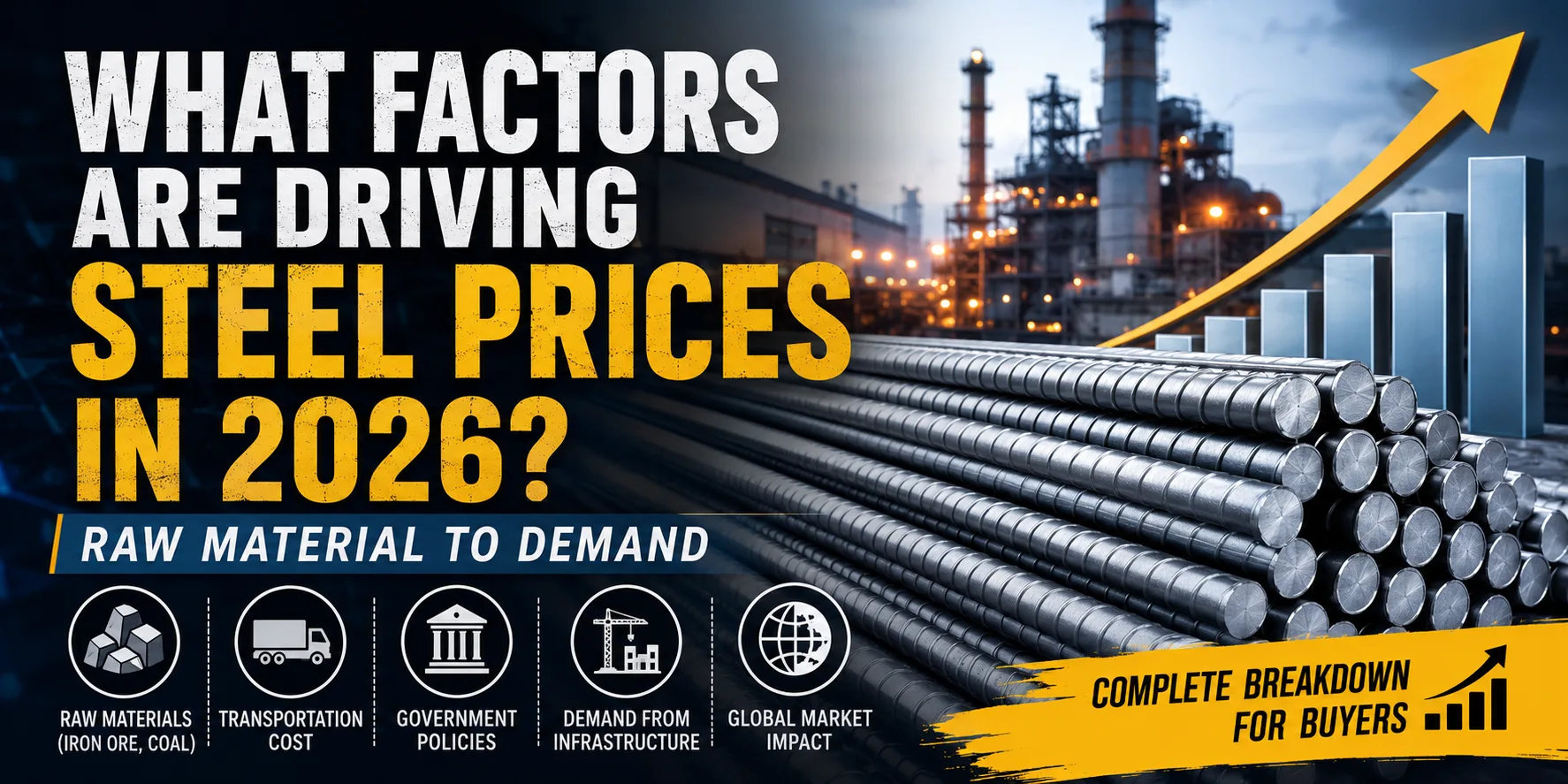
For a complete foundational understanding of this topic, you should read our main guide “Why Steel Prices Are Increasing in 2026”, which explains the broader market forces behind current trends.
India vs Global Steel Market: How They Interact
India’s steel market is closely linked with global trade flows. While India exports steel to many countries, it also imports certain types of steel and raw materials.
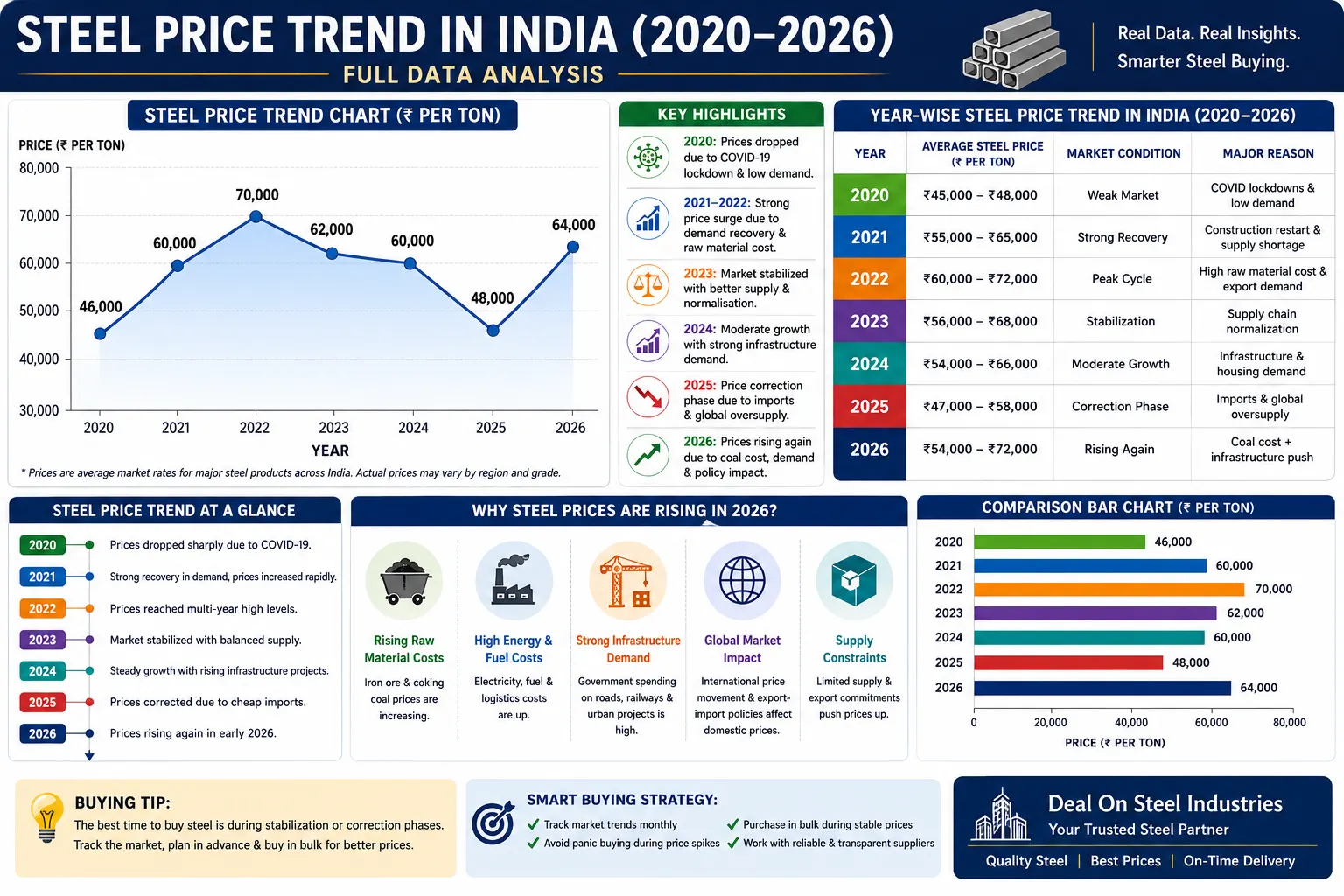
When global demand is high, Indian producers prefer exporting steel because they can earn better margins. This reduces supply in the domestic market, which leads to price increases within India. On the other hand, when global demand is weak, more steel stays within the country, which can stabilize or even reduce prices. This balance between export opportunities and domestic availability plays a major role in price movements. You can better understand domestic fluctuations by reading “Steel Price Trend in India (2020–2026): Full Data Analysis”, where we break down how prices have moved over the years.
China’s Production Impact on Steel Prices
China is the world’s largest steel producer, accounting for more than 50% of global production. Because of this dominance, any change in China’s production directly affects global steel prices—and eventually impacts India.
When China increases production:
- Global supply rises
- Prices tend to fall or stabilize
When China cuts production (due to environmental policies or reduced demand):
- Global supply decreases
- Prices increase worldwide
In 2026, China has been focusing on reducing pollution, which has led to controlled production levels. This has tightened global supply and pushed prices upward. Indian steel manufacturers often adjust their prices based on these global movements. So even if local demand remains unchanged, reduced Chinese output can still lead to higher prices in India.
Export-Import Dynamics: A Key Price Driver
India is both a steel exporter and importer, and this dual role significantly impacts pricing.
Export Impact
When international prices are higher than domestic prices:
- Indian companies export more steel
- Domestic supply decreases
- Prices in India increase
Import Impact
When global prices are lower:
- India imports cheaper steel
- Domestic competition increases
- Prices may stabilize or drop
However, the government sometimes imposes import duties to protect local manufacturers. These policies can limit cheap imports, keeping prices higher within the country. For deeper insights into cost drivers, you can explore “Iron Ore & Coal Prices Impact on Steel Rates (2026 Guide)”, which explains how raw material pricing feeds into this system.
Dollar vs INR: Currency Exchange Effect on Steel Prices
One of the most overlooked but powerful factors is the exchange rate between the US Dollar and the Indian Rupee. Steel and its raw materials are traded globally in US dollars. So, when the rupee weakens against the dollar:
- Import costs increase
- Raw materials become expensive
- Steel prices rise in India
When the rupee strengthens:
- Imports become cheaper
- Production costs decrease
- Prices may stabilize
In 2026, fluctuations in currency have added additional pressure on steel prices. Even small changes in exchange rates can significantly impact large-volume purchases. For buyers working on tight budgets, this becomes a critical factor in planning procurement.
Case Study: How Global Factors Increased Steel Prices in 2026
Let’s take a practical example to understand how all these factors combine.
Situation:
- China reduces steel production due to environmental regulations
- Global demand increases due to infrastructure growth
- The US dollar strengthens against the Indian rupee
Result:
- Global supply decreases
- Prices rise internationally
- Indian manufacturers increase export volumes
- Domestic supply reduces
- Import costs increase due to currency weakness
Final Impact:
Steel prices in India increase significantly—even if local demand remains stable. This is exactly what has been observed in 2025–2026, where multiple global factors aligned to push prices upward.
What This Means for Indian Buyers and Contractors
For contractors, builders, and procurement managers, understanding global market influence is no longer optional—it is essential.
Here’s what you should focus on:
- Track global steel news, especially China
- Monitor USD/INR exchange rates
- Plan bulk purchases when prices stabilize
- Avoid last-minute buying during peak demand
Working with experienced suppliers like Deal On Steel Industries can help you navigate these fluctuations, as they track both domestic and global trends to offer better pricing guidance.
Smart Buying Strategy Based on Global Trends
If you want to reduce costs despite rising prices, you need a strategy aligned with global movements.
Key Tips:
- Buy in phases instead of one bulk order
- Lock prices when global trends show stability
- Avoid peak construction seasons
- Stay updated with policy changes
Timing your purchase based on global indicators can save a significant amount of money, especially in large-scale projects.
Summary: Global Market’s Role in Indian Steel Prices
The Indian steel market is deeply connected to global dynamics. Factors like China’s production, international demand, export-import balance, and currency exchange rates all play a major role in determining prices. In 2026, rising global demand, controlled supply, and currency fluctuations have combined to increase steel prices in India. This trend highlights the importance of understanding not just local conditions but also global market movements. For buyers, the key takeaway is simple:
Better awareness leads to better buying decisions.
And if you want to stay ahead in this volatile market, always combine market knowledge with trusted suppliers like Deal On Steel Industries for smarter procurement planning.
Frequently Asked Questions
1. How do global markets affect steel prices in India?
Global markets influence steel prices through demand, supply, and raw material costs. When international demand increases or supply decreases (especially from countries like China), steel prices in India also rise due to export shifts and cost pressure.
2. Why does China impact steel prices worldwide?
China is the largest steel producer globally. Any increase or decrease in its production directly changes global supply, which affects steel prices in India and other countries.
3. How does the dollar rate affect steel prices in India?
Steel and raw materials are traded in US dollars. When the Indian rupee weakens, import costs increase, making steel more expensive in India.
4. Is it a good time to buy steel in 2026?
It depends on global trends. If prices are rising due to high demand and low supply, it’s better to purchase in phases or lock prices early to avoid further increases.
5. Do exports increase steel prices in India?
Yes. When Indian companies export more steel to global markets for higher profits, domestic supply reduces, which leads to price increases within India.
6. How can buyers reduce the impact of rising steel prices?
Buyers can plan purchases in advance, monitor global trends, avoid peak demand periods, and work with reliable suppliers like Deal On Steel Industries for better pricing strategies.