Government Policies & Steel Prices 2026: Taxes, Duties & Impact
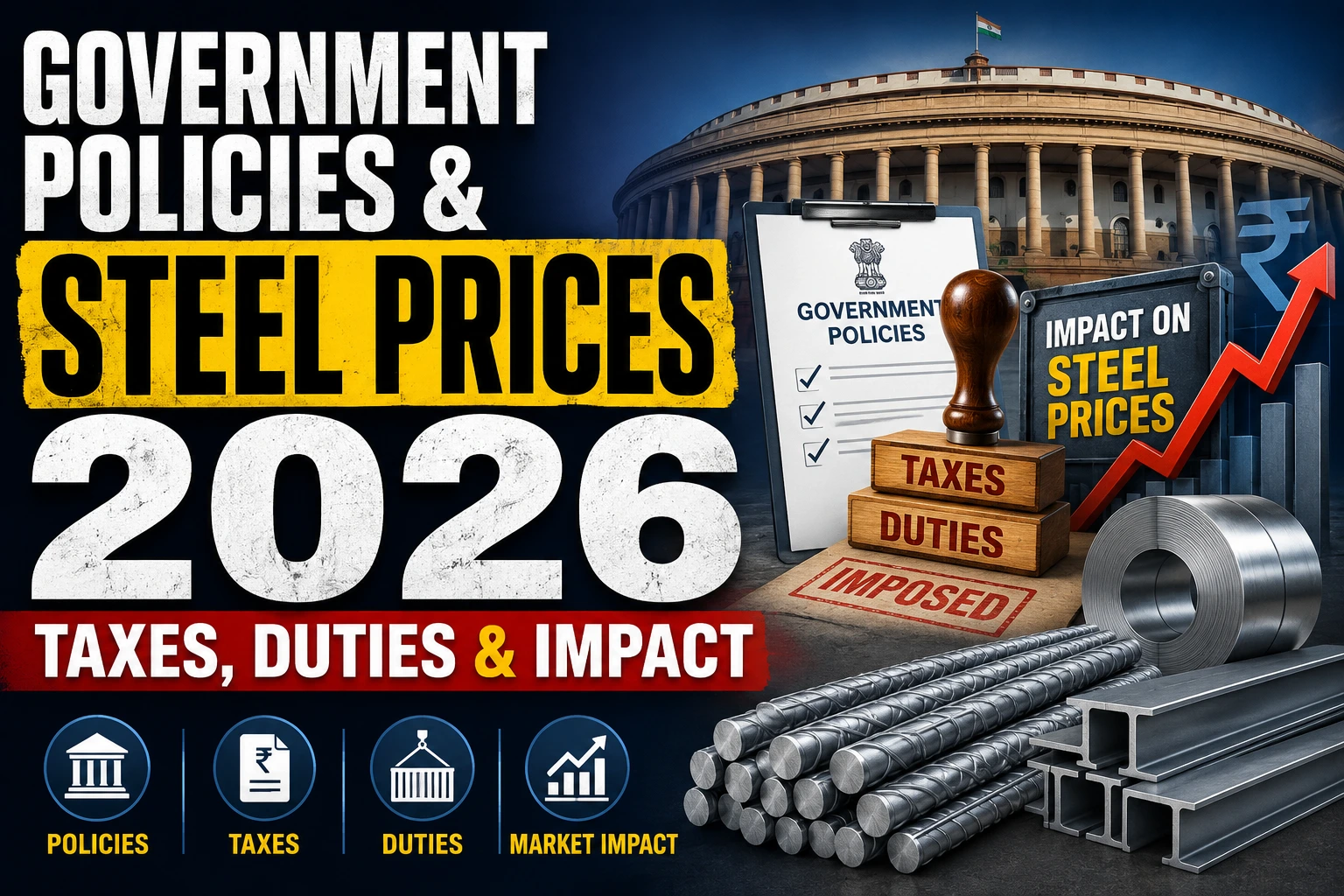
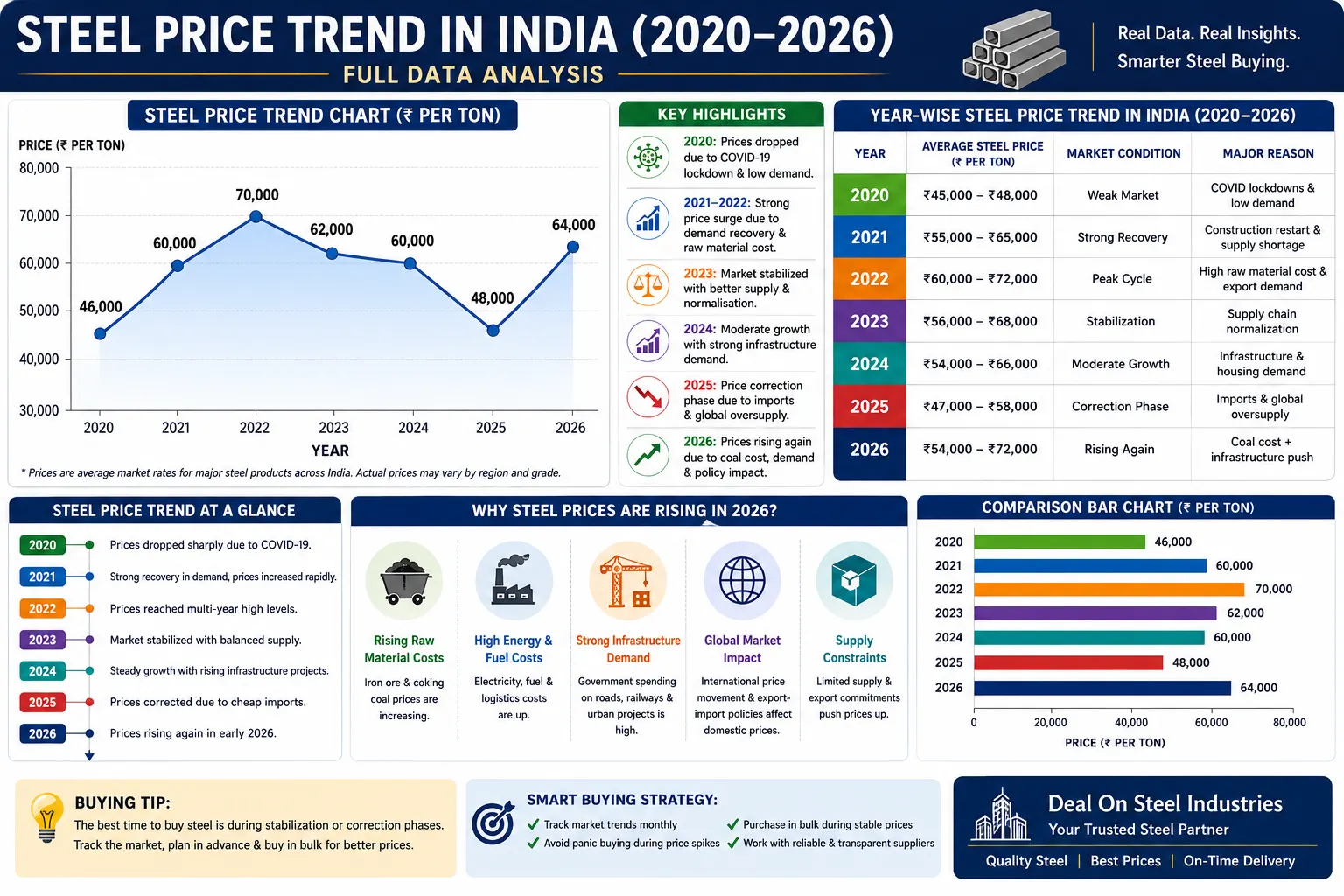
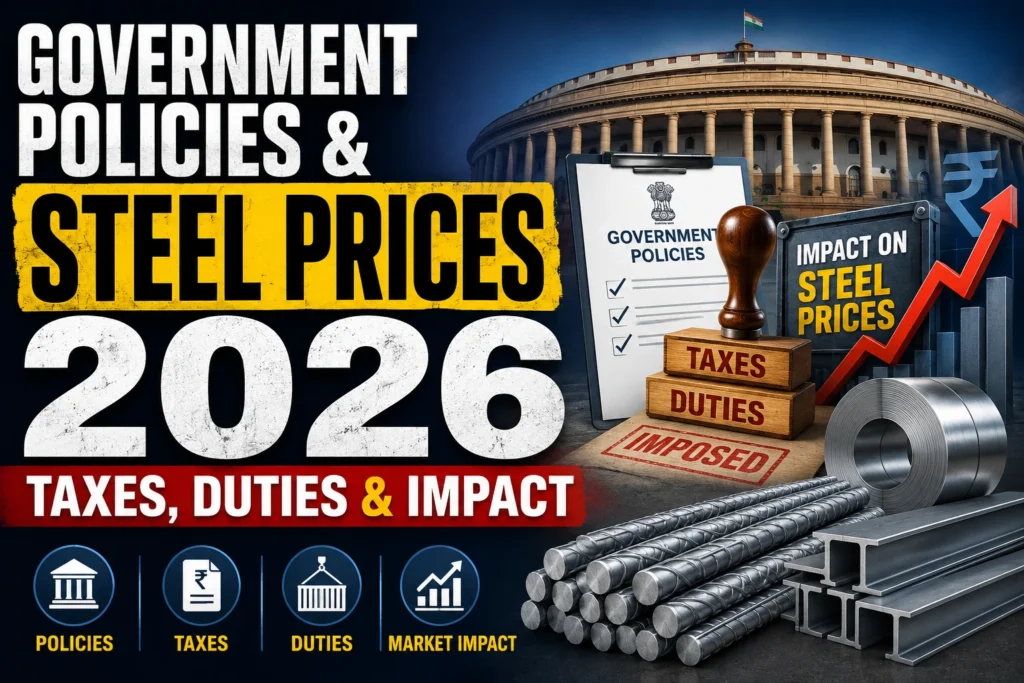
Steel prices in India are increasing in 2026 mainly because of government policies, import duties, rising infrastructure spending, and higher global trade pressure. New safeguard duties on imported steel, GST impact, and large-scale infrastructure projects are pushing domestic demand and production costs upward. These policy changes are directly affecting builders, manufacturers, contractors, and steel buyers across India.
-
Government Policies & Steel Prices 2026: Taxes, Duties & Impact
- Introduction: Why Government Policies Matter in Steel Pricing
- How Government Policies Influence Steel Prices
- India’s Safeguard Duty on Steel Imports in 2026
- Why Cheap Steel Imports Became a Problem
- How Import Duties Increase Domestic Steel Prices
- GST Impact on Steel Prices
- Infrastructure Budget Is Increasing Steel Demand
- Impact on TMT Bars, MS Pipes & Structural Steel
- Global Trade Tensions Are Also Affecting India
- Environmental Policies and Green Steel Transition
- How These Policies Affect Buyers & Contractors
- Smart Procurement Strategies for Steel Buyers
- Final Thoughts
- ❓ Frequently Asked Questions (FAQs)
Introduction: Why Government Policies Matter in Steel Pricing
Steel prices are not controlled only by demand and supply. Government decisions also play a major role in deciding how expensive steel becomes in the Indian market. Policies related to import duties, taxation, infrastructure investment, environmental rules, and trade protection directly affect steel manufacturers and buyers.
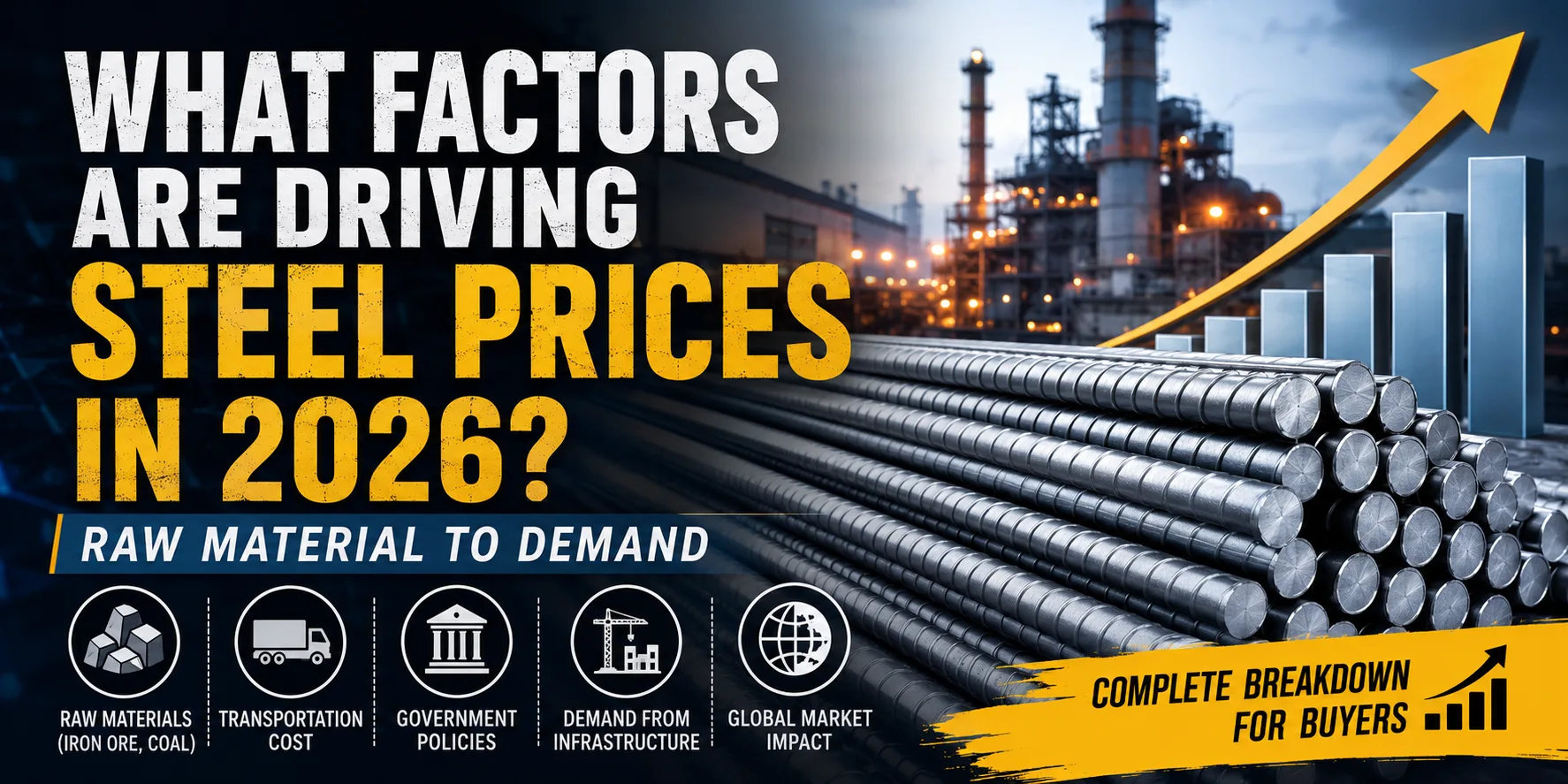
In 2026, India’s steel market is witnessing major policy-driven changes. The government is trying to protect domestic steel companies from cheap foreign imports while simultaneously increasing spending on roads, railways, metro projects, airports, industrial corridors, and smart cities. Because of this, steel demand is rising rapidly, while import restrictions are making foreign steel more expensive. If you have already read our main pillar guide on “Why Steel Prices Are Increasing in 2026? Complete Market Breakdown for Buyers”, then this article will help you understand the government and policy side of the price increase in much greater detail. For steel buyers, contractors, and B2B procurement teams, understanding these policies is extremely important because they directly impact project costs, procurement planning, and long-term budgeting.
How Government Policies Influence Steel Prices
Government policies affect steel prices through several channels. These include:
- Import duties on foreign steel
- Export restrictions
- GST taxation
- Environmental regulations
- Infrastructure spending
- Anti-dumping duties
- Trade agreements
- Industrial production incentives
When the government increases import duties, imported steel becomes expensive. This protects Indian steel manufacturers but also increases domestic steel prices because local producers gain stronger pricing power.
Similarly, when the government increases infrastructure spending, demand for steel rises sharply. Large infrastructure projects consume huge amounts of TMT bars, structural steel, MS pipes, steel plates, and coils. Higher demand automatically pushes prices upward. In 2026, both these situations are happening together in India. Imports are becoming costly while domestic demand is increasing strongly.
India’s Safeguard Duty on Steel Imports in 2026
One of the biggest policy decisions affecting steel prices in 2026 is the safeguard duty imposed by the Indian government on selected steel imports.
According to multiple reports, India imposed a safeguard duty ranging between 11% and 12% on some imported steel products to reduce the sudden increase in cheap imports, especially from countries like China. The government introduced this move because imported low-cost steel was creating pressure on Indian steel manufacturers. Domestic companies argued that extremely cheap imports were hurting Indian steel production and reducing profitability. The Directorate General of Trade Remedies (DGTR) found that there was a “sudden, sharp, and significant increase” in steel imports that could seriously harm the Indian steel industry.
As a result:
- First-year safeguard duty: 12%
- Second-year safeguard duty: 11.5%
- Third-year safeguard duty: 11%
This policy is designed to support Indian steel producers and reduce dependence on imported steel.
Why Cheap Steel Imports Became a Problem
India became one of the world’s largest steel consumers, but cheap imports from countries such as China, Vietnam, and some other Asian markets started increasing rapidly. Foreign steel manufacturers were selling products at lower prices in international markets due to excess production capacity. Indian buyers and traders naturally started purchasing cheaper imported steel.
This created several problems:
Pressure on Indian Steel Companies
Indian steel manufacturers had to reduce their prices to compete with cheaper imports. This reduced profit margins for domestic companies.
Reduced Domestic Production Incentive
If imported steel remains significantly cheaper, local companies may reduce production expansion plans because profitability becomes uncertain.
Risk to Employment
The steel industry supports millions of jobs directly and indirectly. Lower domestic production can impact employment in manufacturing, logistics, mining, fabrication, and construction.
Quality Concerns
The Indian government and domestic industry also raised concerns regarding sub-standard imported steel products entering the market.
Because of these reasons, safeguard duties were introduced.
How Import Duties Increase Domestic Steel Prices
Many buyers assume that import duties affect only imported steel. In reality, they also increase domestic steel prices.
Here is how this works: When imported steel becomes expensive due to duties, buyers shift toward Indian manufacturers. This increases demand for domestic steel. At the same time, domestic steel companies face less competition from foreign suppliers. This gives local producers more pricing flexibility. As imports reduce, overall market supply tightens. Lower supply and higher demand together push prices upward. Reports suggest that after the safeguard duty announcement, steel prices in India increased noticeably in several segments.
This is one of the major reasons why steel buyers are facing higher prices in 2026.
GST Impact on Steel Prices
GST also plays an important role in steel pricing.
Most steel products in India fall under the 18% GST slab. This includes:
- TMT bars
- MS pipes
- Steel coils
- Structural steel
- Steel sheets
- Hollow sections
Although GST created a more organized taxation structure compared to the older tax system, it still adds significant cost to final procurement.
For example:
If the base price of steel increases due to raw material cost or safeguard duty, GST is applied on the higher amount. This increases the final invoice value even further.
Let us understand with a simple example:
| Component | Amount |
|---|---|
| Base steel price | ₹60,000 |
| Transportation & handling | ₹3,000 |
| Total before GST | ₹63,000 |
| GST @18% | ₹11,340 |
| Final cost | ₹74,340 |
This shows how GST magnifies the overall impact of rising steel prices. For contractors and project developers, this becomes a major budgeting issue, especially in large-volume procurement.
Infrastructure Budget Is Increasing Steel Demand
India’s infrastructure growth is another major reason behind rising steel prices.
The government has significantly increased spending on:
- Highways
- Metro rail projects
- Railway modernization
- Industrial corridors
- Smart cities
- Airports
- Warehousing
- Renewable energy projects
- Manufacturing infrastructure
All these sectors require huge quantities of steel products.
Large infrastructure projects consume:
- TMT bars
- Structural steel
- HR coils
- CR sheets
- MS pipes
- GI pipes
- Steel plates
As infrastructure spending increases, steel demand rises automatically. This demand growth is one of the biggest reasons why prices are staying strong despite global market fluctuations. If you want to understand how this directly impacts construction expenses, you can also read our related guide on “How Rising Steel Prices Affect World market”.
Impact on TMT Bars, MS Pipes & Structural Steel
Government policies are not affecting all steel products equally. Some segments are seeing stronger price movement than others.
TMT Bars
Infrastructure and real estate demand are heavily increasing TMT consumption. Price increases in TMT bars directly affect residential and commercial construction costs.
You can also explore our detailed guide on “TMT Bar Price Trend 2026: Why Construction Costs Are Rising” for deeper analysis.
MS Pipes
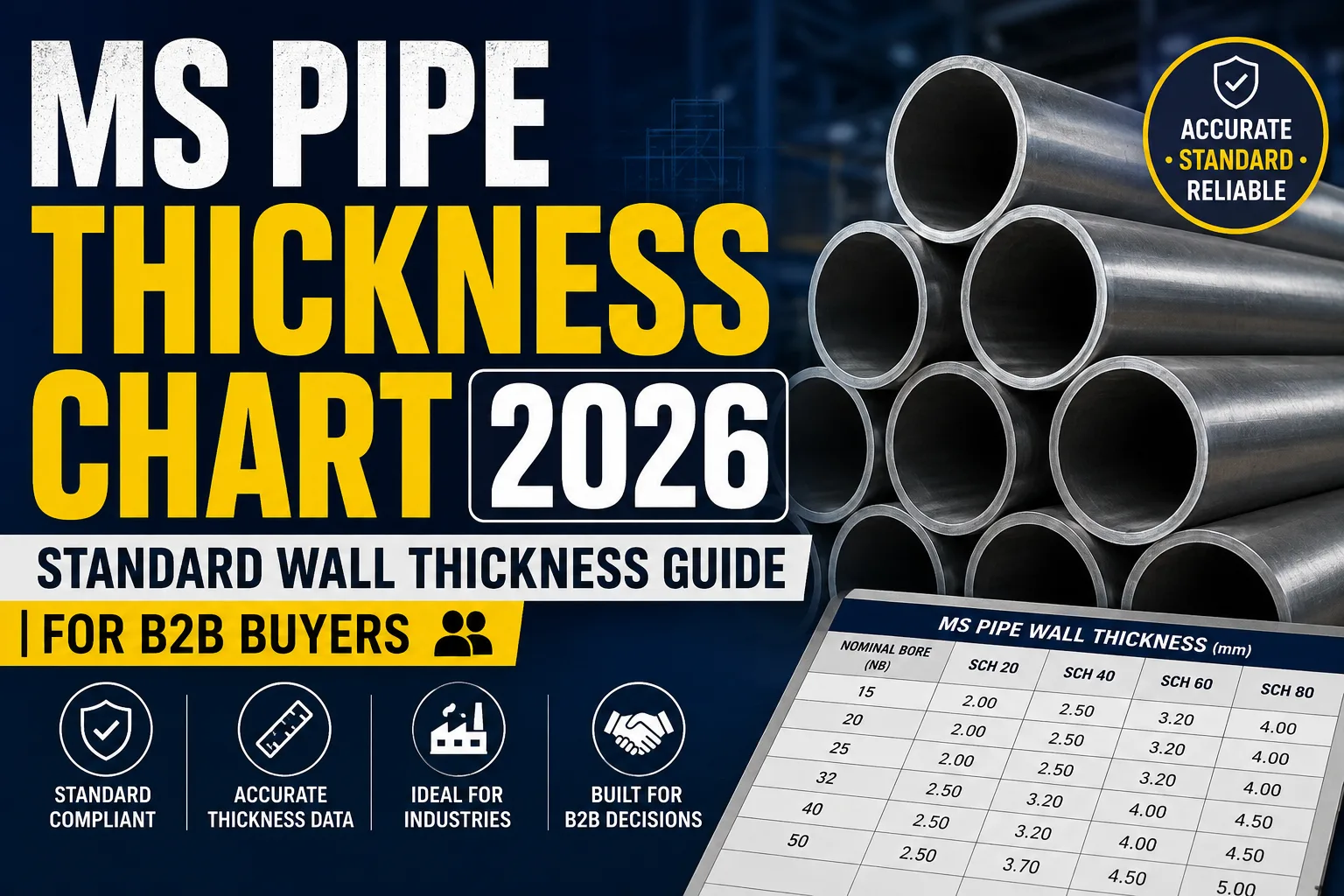
MS pipe prices are rising because of industrial demand, infrastructure expansion, and increased steel sheet costs. At Deal On Steel Industries, many industrial buyers are already observing stronger price fluctuations in pipe and structural steel segments during 2026. You may also like our related article on “MS Pipe Price Increase 2026: Latest Rates & Market Insights”.
Structural Steel
Structural steel demand is increasing because of warehouses, factories, logistics parks, solar structures, and industrial projects. Higher fabrication activity means stronger steel consumption across India.
Global Trade Tensions Are Also Affecting India
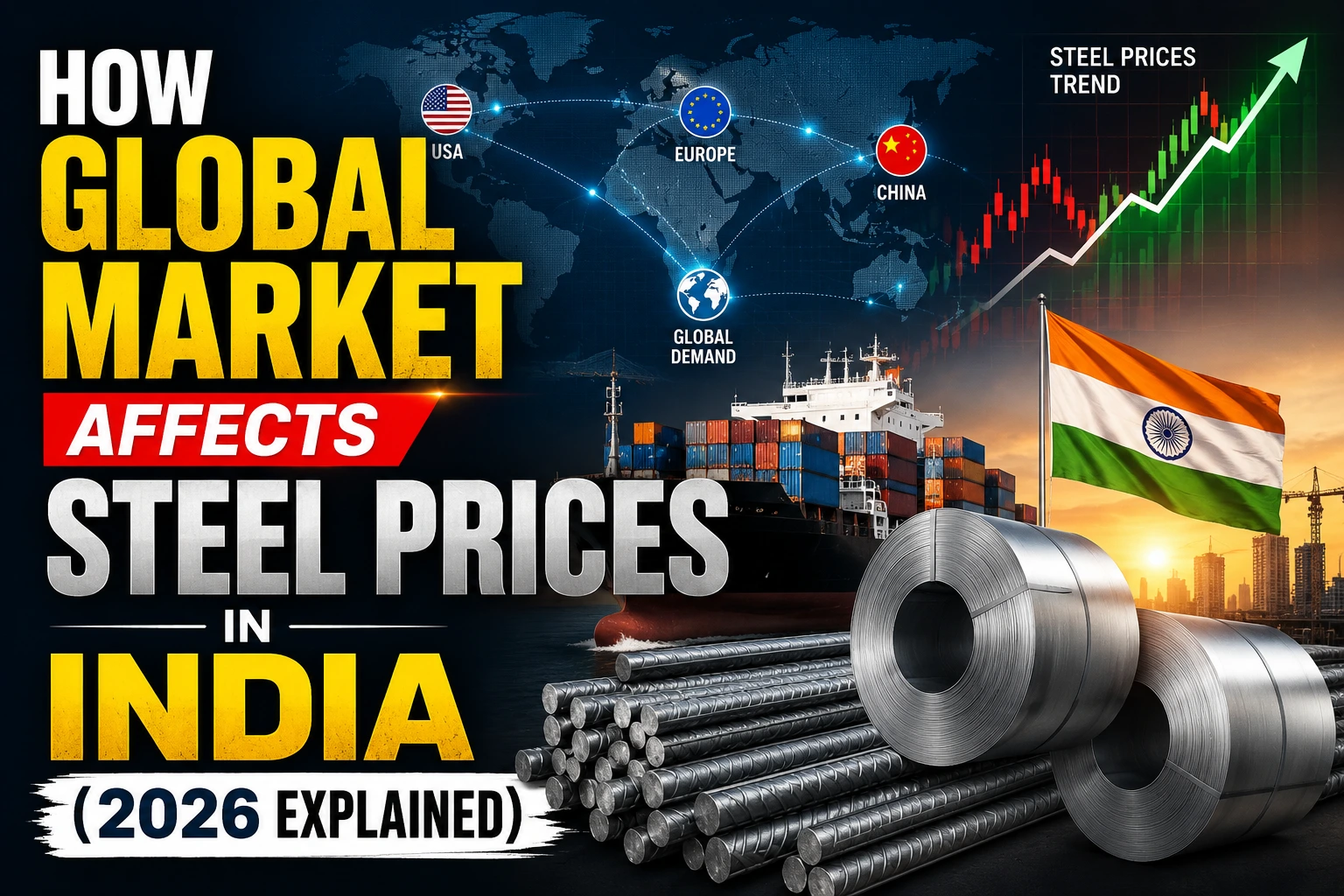
India’s steel pricing is also influenced by international trade conditions. Countries around the world are becoming more protective about their steel industries. Several governments have introduced anti-dumping duties and safeguard measures against cheap imports. Global trade tensions involving China, the United States, and other major economies are changing steel supply chains. When large countries impose tariffs, global steel flows shift toward alternative markets like India. This can suddenly increase imports into India and create pressure on domestic producers.
As a response, India has also strengthened its protective trade policies. This is why steel pricing in 2026 cannot be understood only from a domestic perspective. Global trade policy is now deeply connected with Indian steel rates.
Environmental Policies and Green Steel Transition
Environmental regulations are also increasing production costs. Steel manufacturing is energy-intensive and generates significant carbon emissions. Governments across the world are focusing on cleaner steel production technologies.
Future regulations related to:
- Carbon emissions
- Energy efficiency
- Green hydrogen
- Pollution control
- Renewable energy integration
may increase production costs further in the coming years. Indian steel manufacturers are gradually investing in cleaner technologies and sustainable manufacturing practices. While this is beneficial for the environment, it may increase capital expenditure and production costs in the short term.
How These Policies Affect Buyers & Contractors
The impact of government policies is directly visible in project costs.
Builders
Residential and commercial builders are facing rising construction costs due to higher steel prices.
Contractors
Contractors working on fixed-price agreements are seeing margin pressure because material costs are increasing faster than expected.
Fabricators
Fabricators using MS pipes, structural steel, and plates are experiencing tighter procurement budgets.
Industrial Buyers
Manufacturing companies are also facing higher raw material expenses, especially in sectors dependent on steel-intensive production. This is why procurement planning has become more important than ever in 2026.
Smart Procurement Strategies for Steel Buyers
In a volatile market, buyers should follow smarter procurement practices.
Track Policy Announcements
Government duty changes can impact prices immediately. Buyers should monitor import duty and trade policy updates regularly.
Avoid Last-Minute Bulk Purchases
Emergency procurement during price spikes can significantly increase project costs.
Use Rate Contracts
Long-term supply agreements can help stabilize pricing.
Compare Domestic vs Imported Steel
Depending on duties and freight costs, domestic procurement may become more economical.
Work With Trusted Suppliers
Reliable suppliers help ensure price transparency, quality assurance, and stable delivery schedules. Companies like Deal On Steel Industries are helping industrial and infrastructure buyers manage procurement more efficiently through updated market pricing and bulk steel supply support.
Final Thoughts
Government policies are now one of the biggest drivers of steel prices in India. Import duties, safeguard measures, GST, infrastructure spending, and global trade tensions are all contributing to rising steel rates in 2026. The Indian government is trying to balance two important goals: protecting domestic steel manufacturers and supporting long-term infrastructure growth. However, these policies are also increasing procurement costs for builders, contractors, fabricators, and industrial buyers. For steel buyers, understanding policy changes is no longer optional. It has become essential for budgeting, procurement planning, and project execution.
As India continues expanding infrastructure and manufacturing capacity, steel demand is expected to remain strong. Unless global raw material costs and trade conditions stabilize significantly, steel prices may continue to stay elevated in the near future
❓ Frequently Asked Questions (FAQs)
1. Why are steel prices increasing in India in 2026?
Steel prices in India are rising in 2026 due to government policies like safeguard duties on imports, increasing infrastructure demand, higher raw material costs, and global market pressure. These factors are reducing supply and increasing demand at the same time.
2. What is the new import duty on steel in India?
The Indian government has imposed a safeguard duty of around 11–12% on selected steel imports for three years. This move is aimed at protecting domestic manufacturers from cheap foreign steel entering the market.
3. How do government policies affect steel prices?
Government policies affect steel prices through taxes, import/export duties, infrastructure spending, and environmental regulations. These policies directly impact production costs, supply, and demand, which ultimately influence market prices.
4. How does GST impact steel pricing?
Most steel products attract 18% GST in India. When the base price of steel increases, GST also increases proportionally, making the final cost higher for buyers, contractors, and businesses.
5. Which steel products are most affected by price increases?
Products like TMT bars, MS pipes, structural steel, steel sheets, and coils are most affected. These are widely used in construction, infrastructure, and manufacturing, so any price increase directly impacts projects.
6. Will steel prices decrease in 2026?
Steel prices may remain unstable in 2026 due to strong demand and policy changes. Prices could decrease only if raw material costs fall or import restrictions are relaxed.
About Company
Deal On Steel Industries Pvt. Ltd. has established itself as a leading provider of high-quality stainless steel pipes in India. We are dedicated to exceeding client expectations by delivering superior products, believing this is the definitive path to success.
Most Recent Posts
- All Posts
- Boiler tubes
- Jindal pipes
- Kolkata
- mild Steel
- Ms erw Pipes
- MS Pipes
- Seamless Boiler Tubes
- Stainless Steel Coils
- stainless steel fittings
- Stainless steel Flanges
- Stainless Steel Pipes
- Stainless steel sheets
- Stainless steel Tubes
- Steel Prices
- Trending Steel
- Back
- Alloy Steel Boiler Tubes
- Carbon Steel Boiler Tubes
- Stainless Steel Boiler Tubes
- Jindal Boiler Tubes
- TATA Boiler Tubes
- ERW Boiler Tubes
- Back
- TATA Boiler tubes