Jindal Pipe Thickness Chart 2026 – Complete GI & MS Pipe Guide
Jindal pipe thickness depends on pipe class, nominal bore size, and industrial application. Light, medium, and heavy class GI/MS pipes follow IS 1239 standards and are widely used in plumbing, construction, fire fighting, structural fabrication, and industrial piping systems across India. Pipe wall thickness plays a major role in determining pressure handling capacity, durability, load-bearing strength, welding performance, and corrosion resistance. Selecting the correct pipe thickness helps improve safety, project life, and operational efficiency in residential, commercial, and industrial applications. Today, contractors, EPC companies, industrial buyers, infrastructure developers, fabricators, and project consultants rely on accurate Jindal pipe thickness charts before selecting GI or MS pipes for water supply systems, structural frameworks, fabrication work, industrial plants, and high-pressure pipelines.
-
Jindal Pipe Thickness Chart 2026 – Complete GI & MS Pipe Guide
- What is Pipe Thickness?
- Jindal Pipe Thickness Chart (Light, Medium & Heavy Class)
- Difference Between Light, Medium & Heavy Class Pipes
- Why Pipe Thickness Matters?
- Jindal GI Pipe Thickness Chart
- Jindal MS Pipe Thickness Chart
- Pipe Thickness vs Pipe Weight
- IS 1239 Standard for Jindal Pipes
- Applications of Different Pipe Thicknesses
- How to Choose the Right Pipe Thickness?
- Jindal Pipe Thickness Chart PDF Download
- Conclusion
- Frequently Asked Questions (FAQs)
- Why Buy Jindal Pipes from Deal On Steel Industries?
Whether you are working on a residential plumbing line or a large industrial piping network, understanding pipe thickness standards helps you choose the correct pipe class according to pressure requirements, environmental conditions, and budget. If you’re confused about market direction, this guide on steel market outlook India 2026 is worth reading.
What is Pipe Thickness?
Pipe thickness refers to the wall thickness of a steel pipe measured between the outer surface and inner surface of the pipe wall. It is one of the most important dimensions in GI and MS pipes because it directly affects pipe strength, pressure capacity, and lifespan.
In pipe terminology, three important dimensions are commonly used:
- NB Size (Nominal Bore)
- OD (Outer Diameter)
- Wall Thickness
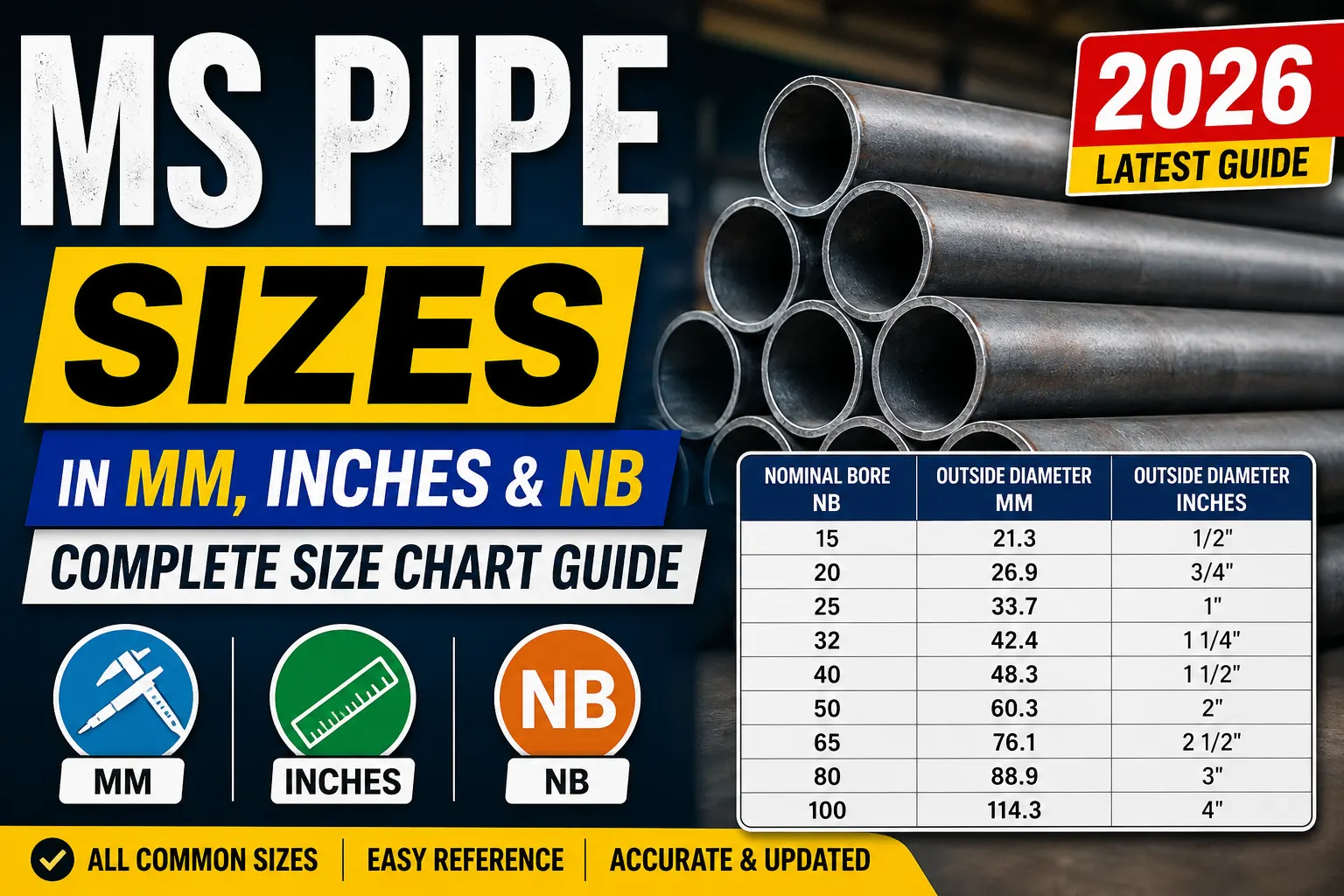
The NB size indicates the approximate internal diameter of the pipe, while the OD remains standardized according to manufacturing standards. Pipe thickness determines how much internal space remains inside the pipe. For example, two pipes may have the same outer diameter but different wall thicknesses. The thicker pipe will have a smaller internal diameter and significantly higher pressure handling capability.
Thicker pipes are generally used in:
- Industrial applications
- Fire fighting systems
- Gas pipelines
- Structural fabrication
- Heavy-duty water transportation
On the other hand, thinner pipes are commonly used in low-pressure plumbing and lightweight fabrication work.
Higher wall thickness usually means:
- Better strength
- Higher durability
- Improved corrosion life
- Better load-bearing performance
- Increased resistance against leakage and bursting
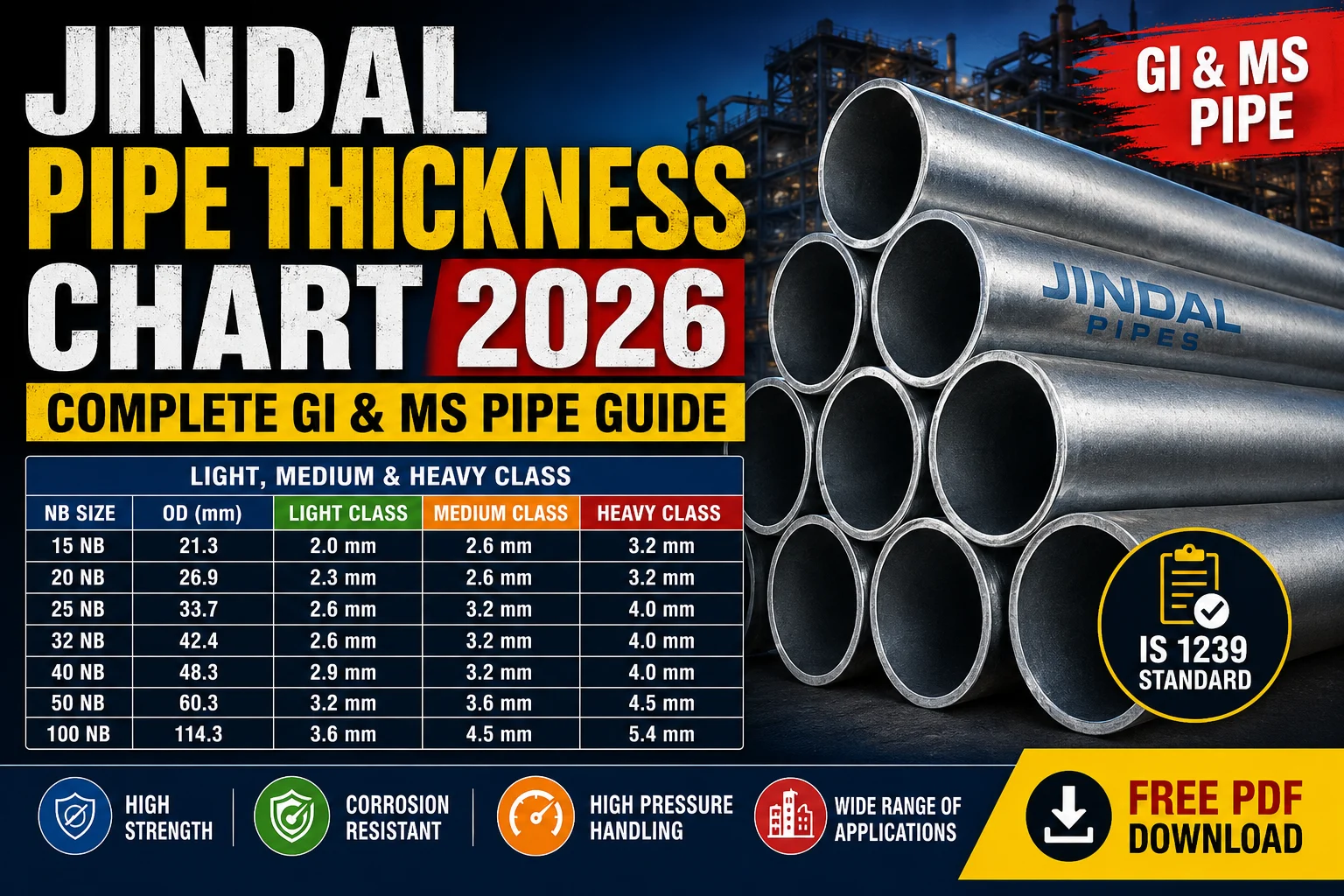
Jindal Pipe Thickness Chart (Light, Medium & Heavy Class)
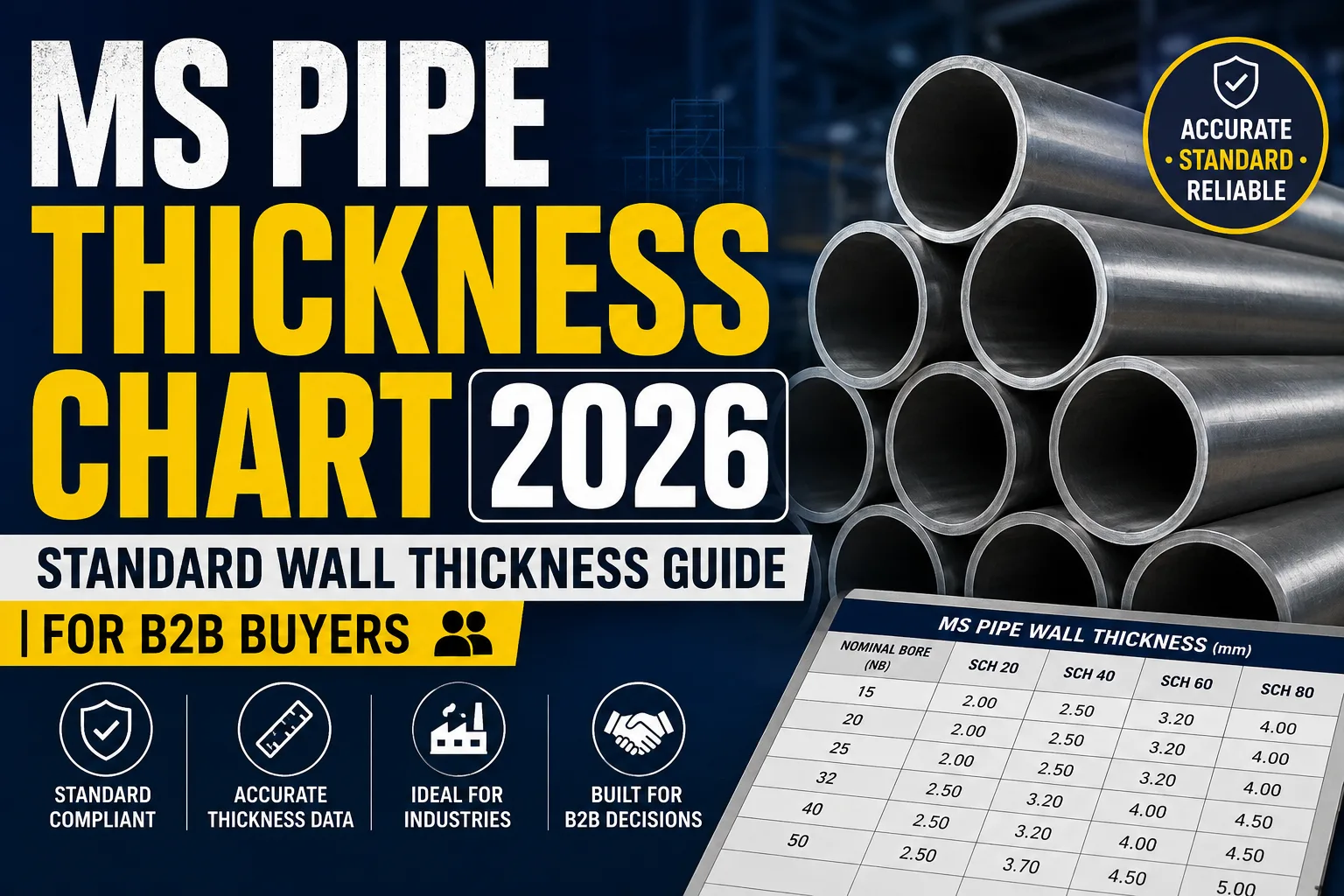
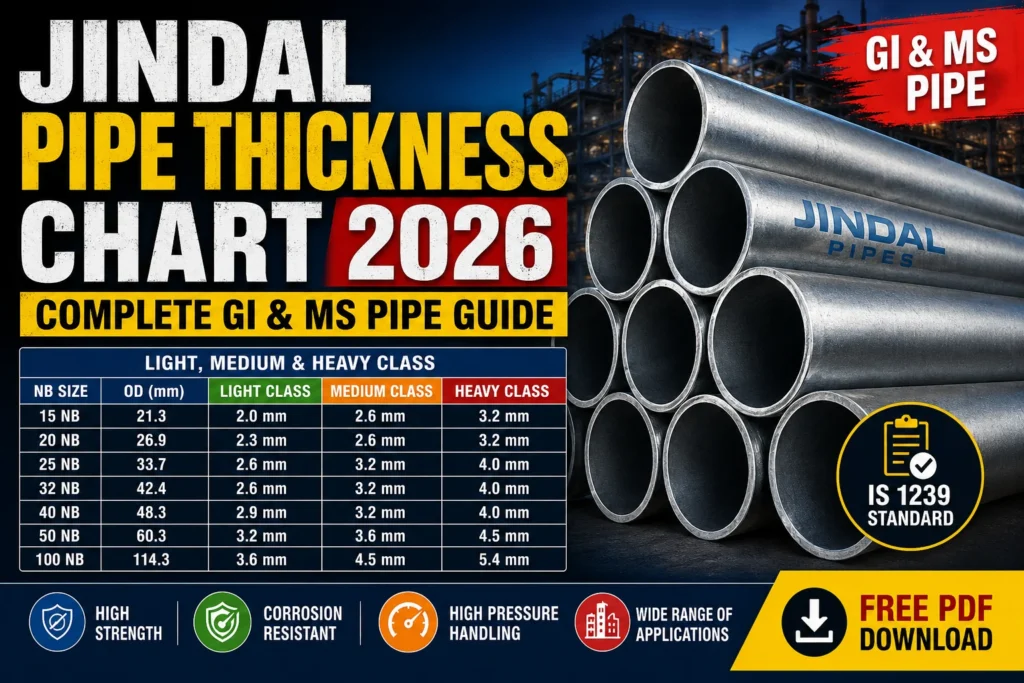
The following Jindal pipe thickness chart is based on IS 1239 Part-1 standards commonly used in India for GI and MS steel pipes. These dimensions are widely followed across plumbing, construction, fabrication, and industrial applications.
| NB Size | OD (mm) | Light Class | Medium Class | Heavy Class |
|---|---|---|---|---|
| 15 NB | 21.3 | 2.0 mm | 2.6 mm | 3.2 mm |
| 20 NB | 26.9 | 2.3 mm | 2.6 mm | 3.2 mm |
| 25 NB | 33.7 | 2.6 mm | 3.2 mm | 4.0 mm |
| 32 NB | 42.4 | 2.6 mm | 3.2 mm | 4.0 mm |
| 40 NB | 48.3 | 2.9 mm | 3.2 mm | 4.0 mm |
| 50 NB | 60.3 | 3.2 mm | 3.6 mm | 4.5 mm |
| 65 NB | 76.1 | 3.2 mm | 3.6 mm | 4.5 mm |
| 80 NB | 88.9 | 3.2 mm | 4.0 mm | 5.0 mm |
| 100 NB | 114.3 | 3.6 mm | 4.5 mm | 5.4 mm |
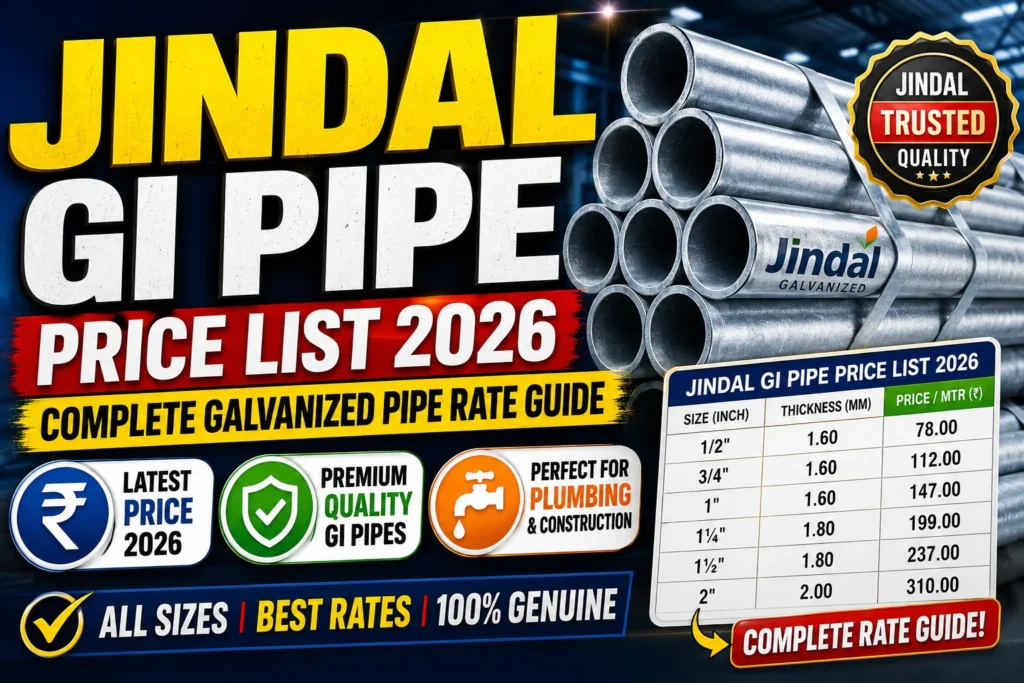
Looking for updated market pricing? Check our Jindal Pipes Price List for the latest GI, MS, and stainless steel pipe rates.
Difference Between Light, Medium & Heavy Class Pipes
Pipe classes are categorized according to wall thickness and pressure-handling capacity. Understanding these categories is important for selecting the correct pipe for specific applications.
Light Class Pipes
Light class pipes have thinner walls compared to medium and heavy class pipes. These pipes are lightweight, economical, and easy to install.
Because of their lower wall thickness, light class pipes are suitable for low-pressure systems where heavy mechanical strength is not required.
Common applications include:
- Residential plumbing
- Domestic water supply
- Low-pressure water lines
- Agricultural connections
- Lightweight fabrication work
Advantages of light class pipes include:
- Lower cost
- Easier transportation
- Reduced installation effort
- Faster fabrication
However, they are not ideal for high-pressure or heavy-duty industrial environments.
Medium Class Pipes
Medium class pipes provide balanced strength and moderate pressure handling capability. These pipes are widely used in commercial and industrial projects because they offer a good combination of durability and cost-effectiveness.
Medium class pipes are commonly preferred in:
- Commercial buildings
- Industrial water supply
- Mechanical fabrication
- General engineering
- Structural applications
These pipes are suitable where moderate pressure and improved durability are required.
Advantages include:
- Better strength than light class
- Good welding performance
- Improved service life
- Moderate pricing
Heavy Class Pipes (C Class)
Heavy class pipes, also known as C class pipes, have the highest wall thickness among standard IS 1239 pipe categories. These pipes are designed for high-pressure applications and heavy-duty industrial use. Their thicker walls improve structural strength, impact resistance, and operational safety.
Heavy class pipe thickness is commonly used in:
- Fire fighting systems
- Gas pipelines
- Industrial plants
- Chemical industries
- Structural fabrication
- High-pressure fluid transportation
Benefits of heavy class pipes include:
- High pressure resistance
- Longer service life
- Better corrosion allowance
- Higher load-bearing performance
- Reduced failure risk
Heavy class pipes are often preferred for mission-critical industrial applications where reliability and safety are extremely important.
Why Pipe Thickness Matters?
Pipe thickness is not just a dimensional specification. It directly affects the overall performance, safety, and lifespan of the piping system.
Pressure Resistance
Thicker pipes can withstand higher internal pressure without deformation or bursting. This is extremely important in industrial systems, fire fighting pipelines, and pressurized water networks.
Durability
Higher wall thickness improves pipe durability and resistance against wear, vibration, and external impact.
Welding Performance
Proper wall thickness improves welding quality and structural stability during fabrication work.
Corrosion Life
Thicker pipes generally provide longer operational life because additional material allows better corrosion tolerance over time.
Transportation Load
Pipes used in structural or heavy transportation systems require higher wall thickness for load-bearing capability.
Project Safety
Using incorrect pipe thickness may result in leakage, pipe failure, or pressure-related damage.
Heavy class Jindal pipes are preferred in high-pressure industrial applications because thicker walls improve structural reliability and reduce failure risk.
Jindal GI Pipe Thickness Chart
GI pipes are galvanized steel pipes coated with zinc for corrosion protection. The galvanized coating helps prevent rust formation and improves service life, especially in outdoor and humid environments.
Jindal GI pipes are commonly used in:
- Water supply systems
- Fire fighting pipelines
- Scaffolding
- Agricultural irrigation
- Fencing
- Outdoor structures
The thickness of GI pipes is extremely important because it affects both mechanical strength and corrosion resistance.
GI pipe thickness in mm generally varies according to:
- Pipe class
- Pressure requirement
- Outdoor exposure
- Industrial application
Heavy class GI pipes are widely used in fire fighting and industrial projects because they provide better durability and pressure handling.
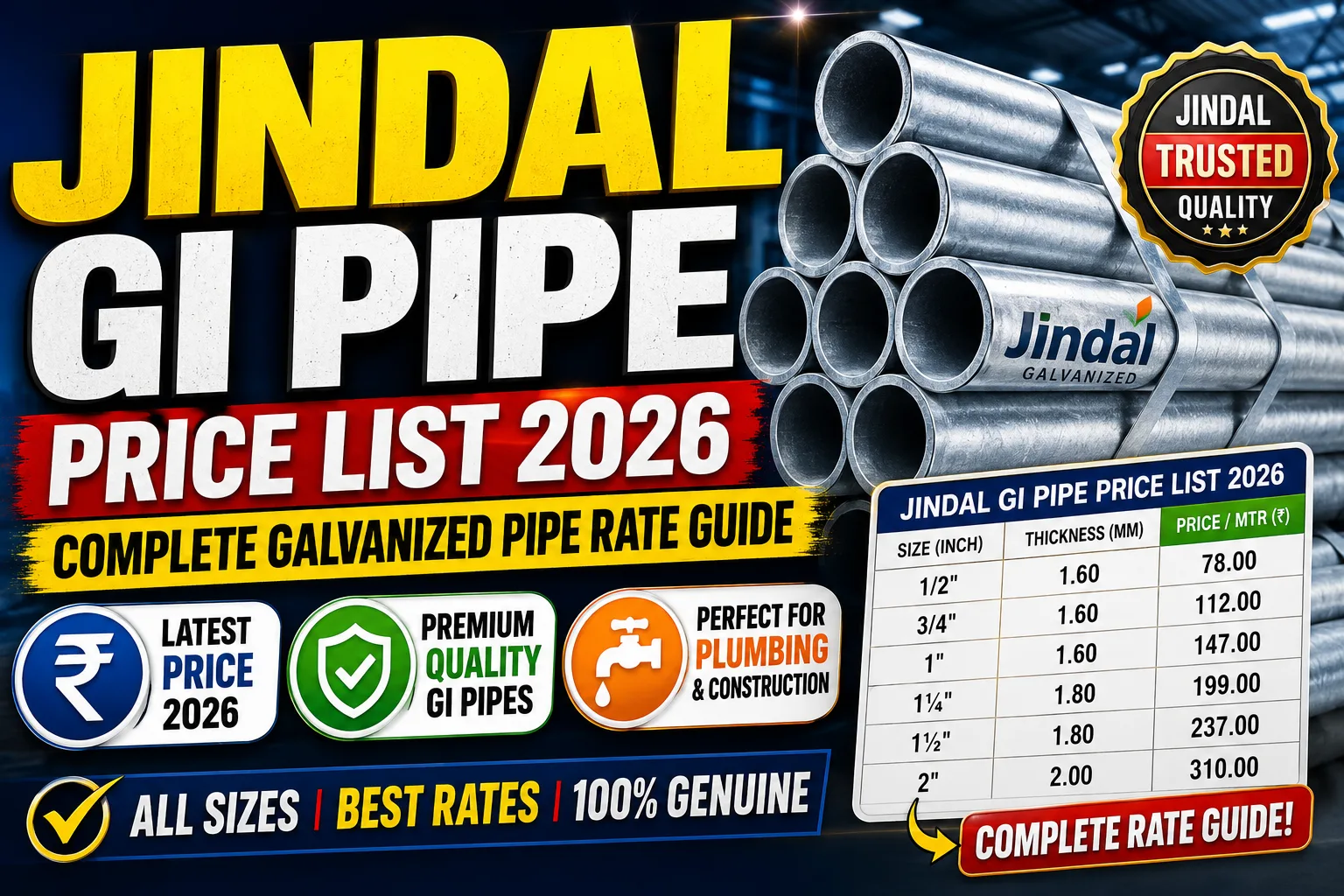
For pricing details, you can also check our GI Pipe Price List for updated market rates and size availability.
Jindal MS Pipe Thickness Chart
MS pipes, also known as mild steel or black steel pipes, are widely used in fabrication and industrial engineering applications. Unlike GI pipes, MS pipes are usually uncoated and primarily selected for strength, weldability, and fabrication flexibility. Jindal MS pipe wall thickness is commonly used in:
- Industrial structures
- Mechanical fabrication
- Trusses
- Sheds
- Factory construction
- Engineering applications
- Industrial pipelines
MS pipe dimensions vary according to project requirements, pressure handling, and fabrication design.
Thicker MS pipes are generally used in:
- Heavy fabrication
- Load-bearing structures
- Mechanical engineering
- Industrial support systems
Because MS pipes are highly weldable and easy to fabricate, they remain one of the most widely used steel pipe products in India.
You can also explore our detailed guide on MS Pipe Sizes Explained to understand standard dimensions and industrial usage.
Pipe Thickness vs Pipe Weight
Pipe weight increases with higher wall thickness. As pipe walls become thicker, more steel material is used in manufacturing, resulting in higher overall weight.
This directly affects:
- Transportation cost
- Structural load
- Installation effort
- Handling requirements
Below is a basic example of pipe thickness vs weight.
| Pipe Size | Thickness | Approx Weight |
|---|---|---|
| 25 NB | 2.6 mm | 1.98 kg/m |
| 25 NB | 3.2 mm | 2.41 kg/m |
| 25 NB | 4.0 mm | 2.97 kg/m |
Higher thickness always increases pipe strength, but it also increases material cost and installation load.
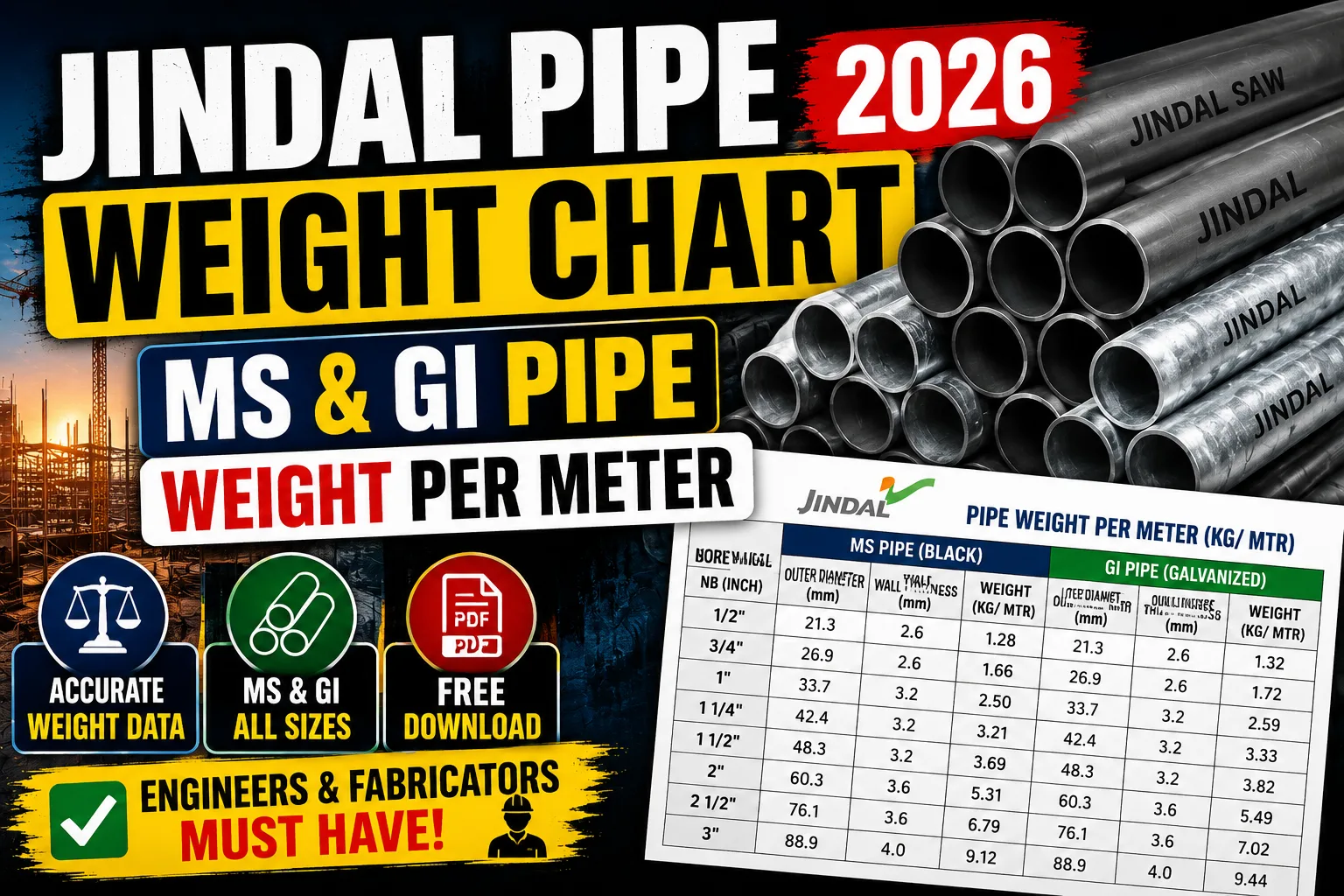
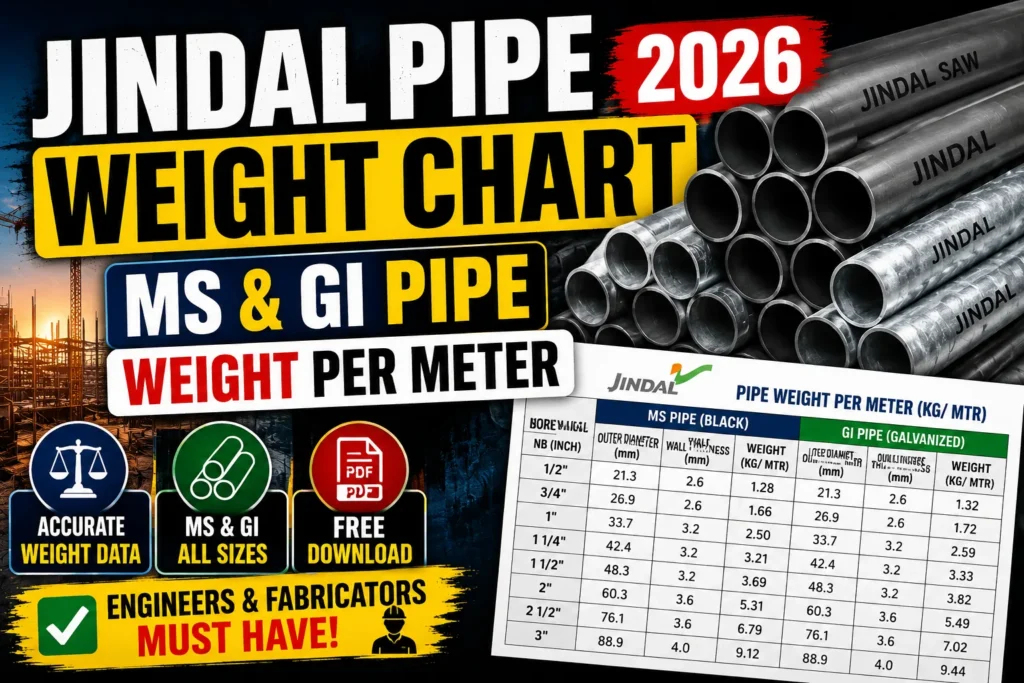
You can also explore our detailed Jindal Pipe Weight Chart for size-wise weight calculations.
IS 1239 Standard for Jindal Pipes
Jindal GI and MS pipes are generally manufactured according to Indian and international quality standards.
The most common standard used in India is:
- IS 1239 Part 1
This standard defines:
- Pipe dimensions
- Thickness tolerance
- Pressure suitability
- Manufacturing requirements
- Quality testing procedures
IS 1239 pipe charts are widely followed across plumbing, industrial piping, and structural engineering sectors.
Other important standards include:
- IS 3589
- ASTM standards
- API standards
These standards ensure:
- Dimensional accuracy
- Quality consistency
- Pressure safety
- Material reliability
Industrial buyers and EPC companies often require test certificates and quality compliance documents before procurement.
Applications of Different Pipe Thicknesses
Different pipe thicknesses are used according to project type, pressure level, and environmental conditions.
Construction Industry
In construction projects, medium and heavy class pipes are commonly used for:
- Structural support
- Plumbing systems
- Building frameworks
- Utility lines
Thicker pipes improve long-term structural stability.
Fire Fighting Systems
Fire fighting pipelines require heavy class pipe thickness because these systems operate under high pressure during emergencies.
Heavy class GI pipes are preferred due to:
- High pressure resistance
- Better reliability
- Improved durability
Oil & Gas Industry
Oil and gas pipelines often use thick-wall steel pipes to handle:
- High pressure
- Corrosive fluids
- Temperature variations
Industrial-grade heavy pipes reduce leakage and improve operational safety.
Structural Engineering
Structural fabrication projects require pipes with high load-bearing strength.
Applications include:
- Trusses
- Factory sheds
- Steel structures
- Mechanical supports
Heavy wall MS pipes are commonly selected for these projects.
Water Distribution Systems
Water transportation systems use different pipe classes depending on pressure requirements.
- Light class for residential supply
- Medium class for commercial use
- Heavy class for industrial networks
Correct pipe thickness improves operational efficiency and reduces maintenance issues.
How to Choose the Right Pipe Thickness?
Selecting the correct pipe thickness depends on multiple technical and environmental factors.
Pressure Requirement
Higher pressure systems require thicker pipes for safe operation.
Fluid Type
Corrosive chemicals, gas, steam, or industrial fluids may require heavy wall thickness.
Environmental Conditions
Outdoor exposure, moisture, and chemical contact influence corrosion life and thickness selection.
Structural Requirement
Load-bearing or fabrication projects often require medium or heavy class pipes.
Project Budget
Thicker pipes provide better performance but also increase material cost. Choosing the correct balance between strength and budget is important for project optimization.
Before finalizing pipe thickness, contractors and industrial buyers should evaluate:
- Pressure rating
- Operating conditions
- Safety standards
- Project lifespan
- Maintenance requirements
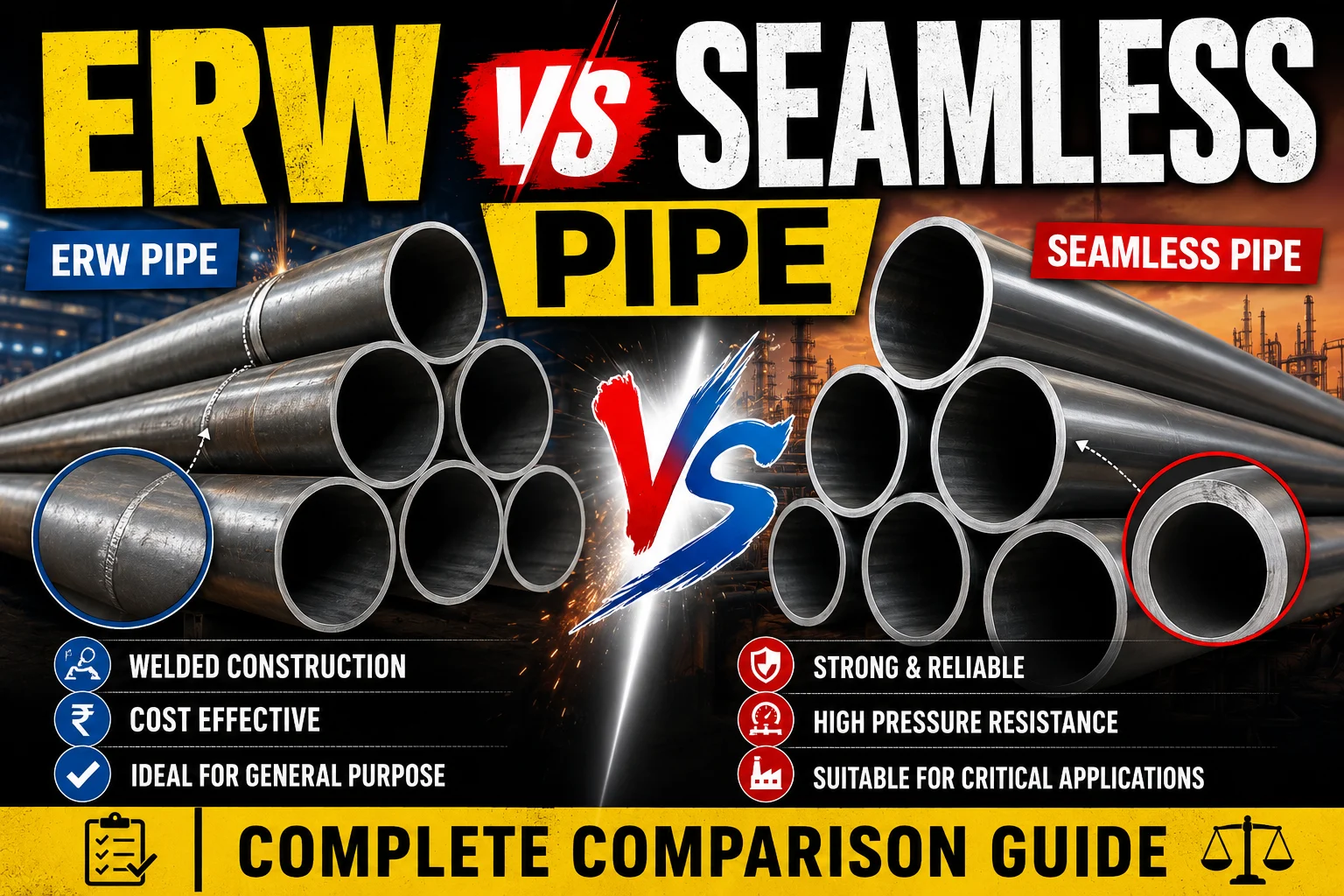
You may also compare manufacturing suitability in our detailed ERW vs Seamless Pipe guide.
Jindal Pipe Thickness Chart PDF Download
Many contractors, industrial buyers, and fabricators prefer downloadable thickness charts for project estimation and technical verification. Contact Deal On Steel Industries for the latest Jindal pipe thickness chart PDF, weight charts, and bulk industrial pricing.
The company provides:
- Updated industrial charts
- Technical specifications
- Pipe size references
- Bulk supply assistance
- Industrial pricing support
Conclusion
Deal On Steel Industries provides the latest Jindal pipe thickness charts, weight charts, and industrial pipe pricing for contractors, fabricators, EPC companies, and infrastructure projects across India. Contact our team for bulk orders, technical specifications, and the latest market rates.
Whether you need GI pipes, MS pipes, heavy class industrial pipes, or complete IS 1239 pipe charts, understanding pipe thickness is essential for selecting the right material for safe and long-lasting project performance.
Frequently Asked Questions (FAQs)
What is the standard thickness of Jindal GI pipes?
Standard Jindal GI pipe thickness depends on pipe class and size. Light, medium, and heavy class pipes are manufactured according to IS 1239 standards with varying wall thicknesses.
What is the difference between B Class and C Class pipes?
B class pipes refer to medium class pipes, while C class pipes refer to heavy class pipes. C class pipes have higher wall thickness and better pressure handling capability.
Which pipe thickness is best for fire fighting systems?
Heavy class GI pipes are generally preferred for fire fighting systems because they can handle higher operating pressure and provide better durability.
How is pipe wall thickness measured?
Pipe wall thickness is measured as the distance between the outer surface and inner surface of the pipe wall using precision measuring instruments.
Which Jindal pipe thickness is best for industrial use?
Heavy class pipes are commonly preferred for industrial applications because they offer higher pressure resistance, improved structural strength, and better reliability.
Does pipe thickness affect weight?
Yes, pipe thickness directly affects pipe weight. Higher wall thickness increases the amount of steel material used, resulting in greater weight per meter.
Why Buy Jindal Pipes from Deal On Steel Industries?
Deal On Steel Industries supplies a wide range of Jindal GI and MS pipes for construction, industrial, infrastructure, and fabrication projects across India.
Key advantages include:
- Bulk industrial supply
- Ready stock availability
- PAN India delivery
- GST billing support
- Mill test certificates
- Competitive industrial pricing
- Dealer and distributor support
- Technical guidance
The company works with:
- Contractors
- EPC companies
- Fabricators
- Infrastructure developers
- Industrial buyers
- Government suppliers
With strong supply capabilities and updated market knowledge, Deal On Steel Industries helps businesses source quality steel pipes efficiently.
About Company
Deal On Steel Industries Pvt. Ltd. has established itself as a leading provider of high-quality stainless steel pipes in India. We are dedicated to exceeding client expectations by delivering superior products, believing this is the definitive path to success.
Most Recent Posts
- All Posts
- Boiler tubes
- Jindal pipes
- Kolkata
- mild Steel
- Ms erw Pipes
- MS Pipes
- Seamless Boiler Tubes
- Stainless Steel Coils
- stainless steel fittings
- Stainless steel Flanges
- Stainless Steel Pipes
- Stainless steel sheets
- Stainless steel Tubes
- Steel Prices
- Trending Steel
- Back
- Alloy Steel Boiler Tubes
- Carbon Steel Boiler Tubes
- Stainless Steel Boiler Tubes
- Jindal Boiler Tubes
- TATA Boiler Tubes
- ERW Boiler Tubes
- Back
- TATA Boiler tubes