
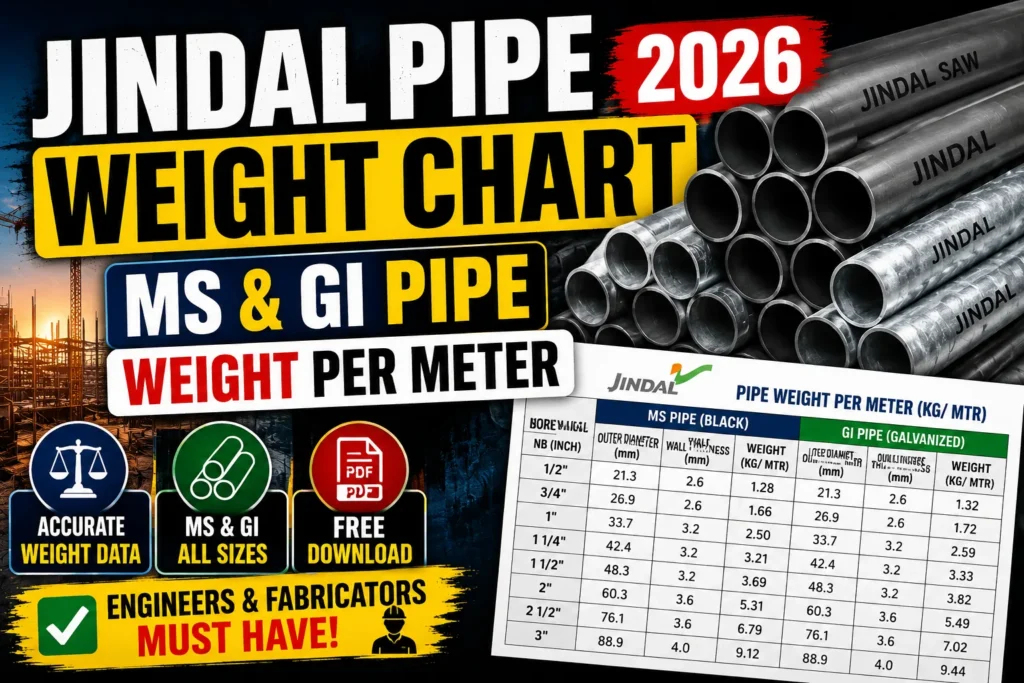
Jindal Pipe Weight Chart 2026 – Complete MS & GI Pipe Weight Guide
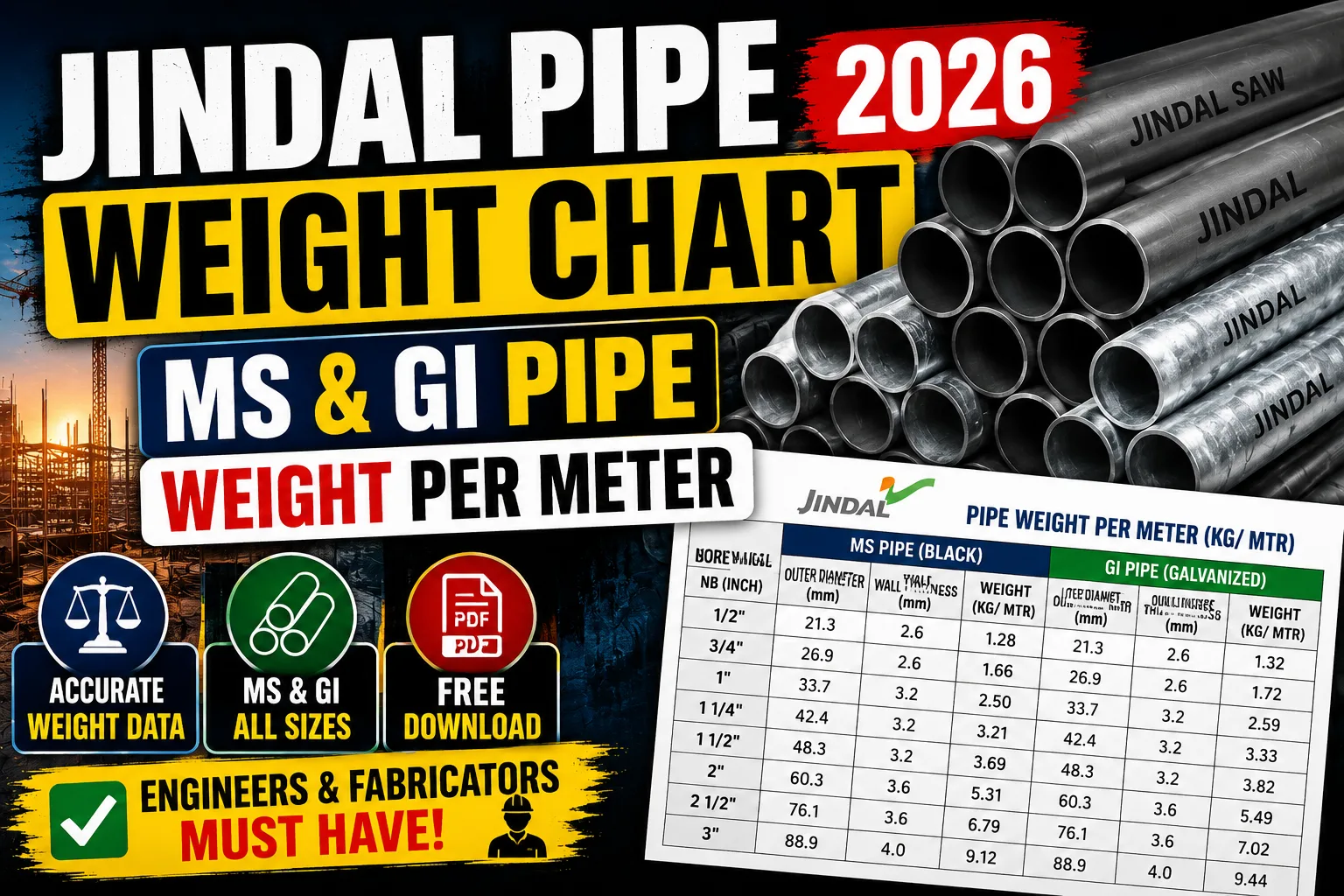
Jindal pipe weight charts help contractors, fabricators, EPC companies, and industrial buyers calculate the exact weight of MS and GI pipes per meter for transportation, fabrication, structural load analysis, and project costing. Pipe weight mainly depends on outer diameter (OD), wall thickness, pipe class, and manufacturing standards. In this detailed 2026 guide, Deal On Steel Industries explains the latest Jindal pipe weight chart with standard MS and GI pipe dimensions, thickness charts, IS 1239 classifications, and industrial applications used across construction, plumbing, fabrication, and heavy engineering sectors. Read our full detailed breakdown on the Jindal Pipes price list.
-
Jindal Pipe Weight Chart 2026 – Complete MS & GI Pipe Weight Guide
- What is a Jindal Pipe Weight Chart?
- Jindal Pipe Weight Formula
- Jindal MS & GI Pipe Weight Chart 2026
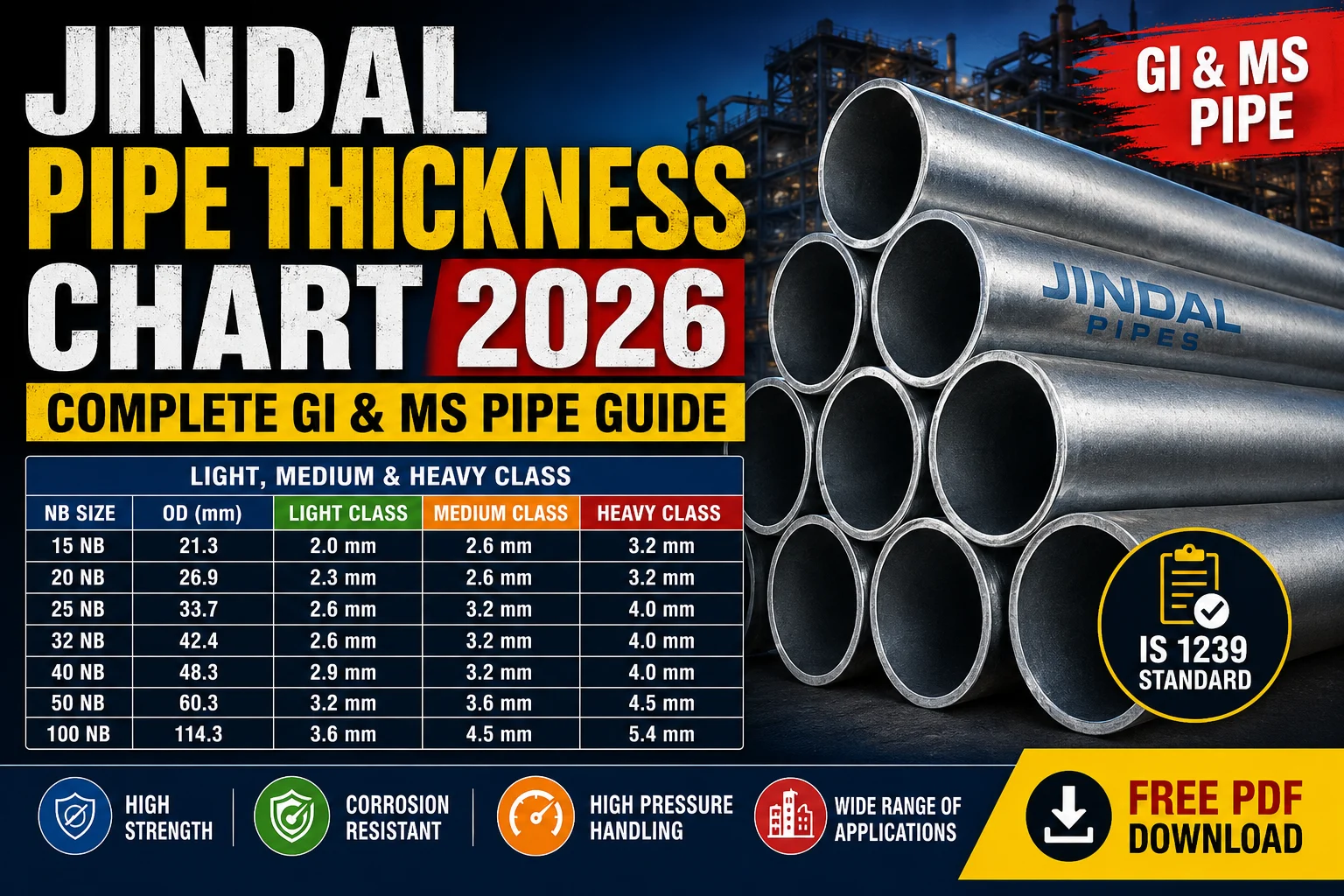
- Jindal Pipe Thickness Chart
- Standard Jindal Pipe Sizes Explained
- Jindal GI Pipe Weight Chart
- Jindal MS Pipe Weight Chart
- Weight Difference Between Light, Medium & Heavy Class Pipes
- How Pipe Weight Affects Project Cost
- Applications of Jindal Pipes
- Jindal ERW vs Seamless Pipe Weight Difference
- How to Choose the Right Pipe Thickness
- Jindal Pipe Weight Per Meter Chart for Industrial Use
- Factors Affecting Pipe Weight
- Latest Jindal Pipe Rates & Weight Relationship
- Why Contractors Prefer Jindal Pipes
- Final Conclusion
- Frequently Asked Questions
What is a Jindal Pipe Weight Chart?
A Jindal pipe weight chart is a standardized reference table that shows the theoretical weight of steel pipes based on their size, outer diameter, and wall thickness. These charts are widely used in the steel, construction, plumbing, fabrication, and infrastructure industries.
The chart generally includes:
- NB size (Nominal Bore)
- Pipe inch size
- Outer Diameter (OD)
- Wall thickness
- Weight per meter
- Pipe class (Light, Medium, Heavy)
Industrial buyers use these charts to estimate:
- Material consumption
- Transportation loads
- Structural weight calculations
- Fabrication planning
- Cost estimation
- Crane lifting requirements
- Project budgeting
For large industrial projects, accurate pipe weight calculations are critical because even small thickness variations can significantly affect total steel tonnage. Deal On Steel Industries supplies Jindal MS and GI pipes with accurate dimensions and standard weight specifications suitable for industrial and commercial projects across India.
Jindal Pipe Weight Formula
The standard pipe weight formula used in the industry is:
Weight (kg/m)=0.02466×(OD−Thickness)×Thickness\text{Weight (kg/m)} = 0.02466 \times (OD – Thickness) \times ThicknessWeight (kg/m)=0.02466×(OD−Thickness)×Thickness
Understanding the Formula
Where:
- OD = Outer Diameter of Pipe (in mm)
- Thickness = Wall thickness of pipe (in mm)
- 0.02466 = Steel density constant
Example Calculation
Suppose:
- OD = 60.3 mm
- Thickness = 3.2 mm
Then:
Weight = 0.02466 × (60.3 − 3.2) × 3.2
= Approx. 4.5 kg/m
Theoretical vs Actual Pipe Weight
Theoretical pipe weight is calculated mathematically based on standard dimensions. Actual pipe weight may vary slightly due to:
- Manufacturing tolerances
- Galvanization coating
- Material density variations
- Production standards
Industrial projects usually allow a standard tolerance range as per IS standards.
Jindal MS & GI Pipe Weight Chart 2026
The following Jindal MS and GI pipe weight chart is based on standard IS 1239 dimensions widely used across construction, plumbing, fire fighting, fabrication, and industrial piping projects in India.
| NB Size | Inch | OD (mm) | Light Thickness | Medium Thickness | Heavy Thickness | Approx Weight (kg/m) |
|---|---|---|---|---|---|---|
| 15 NB | 1/2″ | 21.3 | 2.0 | 2.6 | 3.2 | 1.27 – 1.74 |
| 20 NB | 3/4″ | 26.9 | 2.3 | 2.6 | 3.2 | 1.58 – 2.39 |
| 25 NB | 1″ | 33.7 | 2.6 | 3.2 | 4.0 | 2.44 – 3.66 |
| 32 NB | 1 1/4″ | 42.4 | 2.6 | 3.2 | 4.0 | 3.13 – 4.74 |
| 40 NB | 1 1/2″ | 48.3 | 2.9 | 3.2 | 4.0 | 3.56 – 5.39 |
| 50 NB | 2″ | 60.3 | 2.9 | 3.6 | 4.5 | 4.49 – 6.72 |
| 65 NB | 2 1/2″ | 76.1 | 3.2 | 3.6 | 4.5 | 6.18 – 8.83 |
| 80 NB | 3″ | 88.9 | 3.2 | 4.0 | 5.0 | 7.34 – 11.29 |
| 100 NB | 4″ | 114.3 | 3.6 | 4.5 | 5.4 | 10.85 – 15.02 |
| 125 NB | 5″ | 140.0 | 4.0 | 5.0 | 5.4 | 13.42 – 18.24 |
| 150 NB | 6″ | 168.3 | 4.5 | 5.0 | 5.8 | 18.09 – 23.71 |
Jindal Pipe Thickness Chart
Pipe thickness directly affects:
- Pressure capacity
- Structural strength
- Pipe durability
- Pipe weight
- Industrial performance
Light Class Pipes
Light class pipes are generally used for:
- Plumbing
- Water supply
- Low-pressure applications
- Residential installations
Advantages:
- Lower cost
- Easy handling
- Lightweight structure
Medium Class Pipes
Medium class pipes are widely used in:
- Commercial construction
- Fabrication
- Structural frameworks
- Medium-pressure systems
These pipes provide balanced strength and cost efficiency.
Heavy (C Class) Pipes
Heavy class pipes are suitable for:
- Industrial plants
- Fire fighting systems
- High-pressure applications
- Oil and gas sectors
- Heavy structural fabrication
These pipes have higher wall thickness and better load-bearing capacity.
Standard Jindal Pipe Sizes Explained
Understanding pipe dimensions is important before selecting industrial pipes.
NB (Nominal Bore)
NB represents the approximate internal diameter of the pipe.
OD (Outer Diameter)
OD is the exact external diameter used for weight calculation and fitting compatibility.
Schedule
Schedule indicates wall thickness level. Higher schedule means thicker pipes.
Wall Thickness
Wall thickness determines:
- Strength
- Pressure handling
- Pipe weight
- Durability
| NB Size | OD (mm) | Common Use |
|---|---|---|
| 15 NB | 21.3 | Household plumbing |
| 25 NB | 33.7 | Water lines |
| 50 NB | 60.3 | Structural fabrication |
| 80 NB | 88.9 | Fire fighting systems |
| 100 NB | 114.3 | Industrial piping |
| 150 NB | 168.3 | Heavy industrial projects |
Jindal GI Pipe Weight Chart
GI (Galvanized Iron) pipes include a zinc coating layer that improves corrosion resistance.
| GI Pipe Size | OD (mm) | Thickness | Approx Weight (kg/m) |
|---|---|---|---|
| 15 NB | 21.3 | 2.6 mm | 1.58 |
| 20 NB | 26.9 | 2.6 mm | 1.87 |
| 25 NB | 33.7 | 3.2 mm | 2.91 |
| 40 NB | 48.3 | 3.2 mm | 4.47 |
| 50 NB | 60.3 | 3.6 mm | 5.22 |
| 80 NB | 88.9 | 4.0 mm | 8.36 |
| 100 NB | 114.3 | 4.5 mm | 12.48 |
GI pipes are commonly used in:
- Plumbing
- Outdoor piping
- Water supply systems
- Agricultural pipelines
- Fire protection systems
Jindal MS Pipe Weight Chart
MS pipes are widely used in fabrication and structural applications due to their high weldability and strength. you can also check our detailed blog on Jindal MS pipe price list before purchasing.
| MS Pipe Size | OD (mm) | Thickness | Approx Weight (kg/m) |
|---|---|---|---|
| 20 NB | 26.9 | 2.3 mm | 1.45 |
| 25 NB | 33.7 | 2.6 mm | 2.02 |
| 40 NB | 48.3 | 2.9 mm | 3.35 |
| 50 NB | 60.3 | 3.2 mm | 4.49 |
| 65 NB | 76.1 | 3.6 mm | 6.53 |
| 80 NB | 88.9 | 4.0 mm | 8.36 |
| 100 NB | 114.3 | 4.5 mm | 12.48 |
MS pipes are preferred in:
- Structural fabrication
- Industrial sheds
- Machinery manufacturing
- Steel frameworks
- Conveyor systems
Weight Difference Between Light, Medium & Heavy Class Pipes
| Pipe Class | Thickness | Weight | Pressure Capacity | Common Use |
|---|---|---|---|---|
| Light | Lower | Lightweight | Low | Plumbing |
| Medium | Moderate | Medium | Medium | Construction |
| Heavy | High | Heavy | High | Industrial applications |
Heavy pipes are more expensive because they use more steel and provide higher durability.
How Pipe Weight Affects Project Cost
Pipe weight plays a major role in industrial project costing.
Transportation Cost
Heavier pipes increase:
- Truck load cost
- Fuel expenses
- Crane unloading charges
Fabrication Cost
Higher weight affects:
- Welding time
- Cutting cost
- Labor handling
Structural Load
In large projects, pipe weight impacts:
- Building load calculations
- Structural design
- Foundation strength
Steel Consumption
Thicker pipes consume more steel, increasing total project material cost.
Applications of Jindal Pipes
Construction Industry
Used in:
- Building frameworks
- Roofing structures
- Support columns
- Infrastructure projects
Fire Fighting Systems
Heavy-class GI pipes are widely used in:
- Sprinkler systems
- Hydrant networks
- Industrial safety systems
Plumbing
GI pipes are ideal for:
- Water supply
- Residential plumbing
- Commercial water systems
Structural Fabrication
MS pipes are heavily used in:
- Fabricated structures
- Gates
- Railings
- Industrial platforms
Industrial Plants
Industries use Jindal pipes in:
- Chemical plants
- Processing units
- Manufacturing systems
Oil & Gas Sector
Heavy-duty pipes are suitable for:
- Pressure applications
- Fluid transportation
- Industrial process lines
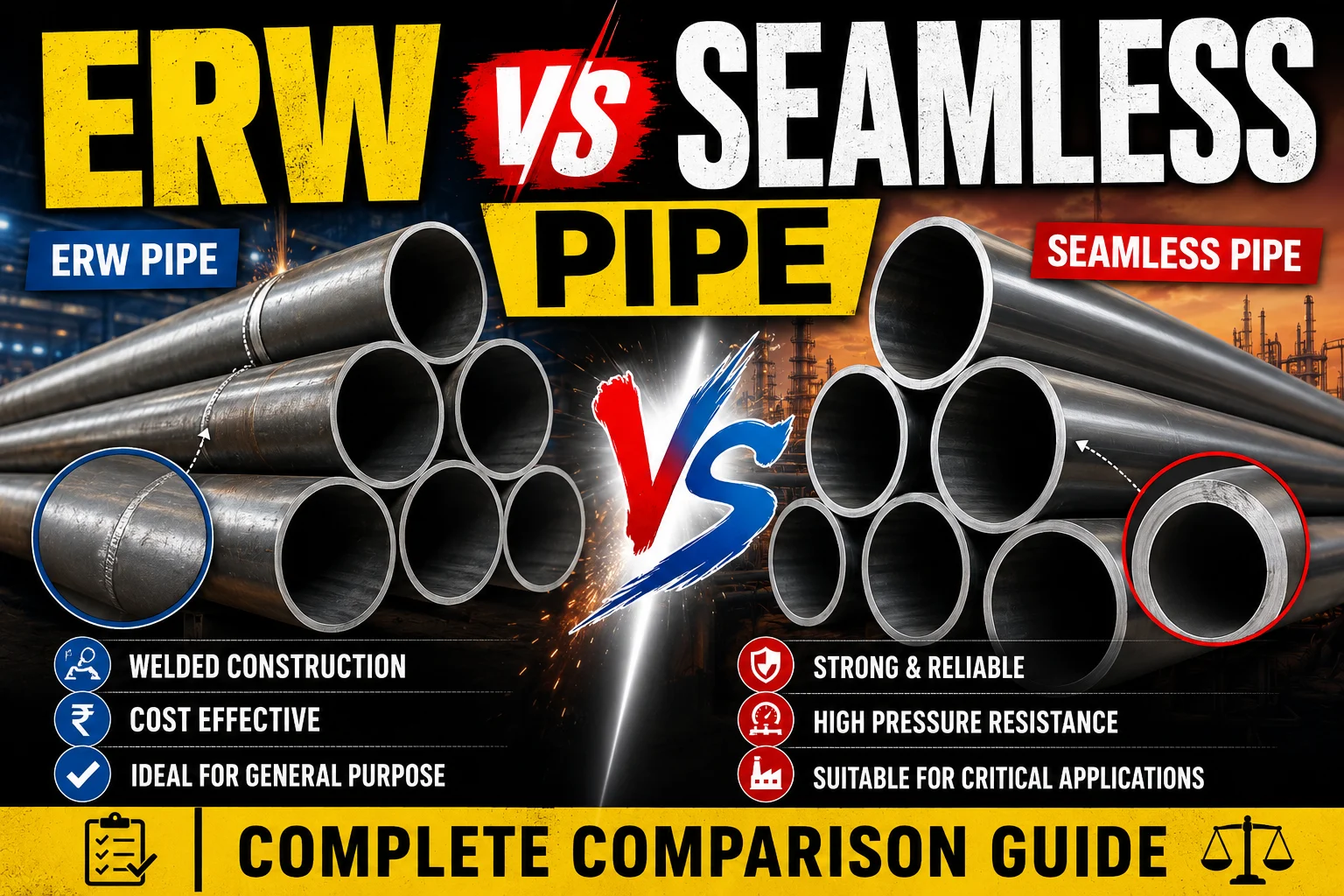
Jindal ERW vs Seamless Pipe Weight Difference
| Type | Weight | Manufacturing | Application |
|---|---|---|---|
| ERW Pipe | Slightly lighter | Welded | General fabrication |
| Seamless Pipe | Heavier | No weld seam | High-pressure industries |
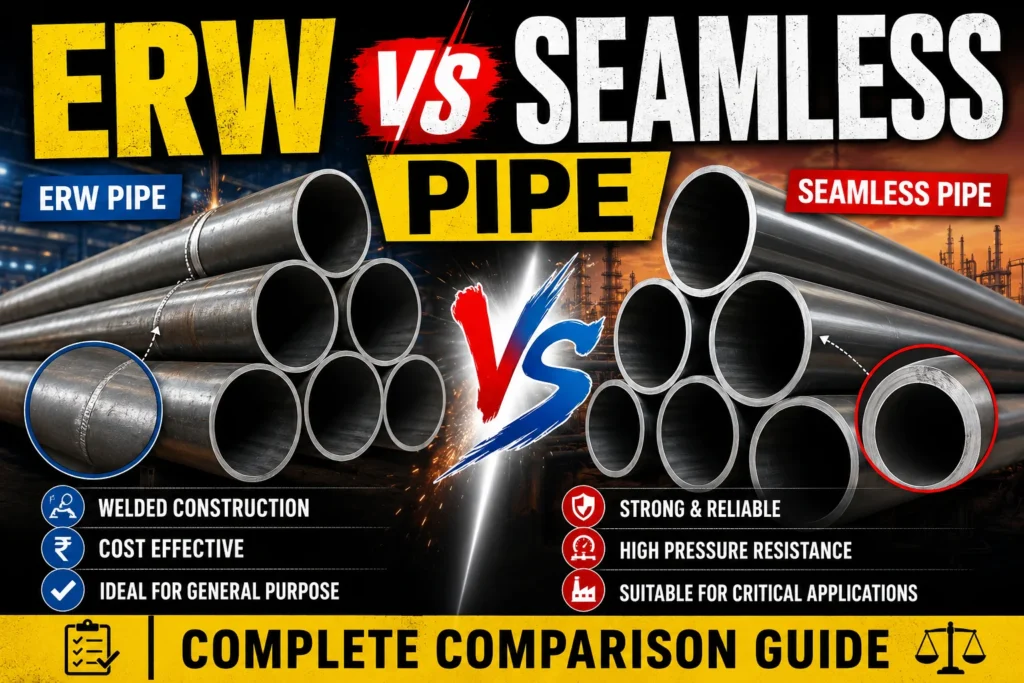
ERW pipes are economical and widely used in construction and fabrication, while seamless pipes are preferred for high-pressure industrial systems. For technical comparison, read our ERW vs Seamless Pipe guide.
How to Choose the Right Pipe Thickness
Choosing the correct pipe thickness depends on several factors.
Pressure Requirement
High-pressure applications require thicker pipes.
Corrosion Environment
Outdoor and chemical environments usually require GI or coated pipes.
Structural Load
Heavy structural applications need thicker walls for strength.
Budget
Light pipes reduce overall project cost.
Indoor vs Outdoor Usage
Outdoor projects require better corrosion resistance.
Jindal Pipe Weight Per Meter Chart for Industrial Use
Large industrial projects often require heavy pipes with higher wall thickness.
| Pipe Size | Thickness | Weight (kg/m) | Industrial Application |
|---|---|---|---|
| 100 NB | 5.4 mm | 15.02 | Industrial plants |
| 125 NB | 5.4 mm | 18.24 | Heavy fabrication |
| 150 NB | 5.8 mm | 23.71 | Oil & gas |
| 200 NB | 6.3 mm | 31.50 | Infrastructure |
| 250 NB | 6.3 mm | 39.40 | Process industries |
These pipes are commonly used in EPC and industrial engineering projects.
Factors Affecting Pipe Weight
Several technical factors influence steel pipe weight.
Thickness
Higher thickness directly increases weight.
Outer Diameter
Larger OD means higher steel usage.
Galvanization
GI pipes weigh slightly more due to zinc coating.
Manufacturing Tolerance
Production variations may slightly affect actual weight.
Seamless vs ERW
Seamless pipes are generally heavier because of manufacturing processes.
Latest Jindal Pipe Rates & Weight Relationship
Pipe pricing is closely linked with pipe weight because steel is generally sold on a per kg basis.
Important pricing factors include:
- Pipe thickness
- Steel grade
- Zinc coating
- Pipe class
- Pipe weight per meter
Heavier pipes naturally cost more because they contain more steel material.
Industrial buyers should compare:
- Price per kg
- Price per meter
- Total project tonnage
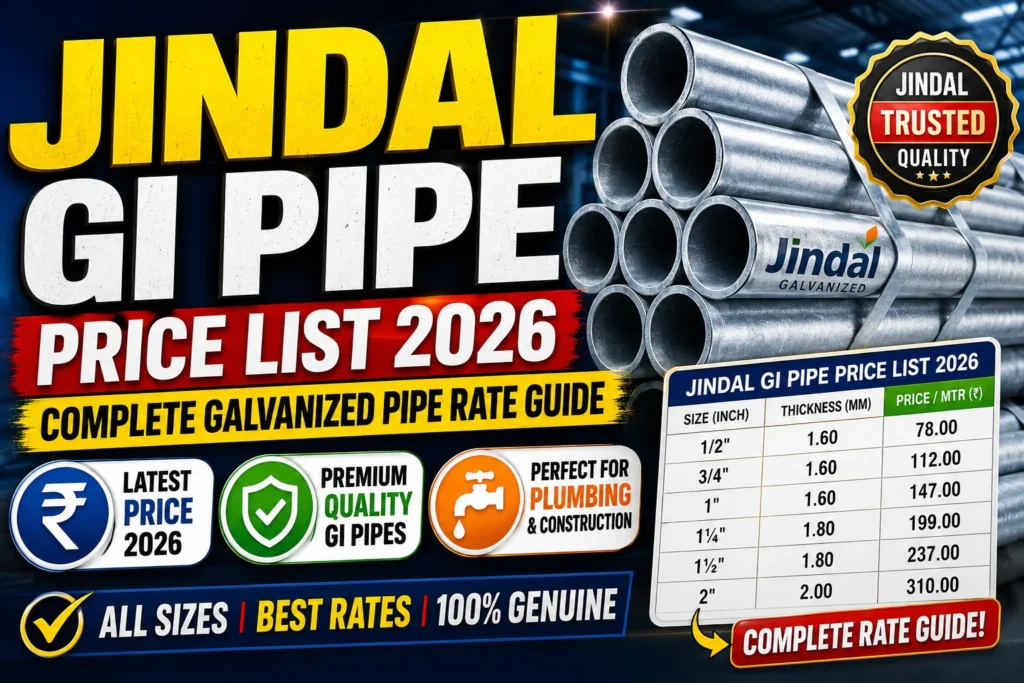
Bulk buyers usually receive better pricing for larger quantities. For current industrial pricing, check our Jindal Pipes Price List guide.
You can also explore:
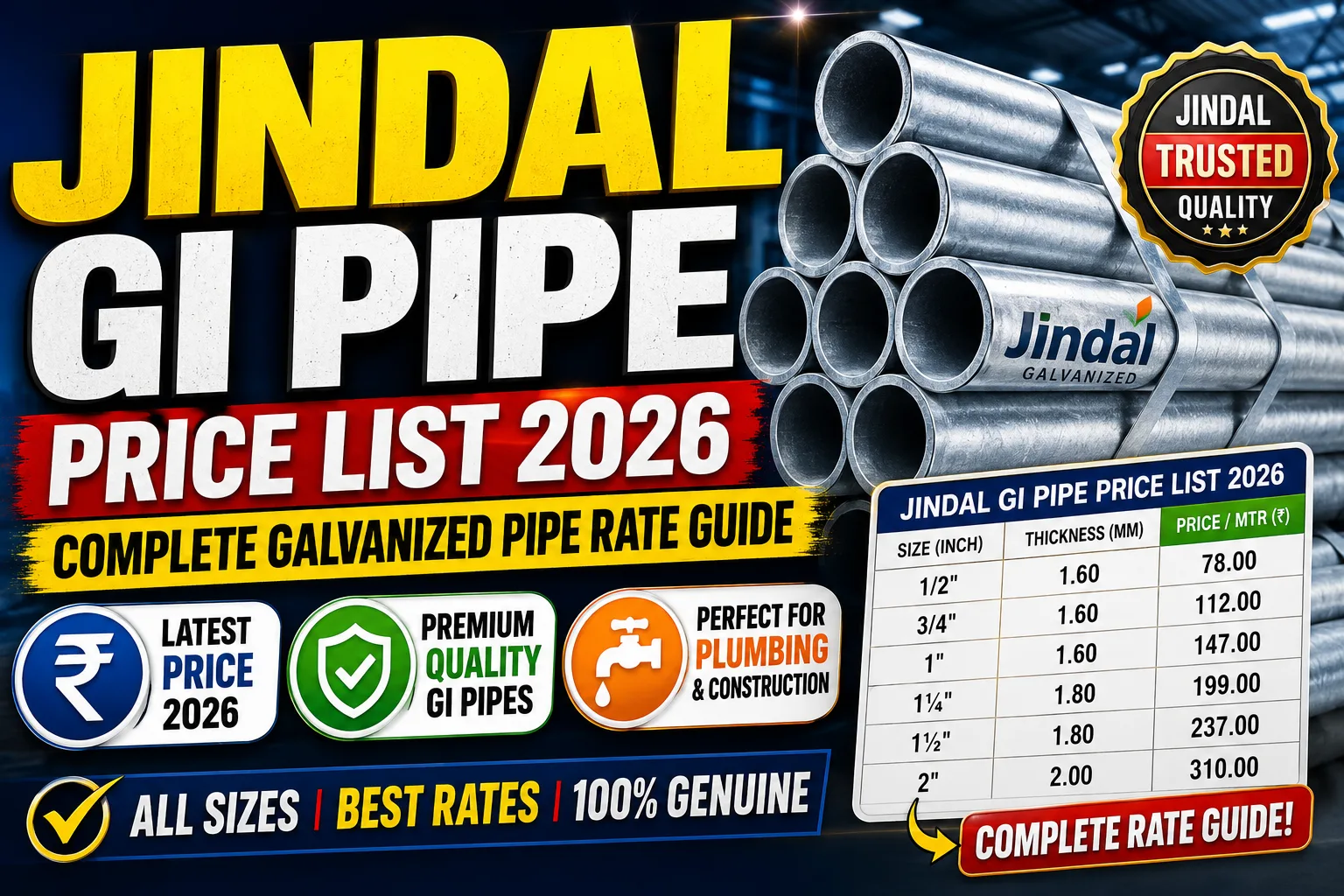
- Jindal GI Pipe Price List
- MS Pipe Sizes Explained
- Pipe Thickness Chart
Why Contractors Prefer Jindal Pipes
Jindal pipes are widely trusted across industrial and construction sectors because of their consistent quality and dimensional accuracy.
ISI Certified Manufacturing
Pipes are manufactured as per Indian standards.
Accurate Dimensions
Uniform OD and thickness improve fabrication accuracy.
Consistent Thickness
Reliable wall thickness improves safety and durability.
High Strength
Suitable for heavy industrial and structural applications.
Corrosion Resistance
GI pipes offer excellent protection in outdoor environments.
Nationwide Availability
Jindal pipes are easily available across India through authorized suppliers and distributors. Deal On Steel Industries supplies industrial-grade Jindal pipes with ready stock availability for infrastructure, fabrication, and industrial projects.
📣 For Jindal ss 304 Pipe Price list , check detailes
Final Conclusion
Jindal pipe weight charts are essential for contractors, fabricators, structural engineers, EPC companies, and industrial buyers who require accurate pipe dimensions and weight calculations for construction, fabrication, plumbing, and industrial applications. Understanding pipe OD, wall thickness, and class helps buyers estimate transportation cost, structural load, fabrication requirements, and overall project budget more accurately.
Whether you are selecting MS pipes for fabrication or GI pipes for plumbing and industrial systems, using the correct pipe weight chart improves project planning and procurement efficiency.
Frequently Asked Questions
What is the weight of Jindal pipe per meter?
The weight depends on OD and wall thickness. Common MS and GI pipes range from approximately 1.2 kg/m to over 23 kg/m.
How do you calculate MS pipe weight?
MS pipe weight is calculated using the standard formula based on OD and thickness.
What is the standard thickness of GI pipes?
GI pipes are available in light, medium, and heavy classes with varying thickness according to IS 1239 standards.
Which pipe class is best for industrial use?
Heavy-class pipes are generally preferred for industrial and high-pressure applications.
What is the difference between light and heavy class pipes?
Heavy pipes have greater wall thickness, higher weight, and better pressure-handling capacity.
Are Jindal pipe dimensions based on IS standards?
Yes, standard Jindal pipes are generally manufactured according to IS specifications.
Why is GI pipe heavier than black pipe?
GI pipes include zinc coating which slightly increases the total weight.
What is the weight of 2 inch GI pipe?
A standard 2-inch GI pipe weighs approximately 5–7 kg per meter depending on thickness and pipe class.
About Company
Deal On Steel Industries Pvt. Ltd. has established itself as a leading provider of high-quality stainless steel pipes in India. We are dedicated to exceeding client expectations by delivering superior products, believing this is the definitive path to success.
Most Recent Posts
- All Posts
- Boiler tubes
- Jindal pipes
- Kolkata
- mild Steel
- Ms erw Pipes
- MS Pipes
- Seamless Boiler Tubes
- Stainless Steel Coils
- stainless steel fittings
- Stainless steel Flanges
- Stainless Steel Pipes
- Stainless steel sheets
- Stainless steel Tubes
- Steel Prices
- Trending Steel
- Back
- Alloy Steel Boiler Tubes
- Carbon Steel Boiler Tubes
- Stainless Steel Boiler Tubes
- Jindal Boiler Tubes
- TATA Boiler Tubes
- ERW Boiler Tubes
- Back
- TATA Boiler tubes






20nb to 700nb pipe required
Share Your Contact Details